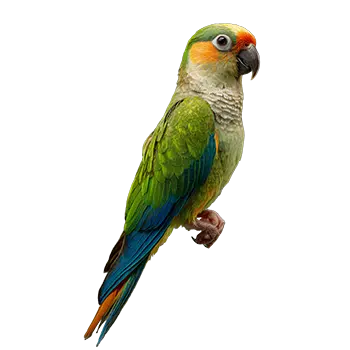

Pet cameras have become one of the most practical technology investments for Half-Moon Conure owners who spend portions of the day away from home. These devices provide real-time visual access to the bird's cage and living area, allowing owners to observe behavior, check food and water levels, and detect early signs of distress or illness from any location with an internet connection. For a species as social and interactive as the Half-Moon Conure, a camera also reveals how the bird spends its unsupervised hours, which can inform enrichment decisions and identify behavioral patterns that only emerge when the owner is absent.
Wi-Fi-enabled cameras with high-definition video, night vision, and two-way audio represent the current standard for pet monitoring. High-definition resolution is important because conures are small birds, and the subtle body language that signals comfort, stress, or illness, such as feather position, eye pinning, and postural changes, requires clear video to interpret accurately. Night vision capability allows monitoring during the bird's dark sleep period without introducing visible light that would disrupt rest. Two-way audio enables the owner to speak to the bird remotely, which can provide reassurance to a social conure that vocalizes for attention during the day.
Camera placement requires consideration of the bird's perspective as well as the owner's monitoring needs. The camera should provide a clear view of the cage interior, including food and water stations, the primary perching areas, and the cage floor. Mounting the camera at cage height rather than above or below captures the most useful angle for behavioral observation. The camera and its cable must be positioned out of the bird's reach, as a curious conure will chew through a power cord or dismantle a camera body within minutes if given access. Cord covers, wall-mounted cable channels, and wireless battery-powered cameras all address this concern.
Cloud recording and motion-triggered alerts add significant monitoring value beyond live viewing. Cloud storage preserves footage of events that occur when the owner is not actively watching, and reviewing time-stamped recordings can reveal patterns such as repetitive behaviors at specific times, reactions to household noises, or interactions with cagemates that would otherwise go unnoticed. Motion-triggered push notifications alert the owner to unusual activity levels, which can indicate a health event, an environmental disturbance, or simply an energetic play session. Setting appropriate sensitivity thresholds prevents notification fatigue from routine movement while still capturing genuinely significant events.