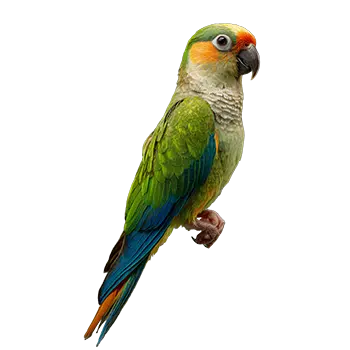

Bathing and Misting Supplies

Regular bathing is essential for maintaining the feather health and skin condition of a Half-Moon Conure. In the wild, these birds bathe frequently in rain showers and dew-laden foliage, and captive birds retain the same strong drive to wet their plumage. Bathing loosens feather dust, softens keratin sheaths on incoming pin feathers, hydrates the skin, and encourages the natural preening behavior that distributes protective oils from the preen gland across the feather surface. A bird denied regular bathing opportunities often develops dry, brittle feathers, itchy skin, and excessive powder production.

Misting bottles provide the simplest and most universally accepted bathing method for Half-Moon Conures. A clean spray bottle set to a fine mist and filled with room-temperature water simulates the gentle rain these birds encounter in their native Central American habitat. Most conures enjoy being misted and will spread their wings, fluff their feathers, and vocalize with pleasure during the process. The mist should be directed above the bird so that droplets fall downward naturally rather than sprayed directly into the face. Dedicated plant misters or bottles sold specifically for avian use work equally well, provided they have never contained cleaning chemicals or other substances.

Birdbath dishes designed to attach to the cage door or perch offer an alternative for conures that prefer to bathe independently. These shallow, clip-on basins allow the bird to wade in and splash at its own pace, which suits birds that are startled by spray bottles. The bath should be large enough for the bird to submerge its chest and wing edges but shallow enough that there is no drowning risk, generally one to two inches of water depth. Bath water should be changed immediately after use and the dish cleaned to prevent bacterial growth in the standing water.

Shower perches that attach via suction cups to bathroom tile or glass extend the bathing experience to the human shower, where warm steam and gentle water provide an exceptionally thorough soaking. Many Half-Moon Conures become enthusiastic shower companions once acclimated to the environment. The perch must be positioned away from the direct shower stream, allowing the bird to choose its level of water exposure. Water temperature for bird bathing should always be lukewarm to cool, as hot water strips natural oils from feathers and can burn sensitive skin. Bathing frequency of two to three times per week is appropriate for most individuals, with daily misting during dry winter months or in arid climates.

Grooming Tools

Nail trimming is the grooming task most Half-Moon Conure owners will need to perform regularly. In the wild, climbing on rough bark and foraging on abrasive surfaces keeps nails worn to a functional length, but captive birds on smooth perches and polished surfaces experience continuous nail growth that eventually curves the nail into the toe pad, causing pain and mobility problems. A quality pair of small bird nail clippers or a rotary grinding tool with a fine-grit attachment gives owners the means to maintain nails at home between veterinary visits.

Small guillotine-style or scissor-style nail clippers designed for birds or cats work well for Half-Moon Conure nails. The key technique is to trim conservatively, removing only the sharp tip and staying well clear of the quick, which is the blood vessel visible as a dark line within the nail of light-colored nails. Styptic powder or cornstarch should always be on hand before trimming begins, as even careful trimming occasionally nicks the quick, causing bleeding that is startling but manageable with immediate application of a clotting agent. Birds with dark nails, where the quick is not visible, require especially conservative trimming.

Rotary nail grinders offer a more gradual approach that some owners and birds prefer. A low-speed Dremel-type tool fitted with a fine sanding drum smooths the nail tip without the abrupt cutting sensation that clippers produce. The grinding approach is inherently less likely to hit the quick because material is removed incrementally, and it leaves a smoother nail edge that is less likely to snag on fabric or skin. The trade-off is that grinding takes longer per nail and the vibration and noise of the tool may require desensitization training before the bird accepts it calmly.

Beak maintenance is rarely needed if the Half-Moon Conure has adequate chewing opportunities and a varied diet. A healthy beak self-maintains through normal use. However, mineral conditioning perches, which have a rough calcium-enriched surface, encourage natural beak filing during perching and provide a supplemental calcium source. These perches should be offered as one of several perch options rather than the only perch, as prolonged standing on the abrasive surface can irritate foot pads. If beak overgrowth or misalignment does develop, this is a veterinary matter requiring professional filing and should not be attempted at home with nail tools.

Harnesses and Outdoor Gear

Aviator-style flight harnesses allow Half-Moon Conure owners to take their birds outdoors safely without the risk of an irretrievable flyaway. Even clipped birds can achieve surprising lift in outdoor air currents, and an unrestrained conure outdoors is one startle response away from disappearing over the treeline. A properly fitted harness tethers the bird to the owner while allowing full wing extension and natural movement, providing the outdoor enrichment of fresh air, sunlight, and environmental stimulation with an acceptable level of security.

Harness sizing for Half-Moon Conures requires the extra-small or petite size available from most avian harness manufacturers. The harness should fit snugly enough that the bird cannot back out of it by folding its wings and pulling backward, but not so tight that it restricts breathing or compresses the keel bone. Most harness systems use an adjustable loop that passes over the head and a second loop that encircles the body behind the wings, connected by a tether leash that the owner holds or clips to a belt loop. Fitting should be practiced indoors multiple times before any outdoor excursion.

Harness training is a gradual process that demands patience and positive reinforcement. Half-Moon Conures are typically more receptive to harness training than larger, more stubborn parrot species, but the process still takes days to weeks of short, reward-heavy sessions. Initial steps involve simply presenting the harness near the bird with treat rewards, progressing to touching the bird with the harness, then draping it over the head, and finally securing the full harness for brief periods that gradually lengthen. Forcing the harness onto a resistant bird creates a lasting aversion that makes future training significantly more difficult.

Backpack-style bird carriers with mesh panels offer an alternative for outdoor excursions when a harness is impractical or the bird has not yet completed harness training. These carriers allow the bird to see and experience the outdoors from a secure enclosure that the owner wears on their back or chest. Ventilation is the primary selection criterion, as enclosed carriers can overheat rapidly in warm weather. Carriers with transparent panels and multiple mesh vents provide the visual and airflow access that makes the experience enriching rather than simply confining. UV-filtering panels in some models protect the bird from excessive sun exposure during extended outings.

Lighting and Environmental Accessories

Full-spectrum lighting is one of the most impactful accessories an owner can provide for a Half-Moon Conure's long-term health. Standard household lighting and light filtered through window glass lack the UVB wavelengths that birds require for vitamin D3 synthesis, which in turn governs calcium absorption and bone density. Without adequate UVB exposure, captive birds can develop metabolic bone disease, weakened immune function, and behavioral disturbances linked to disrupted circadian rhythms. A full-spectrum avian lamp addresses all of these risks.

Avian-specific fluorescent or LED bulbs designed to emit UVA and UVB wavelengths are manufactured by several companies specializing in reptile and bird lighting. The bulb should be mounted within twelve to eighteen inches of the bird's primary perching area, as UVB intensity drops off sharply with distance. Bulbs must be replaced on a schedule determined by the manufacturer, typically every six to twelve months, because UV output diminishes over time even when the bulb continues to produce visible light. A timer that maintains a consistent photoperiod of ten to twelve hours of full-spectrum light followed by twelve to fourteen hours of darkness supports natural hormonal cycles and sleep patterns.

Air quality accessories protect the respiratory system, which is the most vulnerable organ system in captive birds. HEPA air purifiers positioned near the bird's living area capture feather dust, dander, and airborne particulates that accumulate in homes with birds. The powder produced by conure feathers, while less voluminous than that of cockatoos and cockatiels, still contributes to household air quality degradation over time. Ionic air purifiers should be avoided, as many produce ozone as a byproduct, and ozone is a potent respiratory irritant for birds even at concentrations below human detection thresholds.

Humidity management is particularly relevant for Half-Moon Conures during winter months when indoor heating dries household air to levels well below the forty-to-sixty-percent relative humidity range that supports healthy feather and skin condition. A cool-mist humidifier placed near the cage restores moisture to the bird's immediate environment. Warm-mist humidifiers and diffusers that use essential oils must be strictly avoided, as the oils are toxic to birds and heated mist can scald a curious conure. A simple hygrometer mounted near the cage provides the data needed to calibrate humidifier settings appropriately.

First Aid and Emergency Supplies

A dedicated avian first aid kit is an essential accessory for every Half-Moon Conure owner, providing the tools to manage minor injuries and stabilize the bird during the critical window before veterinary care can be reached. Bird emergencies often occur outside of veterinary business hours, and having appropriate supplies immediately available can mean the difference between a manageable incident and a crisis. The kit should be stored in an accessible, clearly labeled container, and every member of the household should know its location.

Styptic powder or gel is the most frequently used first aid item for bird owners. Nail trimming accidents, broken blood feathers, and minor skin lacerations all produce bleeding that can quickly become life-threatening in a bird as small as a Half-Moon Conure, which has a total blood volume of only a few milliliters. Applying styptic powder to a bleeding nail or skin wound induces rapid clotting. For a broken blood feather that continues to bleed despite powder application, the feather must be removed at its base using hemostats or sturdy tweezers, a procedure that owners should learn from their avian veterinarian before it becomes necessary.

Hemostats, small sharp scissors, gauze pads, veterinary wrap, cotton-tipped applicators, and a small penlight belong in every avian first aid kit. A digital gram scale accurate to one gram allows precise weight monitoring, which is the most reliable early indicator of illness in birds, as weight loss often precedes visible symptoms by days. Electrolyte solution formulated for birds helps manage dehydration from illness or heat stress. A hospital cage or small heated enclosure maintains ambient temperature for a bird in shock or recovering from injury, as compromised birds lose body heat rapidly and hypothermia compounds every other medical problem.

The most important item in any first aid kit is the contact information for the nearest avian veterinarian and the nearest emergency avian hospital, along with their hours and after-hours protocols. An owner who has researched these resources in advance does not waste precious time searching for them during an actual emergency. Building a relationship with an avian veterinarian through routine wellness visits establishes the baseline health records and familiarity that enable faster, more effective emergency response. All first aid measures are stabilization tools, not treatments, and veterinary care should follow any significant injury or illness sign as promptly as possible.

Cleaning Products and Hygiene Accessories

Maintaining a hygienic living environment for a Half-Moon Conure requires cleaning products that are effective against organic contamination without introducing chemical hazards to the bird's sensitive respiratory system. The avian respiratory tract is dramatically more efficient than the mammalian system, which means airborne chemical irritants are absorbed at much higher concentrations relative to body weight. Products that are safe for use around dogs and cats may be dangerous or lethal to birds, making product selection a genuine safety consideration rather than a minor preference.

Bird-safe enzymatic cleaners are formulated to break down organic matter, including dried droppings, food residue, and protein-based stains, using biological enzyme action rather than harsh chemical oxidation. These products are effective, produce minimal fumes, and rinse cleanly from cage surfaces. They represent the best all-purpose cleaning option for daily and weekly cage maintenance. Dilute white vinegar is a traditional bird-safe cleaner that handles light organic soiling and mineral deposits, though it lacks the degreasing power of enzymatic formulations for heavier contamination.

Steam cleaners have become increasingly popular among bird owners as a chemical-free deep-cleaning method. A handheld steam cleaner delivers high-temperature steam that sanitizes cage bars, grates, trays, and perches without any chemical residue. The heat effectively kills bacteria and loosens caked-on droppings that resist other cleaning methods. The bird must be removed from the area during steam cleaning and until surfaces have cooled and dried completely, as the steam itself can cause burns and the momentary temperature spike is stressful. Steam cleaning is particularly effective for monthly deep cleans and for sanitizing used cages acquired from other owners.

Products to avoid in any bird-occupied home include aerosol sprays of all types, ammonia-based cleaners, bleach at full concentration, pine and citrus oil cleaners, plug-in air fresheners, and scented candles. Polytetrafluoroethylene fumes from nonstick cookware, self-cleaning oven cycles, and some heated appliances are acutely lethal to birds and deserve mention alongside cleaning products as household respiratory hazards. Establishing a bird-safe household cleaning protocol at the outset of conure ownership prevents accidental exposure and eliminates the need to evaluate each new product individually.

Scales and Health Monitoring Accessories

A digital gram scale is arguably the single most important health monitoring accessory a Half-Moon Conure owner can possess. Birds are biologically programmed to conceal illness as a survival strategy against predation, and by the time a conure visibly appears sick, the underlying condition may be significantly advanced. Regular weight monitoring detects the gradual weight loss that typically accompanies the early stages of illness, infection, or organ dysfunction, often days or weeks before behavioral symptoms become apparent. A scale that reads in one-gram increments provides the resolution needed to detect meaningful changes in a bird weighing approximately sixty-five to seventy-five grams.

Establishing a baseline weight requires daily weigh-ins for several weeks to identify the bird's normal weight range and natural daily fluctuations. Morning weights taken before the first meal provide the most consistent comparison point, as food and water intake throughout the day can add several grams of variable weight. Recording these measurements in a log, whether a simple notebook or a digital spreadsheet, creates a historical record that reveals trends invisible in any single measurement. A weight drop of five to ten percent from the established baseline warrants a veterinary consultation even if the bird appears outwardly normal.

Perch-mounted scales offer a passive weighing solution for birds that resist being handled for scale sessions. These devices replace a standard perch in the cage and record the bird's weight automatically when it stands on the perch. While less precise than a controlled manual weigh-in, perch scales provide useful trend data over time and are particularly valuable for monitoring birds that become stressed by handling. Some models connect to smartphone applications that log and graph weight data, simplifying the tracking process.

Beyond weight monitoring, a handheld magnifying glass or jeweler's loupe aids in inspecting feather condition, skin lesions, nostril clarity, and foot pads at a level of detail the naked eye cannot achieve. A small penlight supplements the loupe for examining the oral cavity, nostrils, and vent area during routine home health checks. These low-cost tools, combined with regular weighing and basic knowledge of healthy versus abnormal findings, allow owners to identify developing problems early enough for veterinary intervention to be most effective.

Always consult a qualified professional before making any health-related decisions. This content is provided for informational reference only and should not replace professional guidance specific to your animal.