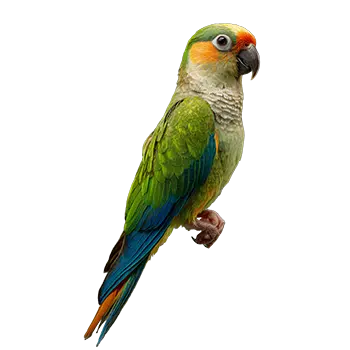

Half-Moon Conures are intelligent, socially driven parrots that spend a significant portion of their waking hours in the wild foraging, exploring, and interacting with flock members. In captivity, where food is delivered in a dish and the environment remains static, the mental energy that would normally be directed toward survival activities has no productive outlet. Without adequate enrichment, this pent-up cognitive and physical energy frequently redirects into problem behaviors including feather plucking, excessive screaming, repetitive cage-pacing, and aggression toward owners or cagemates.
Toy-based enrichment serves as a substitute for the environmental complexity that wild conures navigate daily. A well-chosen toy demands investigation, manipulation, and problem-solving, engaging the same neural pathways that wild foraging activates. The goal is not to fill the cage with objects but to provide a curated selection of items that challenge the bird at an appropriate difficulty level and are rotated frequently enough to prevent habituation. A conure that has fully explored and mastered every toy in its cage is functionally under-enriched regardless of how many toys are present.
The behavioral consequences of inadequate enrichment are not merely cosmetic. Feather-destructive behavior, once established, can become a deeply ingrained compulsive disorder that persists even after enrichment is improved. Chronic stress from boredom suppresses the immune system, increasing vulnerability to opportunistic infections. Screaming that begins as a demand for stimulation can develop into a habitual vocalization pattern that strains the relationship between bird and owner. Investing in appropriate enrichment is therefore both a quality-of-life measure and a preventive health strategy.
Enrichment planning should account for the individual bird's personality and developmental stage. Young Half-Moon Conures tend to be curious and bold, readily engaging with novel objects, while older birds or those with limited prior enrichment experience may be neophobic, requiring gradual introduction of new items. Some individual conures are vigorous chewers while others prefer manipulative puzzles or textural exploration. Observing which types of toys generate the most sustained engagement allows owners to tailor future purchases to the bird's demonstrated preferences.