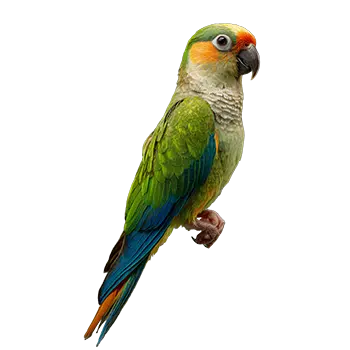

The Half-Moon Conure, also known as the Orange-fronted Conure or Aratinga canicularis, is a compact and energetic parrot native to the dry Pacific lowlands of Central America. In the wild these birds forage across scrubby woodlands and forest edges for seeds, fruits, flowers, and the occasional insect, covering considerable distances each day. That active lifestyle means their metabolism runs hot relative to their body size, and captive birds retain the same caloric demands even when their flight opportunities are limited. A diet that accounts for this metabolic rate while preventing the obesity that comes with sedentary cage life is essential to long-term health.
Protein requirements for Half-Moon Conures are moderate compared to larger parrots but still significant during molting, breeding, and juvenile growth. A base diet delivering roughly twelve to fourteen percent protein from quality sources such as legumes, whole grains, and formulated pellets supports feather regeneration and muscle maintenance without overtaxing the kidneys. During active molt, which typically occurs once or twice a year, a slight increase in protein-rich fresh foods like cooked lentils or sprouted mung beans helps the bird replace feathers efficiently.
Fat intake needs careful calibration. Wild Half-Moon Conures consume seasonally available fatty seeds and nuts, but they burn those calories through sustained flight. In captivity, where a bird may fly only short distances within a room, high-fat seeds like sunflower and safflower can quickly push body weight into unhealthy territory. Dietary fat should come primarily from pellets and modest portions of nuts, contributing roughly four to six percent of the total diet by weight. Owners who notice weight gain should reduce nut and seed offerings before adjusting pellet volume.
Vitamin A is a nutrient of particular importance for conures. Seed-based diets are chronically deficient in this vitamin, and Half-Moon Conures fed primarily on seeds frequently develop signs of hypovitaminosis A, including dull plumage, flaky skin around the nares, and increased susceptibility to respiratory and crop infections. Beta-carotene-rich vegetables such as sweet potato, butternut squash, red bell pepper, and dark leafy greens should appear in the diet daily. These foods provide the precursor form of vitamin A, which the bird converts as needed, virtually eliminating the risk of oversupplementation.