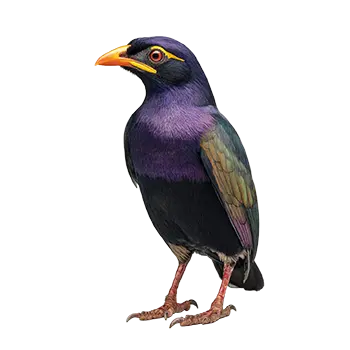

Greater Hill Mynahs are a species where environmental monitoring is not a luxury but a practical necessity driven by the bird's specific physiological vulnerabilities. The mynah's susceptibility to iron storage disease means that dietary management must be precise and consistent over the bird's entire lifespan, and any tool that helps the keeper track food intake, body weight trends, and health indicators provides a genuine safety margin. Similarly, the species' tropical origins create environmental requirements for humidity and temperature that temperate-climate homes do not naturally provide, making continuous environmental monitoring a key component of responsible care.
The messy, moisture-rich enclosure environment that is normal for mynah keeping also creates conditions where bacterial and fungal contamination can develop rapidly if environmental parameters drift. A humidity level that is ideal for the bird's respiratory health can become a breeding ground for aspergillus mold if temperature simultaneously drops, or if ventilation is inadequate. Technology that tracks these variables continuously and alerts the keeper to problematic trends allows intervention before a minor environmental shift becomes a health crisis.
Behavioral monitoring addresses a different but equally important dimension of mynah care. Greater Hill Mynahs are vocal birds whose sound output, activity patterns, and social behaviors provide valuable diagnostic information to an attentive keeper. A bird that suddenly becomes quiet, reduces its movement, or stops bathing may be in the early stages of illness, and the earlier these behavioral changes are detected, the better the prognosis for veterinary treatment. Cameras and audio monitoring systems allow keepers to observe their bird's behavior throughout the day, including during working hours when the keeper is away from home.
The technology landscape for avian care has expanded considerably in recent years, with products ranging from simple digital thermometers to integrated smart home systems capable of managing lighting, humidity, temperature, and air quality through a single interface. The right level of technological investment depends on the individual keeper's circumstances, but even basic monitoring tools provide significant benefits for a species as environmentally sensitive as the Greater Hill Mynah.