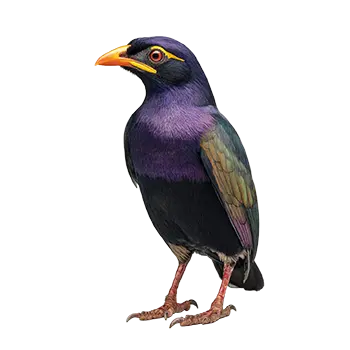

The Greater Hill Mynah (Gracula religiosa) derives its common name from three key elements: its size (greater than related species), its habitat preference (forested hills and mountains), and its family classification (mynahs, members of the starling family). The name "mynah" or "myna" comes from Hindi "mainā," referring to several species of starlings native to Asia. The Greater Hill Mynah is also commonly known as the Greater Indian Hill Mynah, Common Hill Mynah, Hill Myna (alternate spelling), or simply as the Talking Mynah, reflecting its extraordinary vocal abilities that have made it famous worldwide.
Taxonomically, the Greater Hill Mynah belongs to the genus Gracula within the family Sturnidae (starlings and mynahs), a diverse group of passerine birds found primarily in the Old World. This family includes various familiar birds including European Starlings, mynahs, and numerous other species. The genus Gracula contains several closely related hill mynah species, all displaying similar morphology and notable vocal abilities, though the Greater Hill Mynah is the most widespread and commonly kept in aviculture.
The scientific name Gracula religiosa has interesting etymological origins. "Gracula" is Latin for jackdaw or similar corvid-like birds, referencing the mynah's intelligence and behavior. The species epithet "religiosa" (meaning "religious" in Latin) derives from the bird's association with Hindu temples throughout its range where they were historically kept and revered, their extraordinary talking abilities being viewed as supernatural or spiritually significant. Wild mynahs frequenting temple grounds, feeding on offerings and calling melodiously, became associated with religious sites, inspiring the scientific nomenclature.
The Greater Hill Mynah exhibits considerable geographic variation across its extensive range, with numerous subspecies described by taxonomists based on differences in size, plumage details, and wattle characteristics. The exact number of recognized subspecies varies among authorities, with some recognizing up to 12 or more distinct populations. These include Gracula religiosa religiosa (the nominate form from southern India and Sri Lanka), G. r. intermedia (northern India to Indochina), G. r. peninsularis (Southeast Asian mainland), and various island populations throughout Indonesia and the Philippines. In aviculture, these subspecies distinctions are rarely maintained or recognized, with most captive birds representing mixed ancestry or uncertain geographic origin.
Interestingly, several closely related species exist within the Gracula genus that are sometimes confused with the Greater Hill Mynah or hybridize in captivity. The Southern Hill Mynah (Gracula indica), recently elevated to full species status, occurs in southern India and Sri Lanka and was formerly considered a subspecies of G. religiosa. The Sri Lanka Hill Mynah (Gracula ptilogenys) is endemic to Sri Lanka's mountains. The Common Hill Mynah (Gracula religiosa) name is sometimes used interchangeably with Greater Hill Mynah, creating nomenclatural confusion. For aviculture purposes, birds marketed as "Hill Mynahs" typically refer to Gracula religiosa or very closely related species with similar care requirements.
In aviculture and among bird enthusiasts, the Greater Hill Mynah is universally recognized as the supreme talking bird, with vocal abilities surpassing even the renowned African Grey Parrot in clarity, tonal accuracy, and ability to perfectly replicate human voices. This reputation has made Hill Mynahs highly sought after for centuries, with extensive historical trade and captive breeding establishing them as classic aviary birds throughout Asia and increasingly worldwide. The species has been kept in captivity for over 2,000 years in Asia where they remain culturally significant and popular pets.
Distinction from other "mynah" species is important as several unrelated birds share similar common names. The Common Mynah (Acridotheres tristis) and Bank Mynah (Acridotheres ginginianus) belong to different genera within Sturnidae and lack the Hill Mynah's exceptional talking abilities, though they can learn some speech. These species are often confused by novices, but Greater Hill Mynahs are easily distinguished by their glossy black plumage, distinctive yellow wattles, and superior vocal abilities.