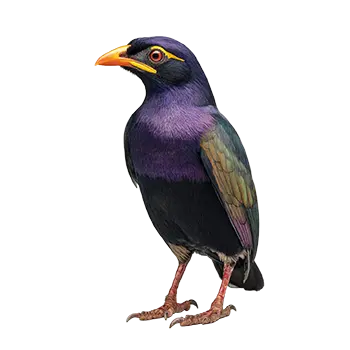

The Greater Hill Mynah is a softbill frugivore-omnivore with nutritional requirements that differ fundamentally from those of hookbills like parrots and cockatiels. In the wild, hill mynahs feed primarily on ripe fruits, berries, nectar, and a variety of invertebrates, and their captive diet must reflect this natural foraging profile. Owners accustomed to seed-and-pellet feeding for other bird species will need to adjust their approach entirely, because the mynah digestive system is designed for rapid processing of high-moisture, low-fiber foods rather than the slow breakdown of hard seeds and dry grains.
The single most important nutritional concern for Greater Hill Mynahs is iron storage disease, also known as hemochromatosis. Mynahs, along with toucans, birds of paradise, and several other softbill families, are highly susceptible to excessive iron accumulation in the liver. Unlike most mammals and many other bird species, these birds lack an efficient mechanism for excreting dietary iron, and over time even moderate iron intake leads to toxic deposits in the liver, heart, and other organs. Iron storage disease is the leading cause of premature death in captive mynahs, making dietary iron management the central pillar of any feeding plan.
Beyond iron restriction, the diet must provide adequate protein to support the bird's active metabolism and its demanding vocal output. Greater Hill Mynahs are among the most accomplished vocal mimics in the avian world, and the muscular effort involved in their complex vocalizations draws on protein reserves. Live insects, cooked egg, and high-quality softbill pellets supply this protein without introducing excessive iron when products are selected carefully.
Vitamins and minerals remain important despite the restricted-iron framework. Vitamin A, supplied through orange and red fruits like papaya and mango, supports respiratory and skin health. Calcium needs are generally met through a combination of softbill pellets and insect exoskeletons, though birds not receiving regular insect protein may need supplementation. The overall dietary goal is a varied, fruit-heavy, low-iron regimen that mirrors the nutritional diversity the species encounters in its native Southeast Asian forests.