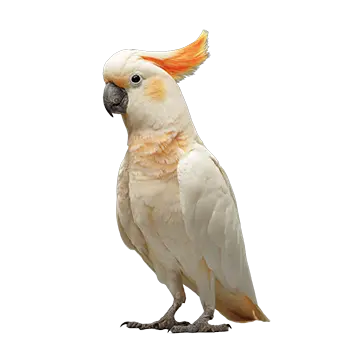

Monitoring & Safety Technology

Technology plays an increasingly valuable role in cockatoo care, offering tools that extend an owner's awareness beyond what direct observation alone can provide. For a species as sensitive and long-lived as the Citron-Crested Cockatoo, the ability to monitor environmental conditions, track behavioral patterns, observe the bird remotely, and maintain precise health records translates into better care decisions and earlier detection of problems that might otherwise go unnoticed until they become serious.

The Citron-Crested Cockatoo presents specific monitoring challenges that make technology particularly useful. As a species prone to feather destructive behavior, the ability to observe the bird when it believes it is alone can reveal plucking or barbering activity that the bird suppresses in the owner's presence. Environmental sensitivity to temperature swings, humidity drops, and airborne toxins makes continuous habitat monitoring more valuable for cockatoos than for many hardier species. The bird's long lifespan means that health data accumulated over years and decades becomes a uniquely powerful diagnostic resource.

Not every piece of technology marketed toward pet owners is worth the investment, and discernment is essential when evaluating products. The most useful devices solve specific, identifiable problems or fill genuine information gaps in the bird's care routine. A temperature sensor that alerts the owner to a heating system failure during a winter night solves a real safety problem. A social media-connected treat dispenser that shoots pellets across the room does not address a meaningful need and may actually startle or stress the bird. Evaluating each device against the specific needs and temperament of the Citron-Crested Cockatoo prevents wasted spending on novelty technology.

Integration and reliability matter more than feature counts. A simple, reliable temperature and humidity monitor that sends consistent alerts outperforms a complex smart home system that requires frequent troubleshooting and firmware updates. Cockatoo owners should prioritize devices with proven track records, straightforward interfaces, and battery backup or offline functionality for critical safety monitoring applications.

Environmental Controls

Maintaining stable environmental conditions in the bird's living space is one of the most impactful applications of technology for Citron-Crested Cockatoo care. Digital thermometers and hygrometers with remote display capabilities allow owners to monitor temperature and humidity at the cage location without disturbing the bird. Models that log data over time provide a record of environmental fluctuations that can be correlated with behavioral or health changes observed in the bird.

Humidity management is particularly important for cockatoos. The Citron-Crested Cockatoo originates from the tropical forests of Sumba, where ambient humidity typically ranges from sixty to eighty percent. Most heated indoor environments during winter months fall well below forty percent relative humidity, which can dry the bird's skin, degrade feather quality, and increase the volume of airborne feather dust. Ultrasonic or evaporative humidifiers can restore humidity to a healthier range, and models with built-in hygrometers and automatic shut-off features maintain target humidity levels without manual adjustment.

Smart thermostats and programmable environmental controllers offer automated temperature management that protects the bird during owner absence. Setting temperature floor and ceiling thresholds ensures that heating or cooling systems respond appropriately to weather changes without requiring manual intervention. For bird rooms or dedicated aviary spaces, independent environmental controllers separate from the home's main thermostat provide zone-specific management tailored to the bird's needs rather than human comfort preferences.

Seasonal considerations shape technology needs. In summer, monitoring for excessive heat and ensuring adequate ventilation prevents heat stress. In winter, maintaining warmth and humidity without creating stagnant, overheated air requires a different balance. Smart plugs and timers can automate humidifier operation, fan cycling, and supplemental heat source management according to time-of-day schedules that approximate natural environmental rhythms. These incremental automations reduce the daily management burden while providing more consistent environmental conditions than manual control typically achieves.

Camera & Surveillance Systems

Pet cameras provide remote observation capabilities that serve both safety and behavioral monitoring functions for Citron-Crested Cockatoo owners. The primary value of a camera system is the ability to check on the bird during work hours, travel, or any period of absence. For a species as socially dependent as the Citron-Crested Cockatoo, knowing whether the bird is resting comfortably, actively playing, or exhibiting distress behaviors allows the owner to respond appropriately, whether that means relaxing or arranging for someone to check on the bird in person.

Camera placement should capture the primary cage area and any play stands or out-of-cage zones the bird uses during supervised or semi-supervised time. A wide-angle lens positioned above and slightly to the side of the cage provides the best coverage of interior activity. Night vision capability is useful for monitoring sleep quality and detecting nocturnal disturbances such as night frights, which are sudden episodes of panicked thrashing in darkness that can cause serious injury. Reviewing night vision footage after a night fright can identify environmental triggers like passing car headlights, sudden sounds, or shadows that prompted the episode.

Two-way audio is a feature included in many pet cameras that allows the owner to hear the bird and speak to it remotely. This feature should be used cautiously with cockatoos. While some birds respond positively to hearing their owner's voice and may vocalize back, others become confused or distressed by a disembodied voice without an accompanying physical presence. If two-way audio causes the bird to scream persistently, search for the source of the voice, or display agitation, it should be disabled or limited to brief, calm interactions.

Motion-triggered recording and alert systems provide event-specific documentation without requiring continuous monitoring. Setting motion sensitivity to capture significant activity while filtering out minor movements creates a useful behavioral log. Over time, reviewing motion-triggered clips can reveal activity patterns, sleep schedules, preferred cage locations, and the onset of behavioral changes that develop too gradually for day-to-day observation to detect. Cloud storage or local SD card recording ensures that footage is preserved for review.

Smart Lighting Solutions

Lighting is one of the most consequential environmental factors for avian health, and smart lighting systems offer precise control over light quality, intensity, duration, and spectrum. The Citron-Crested Cockatoo's biological rhythms are driven by photoperiod, the daily cycle of light and darkness that regulates hormonal activity, molt timing, reproductive behavior, and sleep quality. Artificial lighting that mimics natural photoperiod patterns supports these biological functions, while erratic or inappropriate lighting disrupts them.

Full-spectrum lighting that includes ultraviolet A and ultraviolet B wavelengths is essential for indoor birds that do not receive regular unfiltered sunlight exposure. UVB radiation drives vitamin D3 synthesis in the bird's skin, which in turn enables calcium absorption from the diet. Without adequate UVB exposure, even a calcium-rich diet may fail to prevent metabolic bone disease over time. Full-spectrum avian bulbs designed to emit appropriate UV wavelengths should be positioned within twelve to eighteen inches of the bird's primary perching area, as UV intensity diminishes rapidly with distance.

Smart timers and programmable lighting controllers automate the daily light cycle, ensuring consistent photoperiod regardless of the owner's schedule. A twelve-hour light and twelve-hour dark cycle is a commonly recommended baseline for cockatoos, adjusted seasonally to mimic natural day length variations if desired. Gradual dimming over a fifteen to thirty minute period at the end of the light cycle simulates dusk and gives the bird time to settle onto its sleeping perch before darkness, reducing the likelihood of night frights caused by abrupt light-to-dark transitions.

Bulb replacement schedules are an often-overlooked aspect of avian lighting. Full-spectrum bulbs lose their UV output long before they burn out visibly. Most manufacturers recommend replacing avian UV bulbs every six to twelve months, depending on daily usage hours. Smart systems that track bulb run time and send replacement reminders help owners maintain effective UV exposure without relying on memory or arbitrary calendar dates. The cost of regular bulb replacement is modest compared to the veterinary expenses associated with UV deficiency-related health problems.

Air Quality & Filtration

Air quality management is arguably the most species-specific technology need for cockatoo owners. All cockatoo species produce copious quantities of powder down dust, a fine, white particulate generated by specialized feathers that disintegrate into a waxy powder the bird distributes across its plumage during preening. In enclosed indoor environments, this dust accumulates on surfaces, circulates through HVAC systems, and can reach concentrations that affect both avian and human respiratory health.

High-efficiency particulate air purifiers are the primary technological solution for managing cockatoo dust. HEPA-rated filters capture particles as small as 0.3 microns with an efficiency of 99.97 percent, which is well within the size range of cockatoo feather dust. The air purifier should be sized for the room where the bird lives and operated continuously rather than intermittently, as dust production is constant during the bird's waking hours. Units with pre-filters that capture larger particles extend the life of the primary HEPA filter and reduce replacement frequency.

Filter replacement costs and schedules are practical considerations that affect the long-term economics of air purification. HEPA filters in homes with cockatoos typically need replacement more frequently than the manufacturer's standard recommendation, since the volume of particulate they process exceeds what a typical household generates. Monitoring filter condition through airflow indicators or replacement sensors helps maintain filtration effectiveness. Some owners keep multiple purifiers running in the bird's room and adjacent living spaces, which distributes the filtration load and provides redundancy if one unit fails or a filter expires.

Ionizers and ozone generators are marketed as air cleaning devices but are not appropriate for use around birds. Ozone is a respiratory irritant that can cause pulmonary inflammation and distress in birds at concentrations well below those that affect humans. Ionizers that produce ozone as a byproduct should be avoided entirely. Even ionizers marketed as ozone-free may emit trace amounts that are safe for humans but potentially harmful to avian respiratory systems, which are significantly more efficient at gas exchange and correspondingly more vulnerable to airborne irritants. Stick with true HEPA filtration for cockatoo environments.

Noise & Sound Management

The Citron-Crested Cockatoo is a vocal species capable of producing loud calls and screams that can reach uncomfortable decibel levels in an indoor environment. While vocalization is a natural and healthy behavior that should not be suppressed entirely, technology can help manage the acoustic impact on household members, neighbors, and the bird itself. Sound level meters and decibel monitoring apps provide objective measurement of the bird's vocal output and the ambient noise levels in its environment, establishing baseline data against which changes can be evaluated.

White noise machines and ambient sound generators can serve dual functions in a cockatoo household. Consistent background sound helps mask external noises that may trigger alarm calls, such as passing traffic, construction, or neighborhood dogs. During sleep hours, a gentle white noise or nature sound track can prevent the abrupt silence-to-noise transitions that trigger night frights. The volume should be low enough to avoid overstimulating the bird and should produce natural, non-mechanical sounds. Recordings of rain, gentle wind, or forest ambience are generally better tolerated than electronic tones or music.

Acoustic treatment of the bird's room can significantly reduce noise transmission to adjacent rooms and neighboring units. Sound-absorbing panels, heavy curtains, and thick rugs dampen the reverberation that amplifies cockatoo calls in rooms with hard surfaces. These treatments do not silence the bird, but they reduce the carrying distance and perceived volume of calls by absorbing energy that would otherwise bounce off walls and windows. For owners in apartments or shared-wall housing, acoustic treatment may be the difference between manageable and intolerable noise levels.

Smart home integration offers automated responses to noise events that can help manage the household acoustic environment. Speakers that automatically play calming sounds when a noise threshold is triggered, or lighting systems that dim slightly during extended screaming bouts to reduce stimulation, are examples of technology-assisted behavioral management. These systems should complement rather than replace behavioral training approaches to noise management, and should never include aversive responses such as sudden loud sounds or darkness that could frighten or harm the bird.

Health Tracking & Digital Tools

Digital health tracking tools provide a structured system for recording, analyzing, and sharing the Citron-Crested Cockatoo's health data over the course of its multi-decade lifespan. A digital gram scale accurate to one gram is the most fundamental health tracking device and should be used daily. Consistent morning weigh-ins before the first meal establish a weight baseline against which fluctuations can be measured. Birds instinctively mask illness, and weight loss is often the earliest detectable sign of a developing health problem. A three to five percent weight drop from baseline warrants veterinary attention even if the bird appears otherwise normal.

Spreadsheet applications, dedicated pet health tracking apps, and digital journals allow owners to log weight data alongside dietary records, behavioral observations, molt progression, droppings descriptions, and veterinary visit summaries. Over years of accumulated data, patterns emerge that inform both routine care decisions and diagnostic conversations with the avian veterinarian. A bird that consistently loses weight during the winter months may need dietary adjustment during that period. A pattern of behavioral changes preceding each molt cycle helps the owner anticipate and accommodate the bird's needs.

Photographic documentation of droppings, feather condition, and physical appearance provides visual records that complement numerical data. Smartphone cameras with consistent lighting and positioning produce images that can be compared over time to track changes in feather quality, bare skin patches, beak condition, and foot health. Sharing timestamped photos with an avian veterinarian during consultations gives the clinician visual context that a verbal description alone cannot provide.

Telemedicine platforms designed for veterinary consultations are an emerging tool that can supplement in-person veterinary care. Video consultations allow avian veterinarians to observe the bird's behavior, posture, and breathing in its home environment rather than in the stress-altered state typical of clinic visits. While telemedicine cannot replace hands-on examination for definitive diagnosis, it can facilitate triage, follow-up assessments, and dietary or behavioral counseling without the stress and logistical burden of clinic transport. For owners in areas with limited access to avian veterinary specialists, telemedicine expands the range of expert guidance available.

Always consult a qualified professional before making any health-related decisions. This content is provided for informational reference only and should not replace professional guidance specific to your animal.