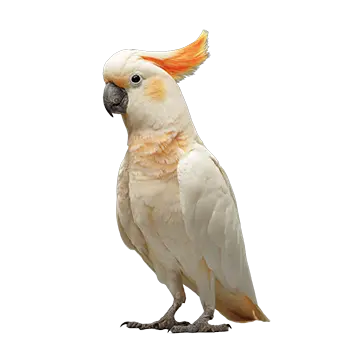

Enrichment Needs

Citron-Crested Cockatoos are among the most intellectually demanding companion birds, and their need for mental stimulation is not optional. In the wild, these parrots spend the majority of their waking hours engaged in activities that challenge their minds and bodies: foraging through forest canopy, manipulating bark and seed pods, socializing with flock members, and navigating complex three-dimensional environments. In captivity, the absence of these natural outlets must be compensated with a robust and varied enrichment program, or the bird will inevitably redirect its energy toward destructive or self-harming behaviors.

Feather destructive behavior, excessive screaming, cage aggression, and stereotypic movements such as pacing or head-bobbing are all strongly correlated with insufficient enrichment in cockatoo species. The Citron-Crested Cockatoo is emotionally sensitive even by cockatoo standards, and boredom or frustration can escalate rapidly into patterns that are difficult to reverse once established. A well-enriched bird is not merely a well-behaved bird; it is a psychologically healthy one whose cognitive needs are being met.

Enrichment should engage multiple categories of behavior: chewing and destruction, foraging and food acquisition, problem-solving and manipulation, physical movement and exercise, and social interaction. No single toy or activity addresses all of these categories, which is why a diverse toy selection and a structured rotation system are fundamental to cockatoo care. Thinking of enrichment as a daily requirement on par with fresh food and clean water is the appropriate framework.

The intensity of a Citron-Crested Cockatoo's chewing drive cannot be overstated. These birds possess powerful beaks relative to their body size and an innate compulsion to shred, splinter, and disassemble materials. This behavior is not aggression or misbehavior; it is a biologically normal activity that must be channeled toward appropriate targets. A cockatoo that destroys toys is a cockatoo that is using its toys correctly. Owners who resist providing destructible materials will find that the bird redirects its chewing toward cage components, furniture, clothing, or its own feathers.

Destructible & Foraging Toys

Destructible toys are the highest-consumption category for any cockatoo and should be viewed as a recurring expense rather than a one-time purchase. The purpose of these toys is to be destroyed, and a Citron-Crested Cockatoo working through a well-made destructible toy is engaging in one of the most satisfying and psychologically beneficial activities available in captivity. Softwood blocks, balsa wood components, palm leaf shreds, yucca chips, and compressed cardboard are all appropriate materials that provide satisfying resistance without posing a safety hazard.

Foraging toys combine the satisfaction of destruction with the cognitive engagement of food acquisition. These products conceal food items within layers of material that the bird must work through to access the reward. Simple foraging toys might wrap a nut in a sheet of paper stuffed inside a cardboard tube, while more complex designs use interlocking compartments, sliding panels, or layered materials that require sustained effort. For a species as intelligent as the Citron-Crested Cockatoo, foraging complexity should increase over time as the bird masters each difficulty level.

Natural material bundles made from bird-safe plant fibers offer cost-effective destruction opportunities. Bundles of palm fronds, corn husks, seagrass mats, and shredded coconut fiber can be purchased commercially or assembled at home from verified safe materials. These bundles can be hung throughout the cage and play areas, providing multiple shredding stations that the bird can visit throughout the day. The key is to offer enough material that the bird never runs out of things to shred before the next replenishment.

Budgeting for destructible toys is a practical reality of cockatoo ownership. A single Citron-Crested Cockatoo can demolish a medium-sized wooden toy in hours and work through several dollars' worth of shreddable material each week. Buying components in bulk, assembling custom toys from wholesale parts, and supplementing commercial products with household items like untreated cardboard boxes, paper towel rolls, and brown paper bags significantly reduces cost without compromising enrichment quality. The goal is abundance: a cockatoo should always have more to chew than it can finish in a single session.

Puzzle & Problem-Solving Toys

Puzzle toys challenge the Citron-Crested Cockatoo's considerable intelligence and provide a form of enrichment that destruction alone cannot match. These products require the bird to observe, manipulate, and solve a mechanical or spatial problem to access a reward, engaging cognitive processes that mirror the problem-solving wild cockatoos perform when extracting seeds from complex seed pods or accessing food sources hidden beneath bark.

Acrylic puzzle boxes with sliding doors, rotating compartments, or lift-out trays are among the most durable and reusable puzzle toy formats. Because they are made from hard materials that resist a cockatoo's beak, these toys can be used repeatedly, with the owner simply reloading the treat compartment after each successful solve. High-quality acrylic foraging stations are a significant upfront investment but offer years of use and represent excellent long-term value compared to disposable toys.

Metal hardware toys featuring nuts, bolts, and chains arranged in configurations that require manipulation to disassemble provide a different kind of cognitive challenge. Stainless steel components are safe for beak contact and provide sensory feedback through their weight, temperature, and the metallic sounds they produce when handled. These toys satisfy both the puzzle-solving and tactile manipulation needs of the species. However, all metal components must be verified as stainless steel or bird-safe metals, as zinc-plated hardware is toxic.

Scalability is an important consideration with puzzle toys. A Citron-Crested Cockatoo that solves a beginner-level puzzle in seconds will quickly lose interest if the challenge does not escalate. The best puzzle toy systems offer multiple difficulty levels, either through modular designs that allow components to be added or reconfigured, or through product lines that graduate from simple to complex. Owners can also increase difficulty by wrapping rewards in additional layers, using smaller food items that are harder to extract, or combining multiple puzzle elements within a single foraging station.

Physical Activity Toys

Physical activity toys encourage movement, coordination, and exercise, all of which are essential for preventing the obesity and muscle atrophy that affect sedentary captive cockatoos. Swings are one of the simplest and most effective physical toys for cockatoos. A well-constructed swing sized for a medium cockatoo provides dynamic, self-directed movement that engages core muscles and balance. Many Citron-Crested Cockatoos develop a strong preference for swing perches and will use them as primary resting spots if positioned appropriately.

Climbing structures extend the bird's usable space and encourage the ascending, descending, and lateral movement that cockatoos perform naturally in forest environments. Rope ladders, cargo nets made from bird-safe cotton or hemp, and multi-level platform systems transform vertical cage space into an active climbing zone. These structures should be inspected regularly for fraying, as loose fibers can entangle toes or be ingested in hazardous quantities.

Boing-style spiral rope perches offer a unique combination of perching and bouncing activity. These flexible, coiled ropes can be mounted vertically or at an angle, and the bird's movements cause them to sway and bounce unpredictably. This dynamic surface engages balance and grip in ways that static perches cannot. Citron-Crested Cockatoos frequently hang upside down from boings, swing side to side, and use them as launching platforms, making them among the most actively used cage accessories.

Play gyms and activity centers positioned outside the cage provide a dedicated exercise and interaction space during supervised out-of-cage time. A well-designed play gym includes multiple perch levels, toy attachment points, food cup holders, and enough surface area for the bird to move freely. Tabletop play gyms work for smaller spaces, while freestanding floor models provide a more substantial activity zone. The play gym should be positioned where the bird can participate in household activity while having independent access to toys, food, and water.

Comfort & Preening Toys

Comfort toys address the Citron-Crested Cockatoo's strong social bonding instincts and its need for tactile stimulation. In the wild, cockatoos spend considerable time engaged in mutual preening with flock members, an activity that reinforces social bonds and maintains feather condition. In captivity, preening toys made from soft, textured materials serve as proxies for this social grooming behavior, giving the bird something to preen, nuzzle, and manipulate during quiet periods.

Rope knots, cotton mop heads, and soft leather strips attached to cage-mountable frames are popular preening toy formats. The bird runs its beak through the fibers in a motion that closely mimics natural preening behavior, which can be calming and self-soothing. For cockatoos that are prone to over-preening or feather plucking, redirecting that oral and tactile energy toward a preening toy can reduce the impulse to target their own feathers. The texture and density of the fibers should be substantial enough to engage the beak without unraveling into ingestible strands.

Soft wood and leather combination toys provide a dual-purpose item that can be both preened and chewed. Vegetable-tanned leather strips threaded through soft wood beads or blocks invite the bird to alternate between gentle preening motions and more vigorous chewing. These transitional toys are particularly useful for birds that shift between high-energy and restful states throughout the day, providing an appropriate activity for each mood.

Some cockatoos develop strong attachments to specific comfort objects, returning to the same toy repeatedly for soothing behavior. This attachment is normal and healthy as long as the bird also engages with other enrichment types and does not become so fixated on a single object that removing it for cleaning or replacement causes distress. Having a rotation of similar comfort items available ensures that the bird's attachment needs are met even when individual toys are being washed or replaced. Cotton-based comfort toys should be laundered regularly to prevent bacterial buildup in fibers that receive frequent beak and tongue contact.

Toy Safety & Materials

Safety evaluation is the first step in selecting any toy for a Citron-Crested Cockatoo. The species' powerful beak, relentless curiosity, and tendency to mouth and ingest fragments mean that every component of a toy must be assessed for toxicity, entanglement risk, and breakage hazard before it enters the cage. A toy that is safe for a budgie or a canary may be dangerous for a cockatoo that can reduce it to small pieces within minutes.

Metal components are a frequent source of toxicity risk. Zinc, lead, and copper are all toxic to birds and are commonly found in cheap hardware, quick-link connectors, key rings, and jingle bells. Every metal part of a toy should be verified as stainless steel, nickel-plated steel, or another bird-safe material. If the metal composition cannot be confirmed, the component should be removed or the toy avoided entirely. This caution extends to toy hanging hardware, cage clips, and any chains used to suspend toys.

Rope and fiber materials require ongoing monitoring. Cotton, sisal, hemp, and jute ropes are all used in bird toys, and all of them fray over time under beak pressure. Loose fibers can wrap around toes, causing circulation loss and tissue necrosis if not discovered quickly. Longer strands can be ingested and cause crop impaction or intestinal obstruction. Rope toys should be trimmed of loose fibers regularly and replaced when they begin to unravel beyond what trimming can manage. Some owners prefer to avoid rope toys entirely, while others find them valuable enough to justify the monitoring effort.

Dyes and colorants used on wood, leather, and other toy components should be food-grade or vegetable-based. Many commercially available bird toys use water-soluble, food-safe dyes that are tested for avian safety, but imported or handmade toys may use industrial dyes or stains with unknown chemical compositions. When in doubt about dye safety, uncolored natural materials are the safest choice. Similarly, adhesives used in toy assembly should be non-toxic and water-soluble, as a cockatoo will inevitably chew through any glued joint and come into contact with the adhesive material.

Rotation & Replacement Strategies

Toy rotation is one of the most effective and cost-efficient enrichment strategies available to cockatoo owners. The principle is straightforward: rather than hanging all available toys in the cage simultaneously, maintain a selection of five to seven toys inside the cage at any given time and swap individual toys in and out on a weekly basis. This approach creates the perception of novelty without requiring constant new purchases, as a toy that has been out of sight for two or three weeks regains its interest value when reintroduced.

A systematic rotation schedule ensures that all enrichment categories remain represented in the cage at all times. Each rotation should include at least one destructible toy, one foraging toy, one puzzle or manipulation toy, one physical activity item, and one comfort or preening toy. When a toy from one category is removed, it should be replaced by a different toy from the same category rather than by whatever happens to be available. This discipline prevents the cage from becoming dominated by one type of enrichment while neglecting others.

Replacement timing for destructible toys is dictated by the bird rather than a calendar. Some Citron-Crested Cockatoos will dismantle a wooden toy in a single afternoon, while others work on the same piece for days. The important metric is whether the bird still has destructible material available, not how long a particular toy has lasted. Running out of shreddable material is equivalent to running out of food in terms of its impact on behavioral health. Maintaining a reserve stock of destructible toys and components allows immediate replenishment without emergency shopping trips.

Introducing new toys requires sensitivity to the Citron-Crested Cockatoo's temperament. While these birds are generally curious and playful, some individuals exhibit neophobia, a wariness of unfamiliar objects that can range from mild hesitation to outright panic. New toys should be introduced gradually, first placed near the cage where the bird can observe them from a safe distance, then hung on the outside of the cage, and finally moved inside once the bird shows interest rather than alarm. Forcing a nervous bird to share its space with a frightening new object creates stress that undermines the entire purpose of enrichment.

Always consult a qualified professional before making any health-related decisions. This content is provided for informational reference only and should not replace professional guidance specific to your animal.