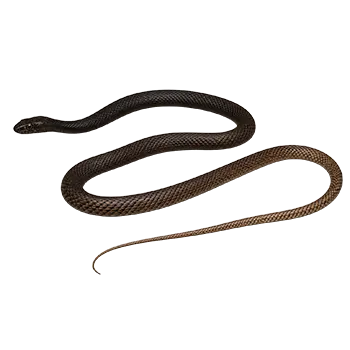

Coachwhips (Masticophis flagellum) are oviparous snakes that deposit clutches of four to twenty-four granular, leathery eggs in loose soil, leaf litter, or decomposing organic material during early summer. After an incubation period of approximately sixty to eighty-five days at temperatures between 82 and 86 degrees Fahrenheit, hatchlings use a specialized egg tooth on the rostral scale to slice through the eggshell in a process known as pipping. The first visible slit in the shell may appear hours before the hatchling fully emerges, and keepers must resist any impulse to assist during this period. Premature intervention risks tearing the umbilical connection or forcing the hatchling out before the yolk sac has been fully internalized, both of which can result in infection or death.
Newly emerged Coachwhip hatchlings measure approximately twelve to sixteen inches in length and are remarkably slender relative to many other colubrid species of similar total length. Their coloration at hatching typically features prominent dark crossbands on a lighter tan or brown background, a pattern that fades substantially as the animal matures. Hatchlings are extraordinarily alert from the moment they leave the egg, exhibiting the keen visual acuity and rapid reflexes that define this species throughout its life. Even within the first hour of emergence, a Coachwhip hatchling will track movement with its head, orient its body toward perceived threats, and attempt to flee at startling speed if disturbed.
The incubation container should remain undisturbed until all eggs that show signs of viability have hatched. In a given clutch, the interval between the first and last hatchling to emerge may span twenty-four to forty-eight hours. Once each hatchling has fully exited its egg and is moving independently, it can be transferred to an individual holding container using a soft cloth or gentle hand. Coachwhip hatchlings are fragile despite their energetic movements, and rough handling during this transition can cause spinal or rib injuries in these fine-boned neonates.
Cleanliness in the hatching area is paramount during the first day. Eggshell fragments, non-viable eggs, and residual albumin should be removed promptly to prevent bacterial colonization. The ambient temperature in the holding area should be maintained at 84 to 88 degrees Fahrenheit with humidity levels around 60 to 70 percent. Providing a small, shallow water dish from the outset ensures the hatchling can hydrate as soon as it is ready, though most will not drink until several hours after emergence. A snug hide on the warm side of the container gives the hatchling a secure retreat, which is especially important for this naturally nervous species.