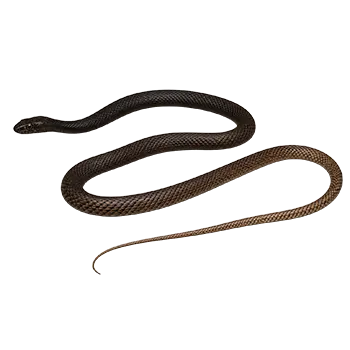

Adult Coachwhips (Masticophis flagellum) reach sexual maturity between two and three years of age, at which point most individuals measure four to six feet in total length with exceptional specimens reaching seven feet or beyond. The species' body plan at maturity is unmistakable: long, lean, and powerfully muscled, with a smooth-scaled, whip-like tail that accounts for roughly one-third of total body length. The head is relatively large and distinct from the neck, with prominent, forward-facing eyes that provide the binocular vision necessary for the species' visually oriented hunting strategy. Unlike heavy-bodied ambush predators, the adult Coachwhip carries almost no excess fat reserves and should present a sleek, athletic profile with no visible vertebral ridging or lateral skin folds.
Adult coloration is fully established by the time the snake reaches approximately three years of age and varies substantially by geographic origin. Eastern populations typically display a dark brown to jet-black anterior that transitions to tan, light brown, or cream along the posterior body and tail. Western populations exhibit a wider range of coloration, from uniform tan to vivid salmon, pink, or red, earning the informal name red racer. Several subspecies and regional variants have been described, and the coloration of a given individual can be a reliable indicator of its geographic provenance. Regardless of color morph, healthy adult Coachwhips maintain vibrant, clean coloration with sharply defined scale edges and no areas of discoloration, scarring, or chronic scale damage.
Muscular development in the adult Coachwhip is impressive for a colubrid of its proportions. The species relies on raw speed rather than constriction to subdue prey, pinning food items beneath body loops before swallowing them whole. This prey-capture method requires significant core and lateral musculature, which is maintained through regular feeding and the opportunity for physical activity within the enclosure. An adult Coachwhip that is sedentary due to an undersized enclosure or inadequate environmental stimulation will gradually lose muscle tone, developing a softer body profile and reduced locomotor performance.
Body condition scoring should be part of routine health assessment for adult Coachwhips. A snake in ideal condition has a rounded cross-sectional body profile with no visible spine or ribs and no lateral bulging that would indicate obesity. The ventral scales should lie flat against the body without gaps between them, which would suggest excessive fat deposition. Obesity is less common in Coachwhips than in heavy-bodied species, but it can occur in adults that are overfed relative to their activity level. Conversely, chronic undercondition, visible as prominent vertebral and rib outlines, indicates either inadequate feeding frequency, inappropriate prey size, or an underlying disease process that warrants veterinary investigation.