
Recognizing the Aging Process

Determining when a Calabar Python (Calabaria reinhardtii) transitions from a mature adult into its senior phase is more nuanced than with many other reptile species, primarily because the species' naturally sedentary and secretive lifestyle makes age-related behavioral changes difficult to detect. In broad terms, Calabar Pythons that have reached fifteen to twenty years of age can be considered to have entered their senior period, though individual variation means some animals show signs of aging earlier while others remain vigorous well into their twenties. Because accurate age records are often unavailable for wild-caught individuals or animals that have changed hands multiple times, keepers must rely on a combination of physical signs and behavioral observations to assess where their animal falls on the aging continuum.

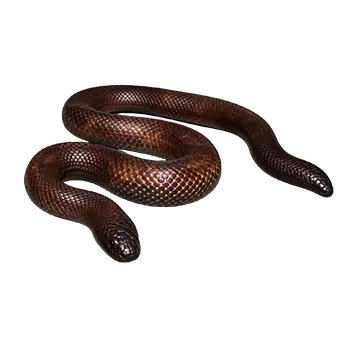
The earliest physical signs of aging in Calabar Pythons are often subtle. Scale texture may become slightly rougher or less lustrous compared to the deep, smooth sheen of a healthy adult in its prime. Coloration can gradually dull, with the orange or reddish-brown markings fading toward a more muted, brownish hue. Muscle tone along the dorsal surface may diminish slightly, giving the body a softer feel during handling compared to the firm, dense musculature of a younger adult. None of these changes are dramatic, and they occur gradually over months or years, making them easy to miss without careful longitudinal observation.

Behavioral indicators of aging may be more noticeable than physical ones, particularly for keepers who have maintained the same animal for many years and know its established routines intimately. Reduced nocturnal activity is often among the first signs, with the snake making fewer surface excursions and spending longer periods completely stationary within the substrate. Feeding response may slow, with the snake taking longer to detect and strike at prey, or requiring prey to be positioned more precisely at the burrow entrance. Shedding intervals often lengthen as growth and metabolic turnover slow, and the snake may require slightly higher humidity levels to complete sheds cleanly.

It is important not to attribute every change in behavior or condition to aging without appropriate veterinary evaluation. Many conditions that mimic the signs of senescence — reduced appetite, lethargy, dull coloration, weight loss — are also symptoms of treatable diseases such as internal parasites, organ infection, or metabolic disorder. A thorough veterinary examination, ideally including bloodwork to assess liver and kidney function, should precede any assumption that an animal's declining condition is simply a product of age. Treating aging as a diagnosis of exclusion ensures that correctable health problems are not overlooked.

Dietary Adjustments for Senior Snakes

As Calabar Pythons age, their metabolic rate and energy expenditure decline further from an already low baseline, necessitating corresponding adjustments to feeding frequency and prey size. A senior Calabar Python that was eating once every ten to fourteen days during its prime adult years may thrive on meals offered once every fourteen to twenty-one days during its geriatric phase. The precise interval depends on the individual animal's body condition, activity level, and appetite. The guiding principle is to maintain stable body weight without promoting fat accumulation, which places unnecessary strain on aging organs.

Prey size for senior Calabar Pythons should be reconsidered and potentially reduced from the adult standard. An animal whose jaw musculature has weakened slightly with age may struggle with prey items that it handled easily in previous years. Offering smaller prey more frequently rather than larger prey at wider intervals accommodates this decline while maintaining adequate nutrition. If the snake begins leaving prey items partially consumed, or if the post-feeding lump appears disproportionately large relative to the snake's body, the prey size should be reduced immediately.

Senior Calabar Pythons may develop longer fasting periods than they exhibited as younger adults, and these periods can be difficult to distinguish from the seasonal anorexia that is normal in the species. The key differentiator is body condition: a seasonally fasting adult in good body condition can safely go eight to twelve weeks without food, while a senior animal that is already underweight should not be allowed to fast for extended periods without veterinary input. Weigh the animal every two weeks during fasting periods to track any weight loss objectively. If weight drops below 80 percent of the animal's established healthy baseline, veterinary consultation is warranted regardless of whether the snake appears otherwise normal.

Hydration becomes increasingly important in senior Calabar Pythons as aging kidneys may process water less efficiently. Ensure that the water dish is always full and clean, and consider increasing ambient humidity slightly — to 75 to 85 percent — to compensate for any reduced drinking behavior. Some senior snakes benefit from periodic soaking in shallow, lukewarm water for fifteen to twenty minutes, which supports hydration, aids pre-shed skin loosening, and allows the keeper to inspect the ventral surface for any developing lesions or scale abnormalities.

Environmental Modifications for Geriatric Snakes

The enclosure parameters that served the Calabar Python well throughout its adult years may require modification as the animal enters its senior phase. The most common adjustment involves narrowing the thermal gradient to provide more uniformly warm conditions. While a healthy adult benefits from the ability to thermoregulate between a warm zone of 82 to 86 degrees and a cool zone of 74 to 78 degrees, a senior animal with reduced mobility or diminished thermoregulatory behavior may benefit from a narrower range of 80 to 84 degrees on the warm end and 76 to 80 degrees on the cool end. This ensures that the snake remains within its preferred optimal temperature range regardless of where it rests within the enclosure.

Substrate depth and composition deserve special attention for geriatric Calabar Pythons. While younger adults easily navigate four to six inches of substrate, a senior animal with reduced muscle strength may struggle to burrow through tightly packed or overly deep substrate. Maintaining the substrate at a slightly looser consistency — achieved by fluffing coconut coir regularly or reducing the proportion of heavier components in a mixed substrate — helps the snake burrow without excessive energy expenditure. Some keepers of very elderly animals reduce substrate depth to three to four inches to make burrowing less effortful while still accommodating the species' need for subsurface concealment.

Enclosure access and layout should be simplified to minimize the physical effort required for the snake to reach essential resources. Position the water dish near the center of the enclosure rather than at the far cool end, reducing the distance the snake must travel for hydration. Ensure that at least one surface hide is positioned directly adjacent to the warm zone so the snake can thermoregulate without burrowing if it prefers. Remove any furnishings that create barriers or obstacles between the snake's favored resting area and its water and feeding locations. The goal is to reduce the energy cost of daily activities without eliminating the environmental complexity that keeps the animal mentally engaged.

Lighting conditions become a minor consideration for senior Calabar Pythons that may have diminished eyesight. While the species has never been strongly visual, relying primarily on chemoreception and vibration detection, older individuals may be more easily startled by sudden light changes than they were in their prime years. If the enclosure is in a room with variable lighting, positioning it away from windows and using a consistent photoperiod via a timer-controlled room light provides predictability that reduces stress. Avoid placing the enclosure near televisions or other screens whose flickering light patterns may be perceived by the snake.

Common Age-Related Health Conditions

Geriatric Calabar Pythons are susceptible to a range of age-related health conditions that differ in character and severity from the diseases typically seen in younger animals. Organ degeneration, particularly of the liver and kidneys, becomes increasingly likely as the snake ages past fifteen to twenty years. Hepatic lipidosis, a condition in which excessive fat accumulates in the liver and impairs its function, is common in snakes that have been chronically overfed throughout their lives. Symptoms are often nonspecific and include gradual appetite loss, weight loss despite apparently adequate feeding history, lethargy beyond the norm for the species, and occasionally a yellowish discoloration visible on the ventral scales. Blood chemistry panels that reveal elevated liver enzymes can confirm the diagnosis, but treatment options are limited and focus primarily on supportive care and dietary management.

Renal disease is another significant concern in elderly Calabar Pythons. The kidneys gradually lose functional capacity over the animal's lifetime, and this process may be accelerated by chronic dehydration, high-protein diets, or repeated antibiotic treatments over the years. Symptoms of renal decline include increased water consumption, changes in urate consistency from firm white deposits to soft or yellowish material, generalized edema or swelling, and progressive weight loss. Veterinary blood panels measuring uric acid and other renal markers can detect kidney dysfunction before clinical signs become severe, which is one of the strongest arguments for routine geriatric blood screening beginning around age fifteen.

Musculoskeletal degeneration manifests in senior Calabar Pythons as reduced muscle mass along the dorsal surface, diminished grip strength during handling, and less vigorous burrowing activity. In severe cases, the spine may become palpable along its entire length despite adequate nutritional intake, indicating age-related muscle wasting or sarcopenia. While there is no specific treatment for musculoskeletal aging in snakes, maintaining appropriate temperatures to support protein metabolism, ensuring adequate nutrition without overfeeding, and providing substrate conditions that allow low-effort burrowing all contribute to slowing the progression.

Neoplasia, or the development of tumors, is documented in geriatric snakes of many species, including pythons. Tumors may be detected as palpable lumps along the body during routine handling, though internal tumors may produce no external signs until they are well-advanced. Any new lump, swelling, or asymmetry in the body should be evaluated by a reptile veterinarian. Diagnostic options include fine-needle aspirate cytology, radiography, and ultrasound. Depending on the tumor type and location, surgical removal may be feasible for some external masses, but the prognosis for internal neoplasia in snakes is generally guarded.

Veterinary Care for the Geriatric Calabar Python

The frequency of veterinary examinations should increase as the Calabar Python enters its senior years. While annual visits are adequate for healthy adults in their prime, biannual examinations beginning around age fifteen allow earlier detection of the gradual organ decline and other conditions common in geriatric snakes. Each visit should include a thorough physical examination, fecal analysis, and ideally a comprehensive blood panel covering hematology, liver enzymes, kidney values, calcium and phosphorus ratios, and total protein. These panels establish a longitudinal dataset that allows the veterinarian to detect subtle trends — a gradually rising uric acid level, a slowly declining albumin concentration — that signal developing problems before clinical symptoms appear.

Medication management in senior Calabar Pythons requires additional care due to the potential for reduced liver and kidney function to alter drug metabolism and clearance. Doses that are well-tolerated by a healthy adult may cause toxicity in a geriatric animal whose excretory organs are compromised. Veterinarians experienced with reptile geriatrics will often reduce medication doses, extend dosing intervals, or select drugs with wider safety margins when treating elderly snakes. Keepers should always inform the veterinarian of the animal's full medical history and any current medications or supplements before new treatments are initiated.

Pain assessment in snakes is notoriously difficult because reptiles do not express discomfort through the vocalizations and facial expressions that make pain recognition relatively straightforward in mammals. Behavioral indicators of pain in senior Calabar Pythons may include persistent refusal to eat, abnormal body posture such as remaining stretched out rather than coiled, reluctance to move even when stimulated, and unusual aggression or defensive behavior in an animal that has historically been docile. Keepers who have maintained their animal for many years are often the best equipped to recognize these subtle behavioral departures from the individual's established baseline, and their observations should be communicated clearly to the veterinarian.

Advanced diagnostic imaging, including radiography and ultrasonography, becomes increasingly valuable in geriatric veterinary care. Radiographs can reveal skeletal abnormalities, organ enlargement, masses, and the presence of eggs in females that may be experiencing reproductive complications. Ultrasound provides real-time visualization of organ structure and can detect fluid accumulations, masses, and changes in organ echogenicity that indicate disease. These imaging modalities are non-invasive, reasonably well-tolerated by the calm Calabar Python, and provide information that physical examination alone cannot access.

Quality of Life Assessment

Assessing quality of life in a senior Calabar Python requires the keeper to balance objective health data with subjective observations of the animal's daily experience. The challenge is magnified by the species' naturally secretive and inactive lifestyle, which makes it difficult to distinguish between normal fossorial behavior and the withdrawal associated with illness or declining vitality. A structured approach to quality of life assessment provides a framework for making these distinctions and guides the difficult decisions that may eventually become necessary.

The core quality of life indicators for senior Calabar Pythons center on four domains: nutrition, comfort, mobility, and behavioral normalcy. In the nutritional domain, a snake that continues to accept food at a reduced but consistent frequency and maintains stable body weight is meeting this criterion. Comfort is assessed through the absence of visible pain indicators, clean sheds, and normal respiratory function. Mobility is measured by the snake's ability to burrow, locate water, and thermoregulate within its enclosure without apparent difficulty. Behavioral normalcy means that the snake continues to exhibit species-typical behaviors — burrowing, nocturnal surface activity, defensive tail display when handled — even if these behaviors are less frequent or vigorous than in younger years.

A simple scoring system can help objectify what is inherently a subjective evaluation. Rate each of the four domains on a scale of one to five, where five represents full function and one represents severe impairment or absence of function. A total score above twelve suggests acceptable quality of life with room for monitoring, a score between eight and twelve indicates declining quality that warrants intensified veterinary involvement and environmental optimization, and a score below eight should prompt a serious conversation with the veterinarian about the animal's trajectory and the appropriateness of continued care versus humane euthanasia.

Quality of life assessments should be performed regularly — monthly is a reasonable interval for stable senior animals, and weekly for animals in active decline. Recording the scores over time creates a trend line that can inform decision-making more reliably than any single assessment point. A gradual downward trend over several months tells a different story than a sudden drop following an acute illness, and the appropriate responses to these two scenarios differ significantly. The keeper should also seek input from the veterinarian, from other experienced reptile keepers, and from family members who interact with the animal, as multiple perspectives help counteract the emotional bias that can cause a devoted keeper to overestimate or underestimate their animal's well-being.

Ultimately, the decision about when the quality of life has declined to an unacceptable level is deeply personal and there is no universally correct answer. What matters most is that the decision is made thoughtfully, informed by objective data, guided by veterinary expertise, and motivated by genuine concern for the animal's welfare rather than by the keeper's desire to avoid the pain of loss. A Calabar Python that has been well-cared-for throughout its long life deserves the same quality of attention and compassion in its final chapter that it received during its decades of quiet companionship.

Always consult a qualified professional before making any health-related decisions. This content is provided for informational reference only and should not replace professional guidance specific to your animal.