
Growth Rate & Physical Development

The juvenile phase of the Calabar Python (Calabaria reinhardtii) begins at approximately four to six months of age and extends until the animal approaches sexual maturity, which typically occurs between three and five years of age. This is a prolonged developmental window compared to many other commonly kept python species, and it reflects the Calabar Python's naturally conservative growth strategy. A juvenile entering this phase will typically measure between ten and fourteen inches in length, having grown modestly from its six-to-eight-inch hatchling size. By the end of the juvenile period, the snake will have reached roughly eighteen to twenty-four inches, approaching but not yet attaining its full adult dimensions.

Weight gain during the juvenile phase follows a steady but unhurried trajectory. Monthly weigh-ins on a precision digital scale are the most reliable way to track growth, as visual assessment alone can be misleading with a species that spends most of its time concealed beneath substrate. A healthy juvenile should show a gradual upward trend in weight over the course of each quarter, with minor fluctuations around shed cycles considered normal. Prolonged weight plateaus lasting more than six to eight weeks, or any period of sustained weight loss, should prompt a review of husbandry conditions and potentially a veterinary consultation.

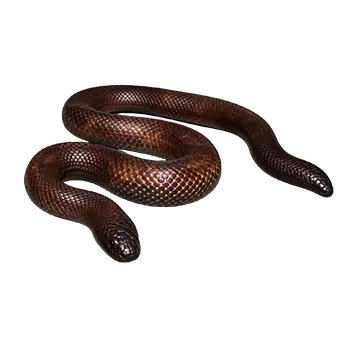
Physical changes during the juvenile stage are subtle but identifiable to attentive keepers. The body gradually thickens relative to its length, developing the characteristically cylindrical, muscular cross-section that defines the adult Calabar Python. The head remains small and blunt, nearly indistinguishable in width from the neck, which is a defining morphological trait of the species. Coloration may shift slightly as the juvenile matures, with the deep brown or near-black dorsal coloring of hatchlings lightening somewhat to reveal the species' characteristic pattern of irregular orange, rust, or reddish-brown blotches and spots against a dark brown to black ground color.

The tail, which serves as the species' primary defensive decoy, becomes increasingly well-defined during the juvenile phase. Its blunt, rounded tip and similar coloration to the head make it a remarkably effective mimic, and juveniles refine their use of this defense as they mature. The tail may also develop slightly brighter or more contrasting markings compared to the body, which enhances its effectiveness as a visual distraction. Keepers who observe their juveniles during the rare moments of surface activity may notice the animal raising its tail while keeping its true head buried, a behavior that becomes more deliberate and practiced with age.

Feeding Progression & Dietary Management

As Calabar Pythons transition from the neonatal stage into the juvenile phase, feeding management shifts from the challenge of establishing initial prey acceptance to the task of maintaining consistent nutrition over a long growth period. By the time a Calabar Python is reliably classified as a juvenile, it should be feeding voluntarily on appropriately sized prey without the scenting techniques or other encouragement that may have been necessary during the hatchling stage. Prey size should scale proportionally with the snake's girth, with the ideal prey item producing only a slight, barely perceptible lump after ingestion.

Juvenile Calabar Pythons transition from pinky mice to fuzzy mice and eventually to small adult mice as they grow. The progression should be gradual, with each size increase introduced only when the current prey size no longer produces any visible post-feeding swelling. Rushing to larger prey items is counterproductive, as the species' relatively narrow jaw gape and specialized feeding anatomy are adapted for consuming small mammals within tight underground passages. Unlike many other pythons that can accommodate impressively large meals relative to their body size, the Calabar Python is built for frequent consumption of modest-sized prey rather than infrequent large meals.

Feeding frequency during the juvenile phase should be once every seven to ten days, consistent with the schedule established during the hatchling period. Some keepers extend the interval to once every ten to fourteen days for older juveniles approaching sub-adult size, and this longer interval is appropriate as long as the animal continues to gain weight steadily. Overfeeding remains a greater risk than underfeeding with this species, as their sedentary, fossorial lifestyle means caloric expenditure is low and excess nutrients are readily stored as fat deposits. Obese Calabar Pythons develop visible fat rolls along the body and may experience reproductive and hepatic complications later in life.

Prey should always be offered pre-killed or frozen-thawed, never live. While the risk of injury from a live pinky or fuzzy mouse is minimal, establishing the practice of offering pre-killed prey from the beginning prevents the development of a preference for live prey that becomes problematic as the snake grows and prey items become capable of inflicting bites. Offer prey in the evening or at night, when the species is naturally most active, using long feeding tongs to present the item near the entrance of the snake's burrow. Many juveniles will seize prey from the tong tip with surprising quickness despite their generally placid demeanor.

Water management continues to be important throughout the juvenile stage. A clean, shallow water dish should be available at all times, and substrate moisture should be maintained at levels that allow the snake to absorb ambient humidity through its skin during its extended periods underground. Juvenile Calabar Pythons that begin refusing food during winter months may be experiencing a natural seasonal appetite reduction, which is common in this species even in captivity. A brief fasting period of two to four weeks during cooler months is not harmful for a well-conditioned juvenile, and feeding typically resumes spontaneously as conditions stabilize.

Enclosure Upgrades & Habitat Design

The transition from a hatchling holding container to a juvenile enclosure typically occurs between four and eight months of age, when the snake has outgrown its initial setup. A juvenile Calabar Python requires an enclosure measuring approximately 20 by 12 by 12 inches, though the vertical dimension is less critical than floor space and substrate depth for this exclusively terrestrial and fossorial species. Plastic tubs with secure, ventilated lids remain an excellent choice throughout the juvenile phase because they maintain humidity effectively, are easy to clean, and prevent the drafts that can be problematic with screen-topped glass terrariums in dry indoor environments.

Substrate depth should be increased proportionally as the snake grows, with four to six inches being appropriate for most juveniles. The substrate itself should continue to be a moisture-retaining, mold-resistant material such as coconut coir, cypress mulch, or a blend of the two. Some keepers add a bottom layer of hydrated sphagnum moss beneath the primary substrate to create a humidity gradient that is dampest at the lowest level and drier near the surface. This layered approach mimics the natural moisture profile of tropical forest soil and allows the snake to select its preferred microhabitat humidity by adjusting its burrowing depth.

The thermal gradient for juvenile Calabar Pythons should remain gentle, with the warm end maintained at 82 to 86 degrees Fahrenheit and the cool end at 74 to 78 degrees. As the enclosure size increases, achieving this gradient becomes easier because there is more physical distance between the heat source and the far end of the enclosure. A thermostatically controlled ceramic heat emitter or radiant heat panel mounted above one end of the enclosure is the safest and most reliable heat source. Under-tank heating pads, while popular for many snake species, pose a particular risk for burrowing species like the Calabar Python because an animal digging down to the enclosure floor can come into direct thermal contact with the heated glass or plastic, potentially causing ventral burns.

Furnishings for the juvenile enclosure should be minimal but purposeful. A sturdy, tip-resistant water dish, one or two flat hides placed on the substrate surface, and a piece of cork bark or driftwood provide sufficient environmental complexity without cluttering the burrowing space. The surface hides serve as transition points where the snake can rest partially concealed without being fully submerged in substrate, which facilitates visual health checks without requiring the keeper to excavate the animal each time. Some keepers also include a small area of dampened sphagnum moss in a shallow dish or hide as a dedicated humidity retreat, which is particularly beneficial during pre-shed periods when the snake's moisture requirements increase.

Behavioral Development & Activity Patterns

Juvenile Calabar Pythons exhibit a behavioral profile that is markedly different from the active, exploratory behavior seen in juvenile species like corn snakes or king snakes. The defining characteristic of this species' behavior at all life stages is extreme secretiveness. Juveniles spend the overwhelming majority of their time buried within the substrate, emerging only occasionally to drink, investigate the enclosure perimeter, or respond to the presence of prey. Keepers who expect to regularly observe their snake above the substrate surface will find the Calabar Python a frustrating choice, but those who appreciate the species for what it is will learn to read subtle signs of activity and well-being without requiring constant visual confirmation.

Nocturnal surface activity typically increases slightly during the juvenile phase compared to the hatchling period. Juveniles that have settled into their enclosure and feeding routine may begin emerging at night to explore, though these excursions are often brief and may occur only a few times per week. Observing the enclosure in the morning for tracks, displaced substrate, or a repositioned water dish provides indirect evidence of nocturnal activity. Some keepers install low-intensity red or infrared lighting to observe nighttime behavior without disturbing the animal, as Calabar Pythons are sensitive to bright light and will retreat immediately into the substrate if exposed to white light during their active period.

The species' signature defensive behavior, the head-tucking and tail-presenting posture, becomes more refined during the juvenile stage. Younger juveniles may respond to disturbance with relatively uncoordinated curling, but by mid-adolescence the defensive ball is tight, deliberate, and remarkably effective. The tail is raised and moved in a manner that convincingly simulates the exploratory movements of a head, while the actual head remains safely buried within the protective coils. This behavior is entirely passive and non-aggressive. Unlike many other snake species that escalate from defensive posture to striking if the initial deterrent fails, Calabar Pythons almost never bite defensively, even when handled roughly or persistently disturbed.

Seasonal behavioral shifts may become apparent during the juvenile phase, even in animals kept under consistent environmental conditions. Some juveniles exhibit reduced activity and appetite during late autumn and winter months, which likely reflects an endogenous circadian rhythm inherited from wild populations that experience subtle seasonal variation in West African forests. This natural cycle should be accommodated rather than counteracted. Attempting to maintain maximum feeding frequency year-round in a juvenile that shows seasonal appetite reduction can lead to refused meals accumulating in the enclosure and unnecessary keeper anxiety.

Common Health Concerns in Juveniles

Juvenile Calabar Pythons that are maintained under appropriate husbandry conditions are generally hardy and resistant to disease. The most frequently encountered health issue during this life stage remains respiratory infection, which is almost always attributable to one of three environmental factors: chronically low humidity, poor ventilation leading to stagnant air, or sustained temperatures below the species' optimal range. The fossorial lifestyle of the Calabar Python means that it spends extended periods in the warm, humid microenvironment beneath the substrate surface, and if the substrate itself is too dry or the ambient temperature too cool, the animal's respiratory system is continuously challenged. Early symptoms include subtle wheezing audible only when the snake is held close to the ear, minor bubbling at the nostrils, and slightly increased breathing effort. These early signs can be easily missed in a species that is rarely observed, making periodic health checks that involve gently removing the snake from its substrate all the more important.

External parasites, particularly snake mites (Ophionyssus natricis), represent a persistent risk for any captive snake collection, and juveniles are especially vulnerable because their smaller body size means that even a modest mite burden constitutes a significant proportion of total blood volume. Mites appear as tiny black or red-brown dots moving on the snake's skin, particularly around the eyes, heat pits, and cloaca. They may also be visible as small dark specks floating on the water dish surface after the snake soaks. Treatment involves thorough disinfection of the enclosure, replacement of all substrate, and application of a mite-specific treatment approved for use on reptiles. Over-the-counter permethrin-based sprays designed for reptile mite treatment are effective when used strictly according to label directions, but keepers should consult a veterinarian if the infestation is severe or if initial treatment does not resolve the problem within two treatment cycles.

Internal parasites are a concern primarily in wild-caught or farm-bred juveniles and in animals acquired from dealers or facilities with multiple species housed in proximity. Routine fecal examinations at six-month intervals are advisable throughout the juvenile period, particularly for newly acquired animals whose parasite status is unknown. Common internal parasites in Calabar Pythons include various nematode species and coccidia. Infected animals may show symptoms such as weight loss despite regular feeding, abnormal feces with visible mucus or undigested material, and general lethargy, though some parasitic infections remain subclinical until the parasite burden becomes heavy. Treatment is straightforward once a specific parasite is identified through fecal analysis, typically involving oral anthelmintics or antiprotozoal medications prescribed by a reptile veterinarian.

Shed-related issues continue to require monitoring throughout the juvenile phase, though they generally become less frequent as the keeper refines the enclosure's humidity management. Incomplete sheds, particularly retained eye caps and tail tip remnants, should be addressed promptly through gentle soaking and manual removal to prevent secondary infection or circulatory constriction. A healthy juvenile Calabar Python sheds approximately once every four to eight weeks, with the frequency gradually decreasing as the growth rate slows toward the end of the juvenile period. Each shed should be examined for completeness, and the record of shed dates and quality should be maintained in the animal's ongoing health log.

Handling Progression & Long-Term Socialization

The juvenile phase is the optimal window for establishing the handling tolerance that will characterize the snake's temperament for the remainder of its life. While Calabar Pythons are naturally among the least aggressive python species, an individual that is never handled during its formative juvenile years may become excessively head-shy or prone to musking and defecating during the infrequent interactions required for enclosure maintenance and health examinations. The goal of juvenile handling is not to produce a snake that enjoys being held, as this is unlikely for any fossorial species, but rather to create an animal that tolerates periodic handling without excessive stress.

Handling sessions during the juvenile phase should occur two to three times per week and last between five and ten minutes. Sessions should not coincide with the forty-eight-hour windows before and after feeding, as handling during these periods can provoke regurgitation or interfere with the feeding response. Begin each session by gently excavating the substrate around the snake if it is buried, then lift the animal with a slow, scooping motion that supports the full length of its body. Avoid grasping the snake from above, as this mimics the approach of an aerial predator and can trigger the defensive ball posture.

As juveniles grow and become accustomed to handling, most individuals progress through a predictable behavioral sequence during each session. Initial contact may produce a brief defensive curl, followed by a period of cautious stillness, and then a gradual relaxation in which the snake begins moving slowly through the keeper's hands. The transition from defensive posture to relaxed exploration typically shortens with experience, and well-socialized juveniles may skip the defensive phase entirely after several months of regular interaction. This progression is encouraging but should not lead keepers to assume that the snake is comfortable with extended handling. Even a calm, tolerant Calabar Python should not be handled for more than fifteen minutes at a time, as prolonged exposure to the drier, cooler conditions outside the enclosure constitutes a physiological stressor.

Juvenile Calabar Pythons are gentle enough for supervised interaction with older children and can serve as excellent educational animals. Their reluctance to bite, moderate size, and slow movements make them far less intimidating than many other python species, and their unusual defensive behavior provides a compelling teaching opportunity about evolutionary adaptation. However, all handling by children should be supervised by an experienced keeper, and children should be taught to support the snake's body fully and avoid sudden movements or loud noises that could startle the animal.

Always consult a qualified professional before making any health-related decisions. This content is provided for informational reference only and should not replace professional guidance specific to your animal.