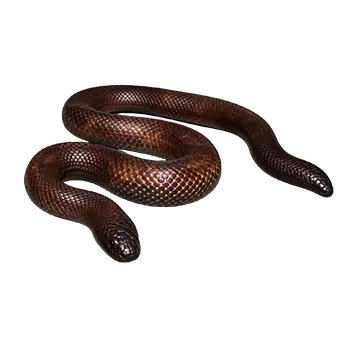

The Calabar Python (Calabaria reinhardtii) is oviparous, producing small clutches that typically number between one and five eggs. This remarkably low reproductive output compared to other python species means that every hatchling carries significant value, both to the keeper and to the genetic pool of captive populations. Females deposit their eggs in concealed, humid locations within the substrate and exhibit maternal brooding behavior, coiling tightly around the clutch to maintain temperature and humidity throughout the incubation period. In captive settings where artificial incubation is employed, eggs are typically maintained at 88 to 90 degrees Fahrenheit with high humidity for approximately sixty to seventy days before the first signs of pipping appear.
Pipping in Calabar Python eggs follows the typical python pattern in which the hatchling uses a small egg tooth on the upper jaw to slice through the leathery shell membrane. Because of the species' small size, the slit is often subtle and may initially appear as a tiny wrinkle or dimple in the shell surface. Keepers should inspect eggs carefully but avoid handling them more than necessary during this phase. The process from first visible slit to full emergence can take anywhere from twelve to thirty-six hours, and intervening prematurely risks tearing the yolk sac or injuring the hatchling before it has fully absorbed its remaining yolk reserves.
Newly emerged Calabar Python hatchlings are strikingly small, measuring approximately six to eight inches in length and weighing between eight and fifteen grams. Their coloration at birth is typically darker than that of adults, with rich brown to near-black dorsal scales and a lighter ventral surface. Unlike the defensive hatchlings of many larger python species, neonatal Calabar Pythons tend to be relatively calm and may simply curl into a tight ball when disturbed, tucking the head beneath body coils and presenting the blunt, rounded tail as a false head. This unique defensive posture is characteristic of the species at all life stages and is not a sign of illness or distress.
Once all viable eggs have hatched, neonates should be transferred individually to small, secure holding containers. The hatching container should be cleaned of shell fragments, residual fluids, and any non-viable eggs to prevent bacterial and fungal proliferation. Ambient temperature in the holding area should remain stable between 80 and 85 degrees Fahrenheit with humidity levels maintained at 70 to 80 percent. These conditions replicate the warm, humid microhabitats of the West African tropical forest floor where the species naturally occurs and provide hatchlings with a low-stress transition into independent life.