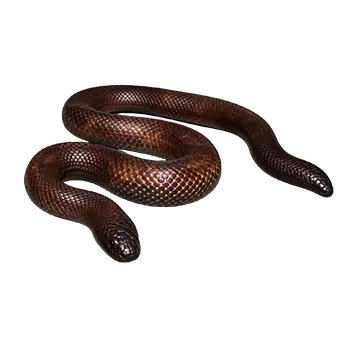

Calabar Pythons (Calabaria reinhardtii) reach sexual maturity relatively late compared to many other commonly kept python species, with most individuals becoming reproductively capable between three and five years of age. Females generally mature slightly later than males, often not producing their first viable clutch until they are at least four years old and have reached a body length of approximately twenty-four inches and a weight of at least 300 grams. Males may show breeding interest as early as three years of age when they reach approximately twenty inches in length, but successful copulation and sperm production are more reliably achieved by males that have reached full adult size.
Determining the sex of Calabar Pythons is essential for any breeding program, yet sexing this species presents unique challenges. The methods commonly used for other python species — visual assessment of tail length and base thickness, manual eversion of hemipenes in hatchlings, and probing — all apply, but the Calabar Python's small size, muscular tail, and extreme defensive tail-curling behavior can make these procedures more difficult than with larger, more cooperative species. Probing is the most reliable sexing method and should be performed by an experienced keeper or veterinarian to avoid injury to the animal. Males probe deeper, typically to a depth of six to eight subcaudal scales, while females probe to only two to four subcaudal scales.
Breeding readiness is assessed through a combination of physical condition and behavioral cues. A female should be in robust body condition with well-developed fat reserves, as the energy demands of egg production and maternal incubation are substantial for an animal of this size. Underweight or recently ill females should not be bred, as the physiological strain of reproduction can exacerbate existing health issues and reduce the likelihood of a successful outcome. Males in breeding condition may exhibit increased nocturnal restlessness, reduced appetite, and a heightened interest in exploring the enclosure perimeter — behaviors that can be subtle in a species that is naturally secretive.
Breeding Calabar Pythons in captivity remains less common and less well-documented than breeding many other python species, and successful reproduction carries particular significance for captive populations. The species' small clutch sizes and infrequent breeding cycles mean that captive-bred animals are produced in relatively small numbers, making each breeding event an important contribution to reducing the demand for wild-caught specimens. Keepers who undertake breeding projects should be committed to providing optimal care for all resulting offspring and should have plans in place for the responsible placement of hatchlings before breeding is initiated.