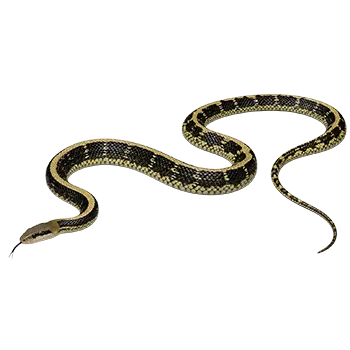

The juvenile phase of the Beauty Snake (Orthriophis taeniurus) spans roughly from four months of age to approximately two years, during which the animal undergoes dramatic physical transformation. A Beauty Snake entering this stage at roughly two feet in length will typically reach four to five feet by the end of its second year, with growth rates varying based on feeding frequency, ambient temperatures, and individual genetic potential. This period represents the most metabolically demanding stretch of the animal's life, and consistent, quality husbandry during the juvenile phase directly shapes the snake's adult size, body condition, and long-term health.
During the juvenile period, shedding frequency increases to keep pace with rapid tissue expansion. Juveniles commonly shed every four to six weeks under optimal conditions, compared to the less frequent cycles seen in fully grown adults. Each successful shed should produce a single, intact skin that reflects the snake's full body length, including the spectacle scales covering the eyes and the tail tip. Frequent incomplete sheds during this stage are almost always an indicator of inadequate humidity, dehydration, or an underlying health issue that should be addressed promptly rather than managed with repeated manual assistance.
Body proportions shift noticeably throughout the juvenile period. Young Beauty Snakes have proportionally larger heads relative to their body diameter compared to adults, and their bodies carry a leaner, more angular profile. As the snake grows, the body fills out and the proportional relationship between head and body normalizes. By the end of the juvenile phase, the snake's overall silhouette should appear well-muscled and smoothly contoured without prominent vertebral ridges, which would indicate underfeeding, or excessive softness and lateral fat deposits, which would suggest overfeeding.
Coloration often undergoes subtle but meaningful changes during the juvenile-to-sub-adult transition. Hatchling Beauty Snakes typically exhibit higher-contrast patterning with bolder dorsal markings against a lighter ground color. As the animal grows, the ground color may deepen and the pattern may become somewhat less sharply defined, though the overall aesthetic remains striking. The specific degree and nature of color change depend on the subspecies — Orthriophis taeniurus has several recognized subspecies and locality variants, each with its own characteristic color development trajectory. Keepers who maintain detailed photographic records across the juvenile period will appreciate the gradual but unmistakable evolution of their animal's appearance.