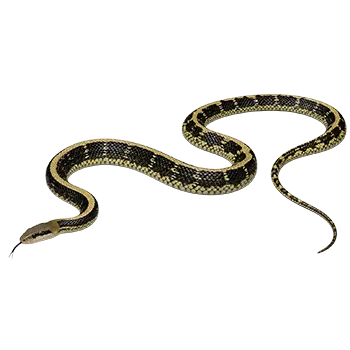

Adult Enclosure Design and Long-Term Housing

An adult Beauty Snake (Orthriophis taeniurus) requires a permanent enclosure that accommodates the species' considerable length, active temperament, and semi-arboreal lifestyle. For an animal in the five-to-seven-foot range, the minimum recommended enclosure dimensions are 48 inches long by 24 inches deep by 24 inches tall, though larger enclosures are always beneficial and strongly encouraged. Height is particularly important for this species — unlike many terrestrial colubrids, Beauty Snakes spend substantial time climbing and resting on elevated perches, and an enclosure that provides ample vertical space contributes meaningfully to the animal's physical fitness and behavioral well-being.

Enclosure construction should prioritize security, ventilation, and ease of maintenance. PVC and sealed wood enclosures with front-opening sliding or hinged glass doors are popular choices among experienced keepers because they retain heat and humidity more effectively than screen-topped aquariums, while the front-opening design allows access without reaching directly over the snake, which can trigger defensive responses. Ventilation panels or screened sections should be positioned to promote gentle airflow without creating drafts that could destabilize the thermal gradient. Locking mechanisms on all doors and access points are essential, as adult Beauty Snakes possess considerable strength and will methodically test weak points in their enclosures over time.

Internal furnishings for the adult enclosure should create a three-dimensional environment that stimulates natural behavior. Sturdy hardwood branches, thick dowels, or commercially available climbing fixtures mounted at various angles provide climbing opportunities and resting platforms at different heights. Cork bark flats and tubes can be secured vertically against the back or side walls to create additional climbing surfaces and visual barriers that increase the effective usable space. At least two ground-level hides — one positioned at the warm end and one at the cool end of the enclosure — allow the snake to thermoregulate without sacrificing its sense of security. A well-furnished enclosure encourages a full range of natural behaviors and reduces the stress-related issues associated with barren, understimulating environments.

Substrate selection for the permanent adult enclosure should balance humidity retention, ease of cleaning, and visual appeal. Cypress mulch remains the most widely recommended substrate for this species, as it maintains appropriate moisture levels, resists mold and bacterial growth, and provides a naturalistic appearance. A substrate depth of two to three inches allows for burrowing behavior and helps buffer temperature and humidity fluctuations. The entire substrate bed should be replaced every four to six weeks, with spot-cleaning performed as needed between full changes. The water dish should be a heavy, wide-based ceramic or stone vessel that the snake cannot easily overturn, positioned in the mid-zone of the enclosure away from direct heat.

Adult Feeding Regimen and Nutritional Management

Feeding an adult Beauty Snake is considerably less demanding than managing the frequent meals required during the juvenile growth phase. Once growth has stabilized — typically by two and a half to three years of age — the feeding interval can be extended to once every ten to fourteen days, with each meal consisting of an appropriately sized prey item. For most adult Beauty Snakes, this translates to a single adult mouse or a small weaned rat. The prey item should produce a modest but visible mid-body lump after ingestion; if no lump is apparent, the prey is too small, while a pronounced, sausage-like distension indicates the item was too large.

Obesity is a significant and preventable health risk in adult Beauty Snakes maintained in captivity. The combination of ready access to food, limited space for physical activity, and the keeper's natural desire to see the animal feed can easily lead to overfeeding if meal frequency and prey size are not carefully managed. An overweight Beauty Snake will show visible fat deposits along the lower flanks, a body profile that appears round or bloated rather than smoothly contoured, and reduced activity levels. Chronic obesity predisposes the animal to fatty liver disease (hepatic lipidosis), cardiovascular strain, and shortened lifespan. Weighing the animal monthly on a digital scale and maintaining a weight log allows keepers to detect gradual weight gain before it becomes a clinical problem.

Seasonal appetite fluctuations are a normal feature of adult Beauty Snake biology and should be anticipated rather than resisted. Many adult individuals, particularly males, will reduce or entirely cease feeding during the cooler months of the year, even in captivity where temperatures are held relatively constant. This natural fasting period, which can last several weeks to two months, corresponds to the species' wild breeding season and appears to be driven by photoperiod and subtle environmental cues rather than hunger or illness. Provided the snake is in good body condition at the start of the fast and shows no other signs of illness, this seasonal appetite reduction is harmless and feeding will resume spontaneously as conditions change.

Dietary variety, while not strictly necessary for survival, can contribute to overall nutritional completeness and behavioral enrichment in adult Beauty Snakes. Alternating between mice and small rats across successive feedings provides slightly different nutritional profiles, and occasional offerings of day-old chicks or quail diversify the diet further. All prey should be humanely dispatched and offered pre-killed or thawed from frozen. Live prey should never be left unsupervised with an adult snake, as even a small rodent can inflict painful and potentially disfiguring bites on a snake that is not in a feeding mood.

Thermal Management and Environmental Stability

Maintaining stable and appropriate environmental parameters is one of the most critical aspects of adult Beauty Snake husbandry. The thermal gradient for adult animals is consistent with that used for juveniles: a warm-end ambient temperature of 84 to 88 degrees Fahrenheit with a basking zone reaching 90 degrees, and a cool-end temperature of 74 to 78 degrees Fahrenheit. In a larger adult enclosure, achieving this gradient evenly may require the use of two or more thermostat-controlled heat sources positioned to distribute warmth across the appropriate zone without creating excessively hot or cold pockets.

Overhead heating remains the preferred method for Beauty Snakes throughout their lives. Ceramic heat emitters, deep heat projectors, and radiant heat panels all deliver ambient and surface warmth from above, which is biologically appropriate for a semi-arboreal species that basks on elevated perches as well as on the ground. Under-tank heating pads, while adequate for strictly terrestrial species, fail to warm the elevated areas where Beauty Snakes spend much of their resting time and can create uneven thermal environments when used as the sole heat source in tall enclosures. All heating devices must be connected to proportional or pulse-proportional thermostats to prevent temperature overshoots, which can cause thermal burns or dangerous overheating.

Humidity management in the adult enclosure requires ongoing attention. Ambient humidity should be maintained between 50 and 65 percent, with localized increases around the water dish and within humid hides creating microenvironments where the snake can seek higher moisture levels as needed. A humid hide — a covered container lined with damp sphagnum moss placed on the warm end of the enclosure — provides a reliable high-humidity retreat that is especially valuable during pre-shed periods. Monitoring humidity with a digital hygrometer positioned at mid-enclosure height provides accurate, real-time data that enables timely adjustments to misting frequency, ventilation, and substrate moisture content.

Lighting for adult Beauty Snakes should provide a consistent photoperiod that mimics natural day-length cycles. A twelve-hour light and twelve-hour dark cycle is appropriate for most of the year, with gradual adjustments to ten hours of light and fourteen hours of dark during the winter months if the keeper intends to cycle the animal for breeding or simply wishes to replicate seasonal patterns. While Beauty Snakes do not require ultraviolet-B lighting for vitamin D synthesis in the way that diurnal lizards and chelonians do, low-level UVB exposure has been shown to benefit the immune function and behavioral activity levels of various snake species and is increasingly recommended as a component of best-practice husbandry. If UVB is provided, it should be delivered through a tube or compact fluorescent fixture designed for reptile use, positioned so that the snake can bask within the effective range without being forced into constant exposure.

Behavioral Enrichment and Mental Stimulation

Adult Beauty Snakes are among the more cognitively active and behaviorally complex colubrid species commonly kept in captivity, and providing adequate mental stimulation is an important component of their overall welfare. In the wild, Orthriophis taeniurus occupies a varied habitat that includes forest edges, rocky outcrops, agricultural buildings, and cave systems. The environmental complexity and foraging challenges of these natural habitats contrast sharply with the relative monotony of a static captive enclosure, and bridging this gap through thoughtful enrichment practices contributes to a healthier, more behaviorally fulfilled animal.

Physical enrichment involves structuring the enclosure to encourage active exploration and movement. Rearranging climbing branches, adding or repositioning hides, and introducing new textured surfaces such as rough bark, smooth stone slabs, or artificial vine tangles at regular intervals gives the snake novel stimuli to investigate. This periodic restructuring mimics the variability of natural environments and prompts investigative behavior — prolonged tongue-flicking, deliberate exploration of new objects, and increased activity — that keeps the animal mentally engaged. Changes should be made thoughtfully and not so frequently that the snake never establishes a sense of security within its space; rotating enrichment elements every two to four weeks strikes a practical balance.

Feeding enrichment is another effective strategy. Rather than presenting prey on tongs in the same location every time, keepers can vary the presentation method and location within the enclosure. Placing a pre-killed prey item inside a hide, suspending it from a branch, or positioning it in a different area of the enclosure engages the snake's foraging instincts and encourages the kind of search-and-locate behavior that Orthriophis taeniurus employs in the wild. These variations add minimal effort to the keeper's routine but can make a meaningful difference in the animal's behavioral repertoire and feeding satisfaction.

Controlled out-of-enclosure exploration time provides another layer of enrichment for adult Beauty Snakes that are well-acclimated to handling. Allowing the snake to explore a secure, supervised room or outdoor space — weather and security permitting — exposes it to novel scents, textures, temperatures, and spatial challenges that no enclosure can fully replicate. These excursions should always be closely supervised, as Beauty Snakes are fast, strong, and highly motivated to explore crevices and vertical surfaces. The room or area must be free of hazards such as exposed wiring, small openings into wall cavities, other pets, and toxic plants. While not a daily necessity, periodic exploration sessions provide valuable stimulation and can strengthen the bond between keeper and animal.

Routine Health Maintenance and Veterinary Schedule

Adult Beauty Snakes that are maintained under appropriate husbandry conditions are generally robust and disease-resistant animals. Nevertheless, a proactive approach to health maintenance — including regular home monitoring and periodic veterinary examinations — is essential for identifying and addressing potential problems before they become serious. An annual wellness examination by a reptile-experienced veterinarian should include a thorough physical assessment, evaluation of body condition and hydration status, fecal parasite screening, and a review of the animal's husbandry conditions and feeding history. Biennial blood work, including a complete blood count and basic chemistry panel, can provide additional insight into organ function and systemic health.

At home, keepers should conduct a brief visual health assessment each time the enclosure is serviced. Key indicators to monitor include the condition of the eyes (clear and bright versus cloudy or sunken), the appearance of the skin (smooth and well-hydrated versus wrinkled, discolored, or exhibiting abnormal lesions), the quality of fecal output (well-formed with white urates versus runny, discolored, or foul-smelling), and the animal's overall activity level and feeding response. Any deviation from the animal's established baseline behavior or physical appearance should be noted, and persistent or worsening changes warrant veterinary consultation.

External parasites, particularly snake mites (Ophionyssus natricis), can appear at any life stage and are frequently introduced through new acquisitions, contaminated substrate, or exposure at reptile events. Regular inspection of the snake's body — paying close attention to the skin folds around the eyes, the gular region under the chin, and the ventral scales — helps catch infestations early. The water dish should also be checked regularly for drowned mites, which appear as tiny dark specks floating on the surface or settled at the bottom. Early detection and prompt treatment prevent the population explosion and health deterioration associated with established mite colonies.

Dental and oral health is an often-overlooked aspect of adult snake care. Infectious stomatitis — commonly known as mouth rot — is a bacterial infection of the oral tissues that can occur when minor mouth injuries from feeding or enclosure contact become colonized by opportunistic pathogens. Signs include reddened or swollen gums, cheesy or caseous discharge within the mouth, reluctance to feed, and excessive salivation. Regular visual inspection of the oral cavity during routine handling allows early detection and treatment, which typically involves gentle cleaning of the affected area with dilute antiseptic solution and a course of antibiotics prescribed by a veterinarian. Left untreated, stomatitis can progress to involve the jawbone and surrounding tissues, causing permanent structural damage.

Seasonal Cycling and Photoperiod Considerations

Even for keepers who do not intend to breed their Beauty Snakes, incorporating a mild seasonal cycle into the annual husbandry routine can benefit the animal's physiological and behavioral health. In the wild, Orthriophis taeniurus experiences significant seasonal variation in temperature, day length, and food availability across its range in China, Vietnam, Taiwan, and other parts of East and Southeast Asia. Replicating a moderate version of these seasonal shifts in captivity helps maintain the animal's natural hormonal rhythms and can prevent the metabolic stagnation that sometimes occurs in animals kept under completely static conditions year-round.

A practical approach to seasonal cycling for non-breeding adults involves gradually reducing daytime temperatures by four to six degrees Fahrenheit and shortening the photoperiod from twelve hours of light to ten hours of light over the course of two to three weeks in late autumn. This cooling and light-reduction period can be maintained for six to eight weeks during the winter months before gradually returning conditions to their normal levels over another two-to-three-week period in early spring. During the cooling period, feeding frequency is naturally reduced or suspended entirely as the snake's appetite diminishes in response to the lower temperatures. Water should remain available at all times throughout the cooling period.

The behavioral effects of seasonal cycling are often noticeable and rewarding. Animals that have undergone a winter cooling period frequently display increased activity, brighter coloration, and more robust feeding responses in the weeks following the return to normal temperatures. Males may exhibit courtship-related behaviors such as restless roaming, chin-rubbing, and heightened interest in exploring the boundaries of their enclosure, even if no female is present. These behaviors are harmless expressions of the animal's natural reproductive drive and will subside within a few weeks as hormone levels stabilize.

Keepers who choose not to implement seasonal cycling should still be aware that their Beauty Snakes may spontaneously exhibit seasonal behavioral changes despite constant environmental conditions. Reduced appetite during the winter months, changes in activity level tied to natural photoperiod shifts visible through windows, and subtle behavioral shifts are all common even in animals housed without deliberate cycling. These natural fluctuations should not cause alarm as long as the animal maintains healthy body condition and shows no other signs of illness. Attempting to override these natural rhythms by force-feeding or dramatically altering environmental conditions is counterproductive and can cause unnecessary stress.

Always consult a qualified professional before making any health-related decisions. This content is provided for informational reference only and should not replace professional guidance specific to your animal.