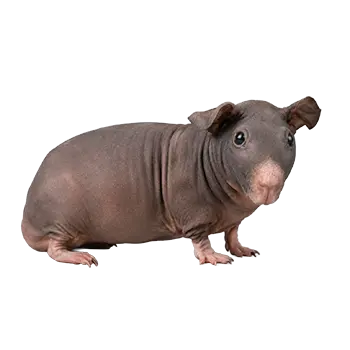

Growth & Physical Development

The juvenile stage for Skinny guinea pigs spans roughly from four weeks of age through about five to six months, a period of remarkable growth and transformation. During this window, your Skinny will transition from a small, delicate pup into a nearly full-sized young adult. Weight gain should be steady and consistent, with most Skinnies reaching close to their adult weight by around four to five months of age. Regular weigh-ins, ideally weekly at this stage, help you track progress and catch any growth stalls early.

Physically, your Skinny's body will fill out considerably during the juvenile period. The loose, slightly wrinkled skin common in young pups becomes smoother and more taut as the guinea pig gains muscle and fat. The sparse fuzz on the nose, feet, and legs becomes more defined, and the overall skin texture and coloring settle into their adult pattern. You may notice that your Skinny's skin pigmentation shifts subtly during growth, which is entirely normal and not a cause for concern.

Bone and skeletal development are actively occurring throughout the juvenile phase, which makes proper nutrition and a safe enclosure environment especially important. Avoid housing young Skinnies on wire-bottom cages or surfaces that place uneven stress on developing joints and footpads. Solid-bottom enclosures with soft fleece bedding are ideal for protecting their sensitive, exposed skin and supporting healthy skeletal development.

Sexual maturity arrives earlier than many owners expect. Male Skinny guinea pigs can become fertile as young as three to four weeks, while females may reach sexual maturity between four and six weeks. By the time you are well into the juvenile stage, it is essential that males and females have already been separated unless intentional, well-planned breeding is the goal. Unplanned pregnancies in young guinea pigs carry significant health risks, particularly for females that have not yet finished growing.

Nutrition & Diet Transition

By the time your Skinny guinea pig enters the juvenile stage, it should be fully weaned and eating a complete diet of hay, pellets, and fresh vegetables. Timothy hay should form the foundation of the diet and be available in unlimited quantities at all times. Hay provides the essential fiber that keeps the guinea pig's constantly growing teeth worn down and its digestive system functioning properly. For juveniles under six months, you may also offer alfalfa hay as a supplement, as its higher calcium and protein content supports growth during this demanding period.

Pellets formulated specifically for guinea pigs should be offered daily in measured amounts. Look for a plain, timothy-based pellet that is fortified with vitamin C and free of added seeds, dried fruit, or colorful fillers. Juvenile Skinnies can be given slightly more pellets than adults, roughly an eighth of a cup per day, to support their growing bodies. As they approach six months of age, begin tapering down to adult pellet portions and transitioning away from alfalfa hay to prevent excess calcium intake.

Fresh vegetables are a critical component of the juvenile Skinny's diet and serve as the primary source of vitamin C. Guinea pigs cannot manufacture their own vitamin C and depend entirely on dietary intake to avoid deficiency, which can lead to scurvy. Offer a daily rotation of vitamin C-rich vegetables such as bell peppers, which are among the highest sources available, along with leafy greens like romaine lettuce, cilantro, and parsley. Introduce new vegetables one at a time and monitor for any digestive upset.

Skinny guinea pigs have a slightly higher metabolic rate than their furred counterparts because their bodies must work harder to maintain core temperature without an insulating coat. This means your juvenile Skinny may eat somewhat more than a furred guinea pig of the same age and size. Ensure that food and water are always readily accessible, and monitor body condition regularly. A healthy juvenile Skinny should feel solid and well-covered without being overweight. Ribs should not be prominently visible but should be palpable with gentle pressure.

Behavioral Changes

The juvenile and adolescent stage brings a significant shift in your Skinny guinea pig's personality and behavior. This is the period when your cavy's individual temperament truly begins to emerge. Some Skinnies become bold and outgoing, eagerly approaching the front of their enclosure when they hear your voice or the rustle of a vegetable bag. Others may be more cautious and reserved, requiring patience and gentle encouragement to build confidence.

Dominance behaviors often appear during adolescence, particularly in males. If you house multiple guinea pigs together, you may observe mounting, rumblestrutting, teeth chattering, and chasing as the social hierarchy is negotiated. These behaviors are normal and usually resolve on their own once a pecking order is established. However, if interactions escalate to biting that draws blood or causes visible injuries, the guinea pigs may need to be separated and reintroduced more gradually.

Vocalizations become more frequent and varied during the juvenile period. Your Skinny will develop its full repertoire of sounds, including wheeks of excitement when food is anticipated, purring when content, and low rumbles during social interactions. Learning to interpret these sounds is one of the joys of guinea pig ownership and helps you respond to your pet's needs and emotional state. A Skinny that suddenly becomes unusually quiet after being vocal may be feeling unwell and warrants closer observation.

Chewing and exploration increase dramatically during this stage. Juvenile Skinnies are curious and will investigate every corner of their enclosure, gnaw on cage accessories, and test the boundaries of their environment. Provide safe chewing materials such as untreated apple wood sticks and hay-based toys to satisfy this natural urge and help keep their teeth in good condition. Ensure that all cage accessories are free of sharp edges that could injure their unprotected skin.

Training & Enrichment

Guinea pigs are far more trainable than many people realize, and the juvenile stage is the optimal time to establish routines and build trust through positive reinforcement. Skinny guinea pigs, with their naturally social and food-motivated personalities, respond particularly well to consistent, reward-based training. Start with simple goals such as teaching your Skinny to come when called by associating your voice or a specific sound with a small treat reward.

Lap time is one of the most effective training and bonding activities during the juvenile period. Set aside at least fifteen to twenty minutes daily for calm, one-on-one interaction outside the enclosure. Place a fleece blanket on your lap, offer a small piece of vegetable, and allow your Skinny to settle in and become comfortable with being held and touched. Over time, this routine builds a deep bond of trust that makes handling, grooming, and veterinary visits significantly easier throughout your guinea pig's life.

Environmental enrichment is essential for a juvenile Skinny's mental stimulation and physical development. Provide a variety of hiding spots such as fleece tunnels, wooden houses, and paper bags. Rearrange the enclosure layout periodically to create novelty and encourage exploration. Foraging activities, where small pieces of vegetables are tucked into hay piles or hidden inside paper towel rolls, engage your Skinny's natural instinct to search for food and provide both physical and mental exercise.

Floor time in a guinea pig-safe area outside the enclosure gives your juvenile Skinny the opportunity to run, explore, and exercise in a larger space. Set up a pen on a smooth floor covered with fleece blankets and include tunnels, ramps, and obstacles for your Skinny to navigate. Supervise all floor time sessions closely, as juvenile guinea pigs are quick and curious, and their hairless skin is vulnerable to scratches from rough surfaces or encounters with other household pets.

Exercise & Activity

Adequate space and daily activity are crucial for the healthy development of a juvenile Skinny guinea pig. At minimum, the enclosure should provide at least seven and a half square feet of floor space for a single guinea pig, with additional space for each additional cage mate. Larger enclosures allow for more natural movement patterns, reduce stress-related behaviors, and give your Skinny room to run, popcorn, and explore without feeling confined.

Daily exercise outside the enclosure supplements the activity your Skinny gets within its cage. A supervised floor time session of at least thirty minutes allows your juvenile guinea pig to stretch its legs, run at full speed, and engage muscles that are difficult to exercise in even a generously sized cage. The exercise area should be warm, draft-free, and covered with soft, clean material to protect your Skinny's exposed skin from abrasion and cold.

Social exercise is equally important. Guinea pigs are herd animals that thrive when they have at least one compatible companion. Watching a pair or small group of juvenile Skinnies play together reveals the full range of their social and physical capabilities. They chase each other, play-wrestle, popcorn in tandem, and engage in complex social interactions that provide both physical exercise and mental stimulation that no human interaction can fully replicate.

Monitor your juvenile Skinny's activity levels as a barometer of overall health. A healthy adolescent guinea pig is active, curious, and engaged with its environment. Sudden decreases in activity, reluctance to move, or limping can indicate pain, illness, or injury. Because Skinnies lack fur that might cushion minor bumps and scrapes, skin abrasions from overly rough play surfaces are a common concern that should be addressed by switching to softer, smoother enclosure materials.

Spay & Neuter Considerations

The decision to spay or neuter a Skinny guinea pig involves careful consideration of the individual animal's health, living situation, and the owner's long-term plans. Neutering male guinea pigs is a relatively straightforward procedure that is most commonly performed to allow males and females to live together without the risk of pregnancy. It is generally considered a lower-risk surgery than spaying and is performed by experienced exotic animal veterinarians on a routine basis.

Spaying female guinea pigs is a more invasive abdominal surgery and carries a higher level of anesthetic and surgical risk. However, spaying offers significant health benefits for females, including the elimination of the risk of ovarian cysts, which are remarkably common in guinea pigs and can cause pain, hormonal imbalances, and hair loss in furred breeds. For Skinny guinea pigs, the hormonal symptoms of ovarian cysts may manifest differently but are no less problematic. Discuss the risks and benefits of spaying with your veterinarian based on your individual guinea pig's health profile.

Timing matters when considering these procedures. Most veterinarians prefer to perform neutering on male guinea pigs between four and six months of age, when the animal is large enough for safe anesthesia but young enough to recover quickly. Spaying is typically performed around the same age range. It is critical to use a veterinarian who has specific experience with guinea pig surgery, as their small size and unique physiology require specialized knowledge that not all general practice veterinarians possess.

If surgery is not pursued, responsible housing management is the alternative. Males and females must be housed separately at all times unless the male has been neutered and has completed the post-surgical waiting period during which residual fertility can persist. Same-sex pairs or groups are the standard recommendation for owners who do not wish to pursue surgical options. Two females or two males that have been properly introduced and bonded typically coexist peacefully and provide each other with essential social companionship.

Socialization & Bonding

The juvenile period is a golden window for deepening your Skinny guinea pig's social bonds with both humans and other guinea pigs. The habits and relationships formed during this stage tend to persist throughout adulthood, making it well worth the time investment to prioritize socialization. A Skinny that is regularly and positively handled during its adolescent months typically grows into a trusting, relaxed adult that genuinely enjoys human company.

When introducing a juvenile Skinny to a new guinea pig companion, follow a structured bonding process. Begin with side-by-side enclosures that allow the guinea pigs to see, smell, and hear each other without direct physical contact. After several days of positive interaction through the barrier, arrange a supervised meeting in a neutral space that neither guinea pig has claimed as territory. Provide multiple hiding spots and food sources to reduce competition and tension during the introduction.

Human socialization should expand beyond simple lap time as your Skinny matures. Introduce gentle grooming routines, including skin inspection and nail trimming, so that your guinea pig becomes accustomed to these necessary maintenance activities. Practice picking up and setting down your Skinny from various angles and positions to build its confidence with handling. Offer treats during and after these sessions so that grooming and handling are associated with positive experiences.

Be mindful that Skinny guinea pigs may be more sensitive to touch than their furred relatives due to the lack of a protective hair layer between your hand and their skin. Approach with warm hands, use gentle pressure, and avoid rough or grabbing motions. Many Skinnies develop a strong preference for specific types of touch and will lean into gentle scratching behind the ears or along the back while pulling away from contact they find uncomfortable. Paying attention to these preferences and respecting them strengthens the trust between you and your guinea pig.

Always consult a qualified professional before making any health-related decisions. This content is provided for informational reference only and should not replace professional guidance specific to your animal.