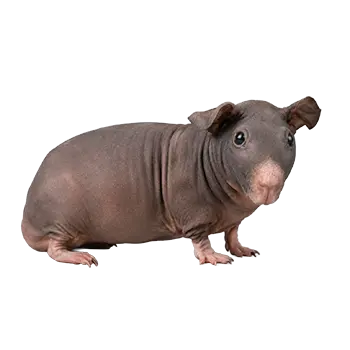

Breeding Readiness

Breeding Skinny guinea pigs is a decision that carries significant responsibility and should only be undertaken by owners who have thoroughly researched the breed, have secure placement plans for all potential offspring, and have access to an experienced exotic animal veterinarian. The Skinny guinea pig's hairless trait is the result of a recessive gene, and understanding the basic genetics behind this trait is essential before any breeding is considered. Pairing two Skinny guinea pigs will produce all hairless offspring, while crossing a Skinny with a standard furred guinea pig produces furred carriers of the hairless gene.

Female Skinny guinea pigs should not be bred for the first time after seven months of age. This is a critical and non-negotiable guideline that applies to all guinea pig breeds. The pubic symphysis, a cartilaginous joint in the pelvis, fuses permanently after approximately seven to eight months of age. A female whose symphysis has fused cannot deliver pups naturally and will require a cesarean section, which is a high-risk procedure in guinea pigs with a significant mortality rate. Ideally, a first breeding occurs between five and seven months of age.

Males reach sexual maturity as early as three to four weeks of age and can breed reliably from around three months onward. Both the male and female selected for breeding should be in excellent overall health, at a healthy weight, free of skin conditions, dental problems, and respiratory issues, and should have no known genetic health problems. A pre-breeding veterinary examination for both animals is strongly recommended to identify any conditions that could complicate pregnancy or be passed to offspring.

Beyond physical readiness, consider the temperament of both prospective parents. Guinea pigs with calm, friendly dispositions tend to produce offspring with similar qualities, and well-socialized parents are easier to manage during the breeding, pregnancy, and birthing process. Aggressive, fearful, or chronically stressed guinea pigs should not be bred, as these traits can be passed along behaviorally and may indicate underlying health or welfare concerns.

The Estrous Cycle

Female guinea pigs experience an estrous cycle that repeats approximately every fifteen to seventeen days year-round, with no seasonal breeding restrictions. Each cycle includes a fertile window of roughly twelve to twenty-four hours during which the female is receptive to mating. Understanding the timing and signs of this cycle is essential for planned breeding and equally important for preventing unplanned pregnancies in mixed-sex housing situations.

The signs of estrus in a female guinea pig can be subtle to the untrained eye. A female in heat may become more active and vocal, arch her back when touched along the spine, and display a distinctive swaying walk known as lordosis positioning. She may mount other guinea pigs regardless of their sex, which is a normal hormonal behavior and not a sign of aggression. Some females become temporarily more assertive or restless during estrus, and experienced breeders learn to read these behavioral cues reliably over time.

When introducing a male to a female for breeding, supervision during the initial pairing is important to ensure compatibility and to observe for signs of aggression. Most guinea pig pairings proceed without incident, but some females will reject a male with teeth chattering, lunging, or biting, particularly if they are not in estrus at the time of introduction. If the female is receptive, mating typically occurs quickly and may be repeated multiple times during the fertile window.

After a successful mating, the female can be separated from the male or left with him, depending on your breeding plan. However, it is important to know that female guinea pigs experience a postpartum estrus within hours of giving birth and can become pregnant again almost immediately. If back-to-back pregnancies are not desired, the male must be removed before the birth or well in advance. Continuous breeding without adequate recovery time between litters places serious strain on the female's health and is not recommended.

Pregnancy & Gestation

The gestation period for Skinny guinea pigs ranges from approximately fifty-nine to seventy-two days, with an average of around sixty-five days. This is notably longer than many other small rodents and reflects the advanced developmental state in which guinea pig pups are born. During this extended pregnancy, the female's nutritional, environmental, and emotional needs change significantly, and attentive management during gestation directly impacts the health of both the mother and her pups.

Nutritional demands increase substantially during pregnancy. The expectant mother should receive increased quantities of vitamin C-rich vegetables, as her requirements for this nutrient rise during gestation. Alfalfa hay can be reintroduced alongside timothy hay to provide the additional calcium and protein that support fetal bone development and the mother's increased metabolic demands. Pellet portions can be modestly increased, and fresh water should be available at all times. A pregnant Skinny guinea pig will gradually eat more as her pregnancy progresses, and food restriction during this period is harmful.

As the pregnancy advances, the female's body changes become visible. Her abdomen expands noticeably, and by the final two to three weeks you may be able to feel individual pups moving when you gently place your hand on her side. Handle the pregnant female with extra care during this period, supporting her full body weight when picking her up and avoiding any pressure on the abdomen. Reduce handling to essential health checks during the final week of gestation to minimize stress.

The enclosure should be prepared for birth well before the due date. Remove ramps, upper levels, and any obstacles that could cause a fall or injury. Ensure the bedding is clean, soft, and warm, and position the enclosure in a quiet area of the home away from high traffic, loud noises, and other pets. A pregnant Skinny guinea pig is even more sensitive to temperature fluctuations than usual, and the enclosure temperature should be maintained consistently between 72 and 78 degrees Fahrenheit throughout the pregnancy.

Birth & Delivery

Guinea pig births typically occur quickly and with minimal complications when the female is healthy and within the safe age range for first-time breeding. Labor often happens in the early morning or late evening hours and may proceed so swiftly that you miss it entirely. A typical litter consists of one to four pups, though litters of five or six are possible. The entire delivery process usually takes between fifteen and forty-five minutes, with individual pups arriving every few minutes.

The mother handles most aspects of the birth independently. She will deliver each pup, remove the amniotic sac, sever the umbilical cord, and clean the newborn. Skinny guinea pig pups are born fully developed with open eyes, functional ears, and the ability to walk within minutes. Their characteristic hairless skin is immediately visible, and they are remarkably active from the moment of birth. Resist the urge to intervene unless a clear emergency arises, as interference can stress the mother and disrupt her natural birthing and bonding behaviors.

Signs that veterinary intervention may be needed include active straining for more than twenty minutes without producing a pup, visible distress such as loud vocalizing or lethargy during labor, bleeding that goes beyond the normal small amount associated with delivery, or a pup that appears to be stuck in the birth canal. These situations constitute veterinary emergencies and require immediate professional attention. Having your exotic veterinarian's emergency contact information posted near the enclosure during the expected delivery window is a sensible precaution.

After all pups have been delivered, the mother will typically rest briefly and then begin nursing. Count the pups and confirm that the number of placentas passed matches the number of pups born, as a retained placenta can cause serious infection. Offer the mother fresh water and food, including her favorite vegetables, as she will be hungry and thirsty after the effort of delivery. Keep the environment calm and warm, and limit visitors and handling for the first several hours to allow the new family to stabilize.

Postpartum Care

The postpartum period is a critical time for both the Skinny guinea pig mother and her new litter. In the hours and days following delivery, the mother's primary focus is nursing and caring for her pups, and your role is to support her with optimal nutrition, a clean environment, and minimal disruption. Increase the mother's food supply substantially during the nursing period, as producing milk demands significant caloric energy. Continue offering alfalfa hay, increased pellets, and generous portions of vitamin C-rich vegetables.

Monitor the mother's physical recovery carefully during the first week after birth. She should return to normal eating and activity levels within a day or two of delivery. Check for any signs of complications such as continued bleeding beyond the first day, foul-smelling discharge, swelling around the vulva, or refusal to eat. Mastitis, an infection of the mammary glands, can occur in nursing guinea pigs and presents as hot, swollen, or painful mammary tissue. Any of these symptoms require prompt veterinary attention.

Remember that female guinea pigs enter estrus again within hours of giving birth, making immediate re-pregnancy possible if a male is present. If the male has not been removed from the enclosure prior to delivery, he must be separated as soon as possible after birth. While the presence of a calm, bonded male does not typically pose a danger to the pups, the risk of an immediate second pregnancy makes separation essential for the mother's long-term health and recovery.

As the pups grow during the first few weeks of life, the mother's milk production will gradually decrease as the pups transition to solid food. By three to four weeks, the weaning process should be largely complete. Male pups must be separated from the mother and any female siblings by three to four weeks of age at the latest to prevent inbreeding. The mother should be given adequate time to recover her body condition before any consideration of future breeding, and most responsible breeders allow a minimum of several months between litters.

Responsible Breeding Ethics

Responsible breeding of Skinny guinea pigs extends far beyond the mechanics of mating and delivery. It begins with an honest assessment of your motivations, resources, and ability to provide for every potential outcome, including the possibility that not all pups will survive, that the mother may require emergency veterinary intervention, or that offspring may have health issues requiring ongoing care. Breeding should never be motivated by curiosity, the desire to show children the miracle of birth, or the assumption that pups will be easy to sell or rehome.

The Skinny guinea pig community, while growing, is relatively small, and the demand for responsibly bred Skinnies varies by region. Before breeding, identify homes for all potential offspring. This means having committed adopters who understand the unique care requirements of hairless guinea pigs, including their temperature sensitivity, higher caloric needs, and specialized skin care. Producing pups without confirmed placement plans contributes to the population of guinea pigs in shelters and rescues, which is already a significant concern.

Genetic responsibility is a cornerstone of ethical breeding. Maintain detailed health records for all breeding animals, track the health outcomes of previous litters if applicable, and avoid breeding guinea pigs with known heritable health problems. The Skinny gene is recessive, which means that all Skinny-to-Skinny pairings produce hairless offspring, while Skinny-to-carrier pairings produce a mix of hairless and furred carrier pups. Understanding these genetics helps breeders make informed decisions that prioritize the health and welfare of the offspring above aesthetic preferences.

Finally, responsible breeders commit to being a lifelong resource for the families that adopt their pups. This means being available to answer questions, provide guidance, and, if circumstances change for the adopter, accepting pups back rather than allowing them to end up in uncertain situations. Breeding is a commitment that extends well beyond the moment of birth and encompasses the entire lifespan of every animal produced. If the scope of this commitment feels overwhelming, consider supporting Skinny guinea pigs by adopting from rescues, fostering, or volunteering with organizations that advocate for guinea pig welfare.

Always consult a qualified professional before making any health-related decisions. This content is provided for informational reference only and should not replace professional guidance specific to your animal.