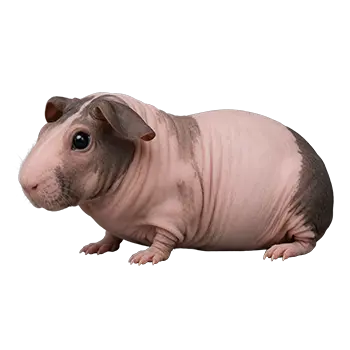

The juvenile stage for Baldwin guinea pigs spans roughly from three weeks of age through five or six months, a period of dramatic physical transformation. The most visually striking change is the continued loss of their birth coat. By around two months of age, most Baldwins have lost nearly all of their fur, retaining only small patches on their feet and possibly their nose. The skin that emerges is soft, warm, and may display a range of pigmentation from pale pink to dark brown or mottled patterns depending on the individual's genetics.
Weight gain during this period is rapid and should be monitored weekly. A healthy juvenile Baldwin will progress from roughly 150 to 250 grams at weaning toward 500 to 800 grams by the five-month mark. Males tend to grow faster and larger than females. Consistent growth along a predictable curve is more important than hitting an exact number at any particular age. Sudden plateaus or weight loss should prompt a review of diet and a veterinary consultation.
Skeletal and muscular development are at their peak during the juvenile period. The guinea pig's body is lengthening, its limbs are strengthening, and its overall proportions are shifting from the compact, rounded shape of a baby to the elongated build of an adult. Adequate calcium and phosphorus intake through quality hay and appropriate pellets supports healthy bone development. Unlike some rodent species, guinea pigs do not require a running wheel, and in fact, wheels can cause spinal injuries due to their body structure.
As the Baldwin's skin becomes fully exposed during this stage, caregivers will notice the skin developing its characteristic texture. Some Baldwins develop slight wrinkling, especially around the head and shoulders, while others maintain smoother skin. Both presentations are normal. The skin may also become oilier as the guinea pig matures, which is a natural part of the breed's biology and will require regular attention in the form of gentle bathing and skin care routines.