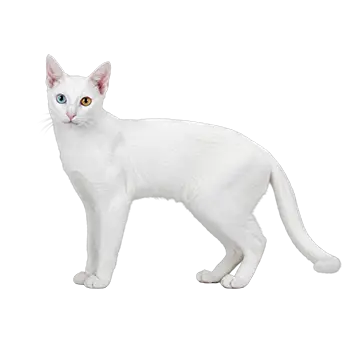

Growth & Physical Development

The juvenile period for a Khao Manee typically spans from around three months to approximately twelve months of age, though some individuals continue filling out until they are closer to two years old. During this phase, the kitten undergoes dramatic physical changes as it transitions from a round, compact baby into a sleek, muscular young cat. Growth is rapid during the first six months, with most Khao Manee kittens doubling or tripling their weight from the three-month mark.

The breed's distinctive features become increasingly defined during adolescence. The pure white coat becomes denser and develops its characteristic close-lying, smooth texture. Eye color, which is one of the Khao Manee's most celebrated traits, may continue shifting during this period. Kittens born with blue eyes may develop gold, green, or the prized odd-eyed combination, with final eye color sometimes not fully stabilizing until well past six months.

Regular weigh-ins at home, at least once per week, help you track growth trends and catch potential problems early. A healthy Khao Manee juvenile should show steady, consistent weight gain without dramatic fluctuations. The body should feel firm and well-muscled, with ribs that can be felt under a thin layer of flesh but are not visually prominent. If growth appears to stall or the kitten seems excessively thin despite a good appetite, consult your veterinarian to rule out parasitic infections or metabolic issues.

Dental development is another significant aspect of this stage. The deciduous baby teeth begin falling out around three to four months of age, replaced by permanent adult teeth over the following months. You may find tiny teeth on the floor or in bedding, or notice occasional reluctance to eat hard food during active teething periods. This transition is generally complete by six to seven months.

Nutrition & Diet Transition

Nutrition during the juvenile phase directly shapes the Khao Manee's adult health, bone density, muscle development, and immune function. Kittens at this stage require a diet specifically formulated for growth, which provides higher levels of protein, fat, and essential nutrients compared to adult maintenance formulas. Look for a high-quality kitten food with a named animal protein as the primary ingredient and appropriate levels of taurine, an amino acid essential for feline cardiac and visual health.

Feeding frequency should gradually shift from four meals per day for kittens under four months to three meals between four and six months, and eventually to two meals per day by eight to twelve months. Free-feeding, or leaving food available at all times, can work for some kittens but may encourage overeating in others. Monitor your Khao Manee's body condition carefully and adjust portions accordingly.

The transition from kitten food to adult food should not happen too early. Most veterinary nutritionists recommend keeping cats on kitten-formulated food until they reach approximately twelve months of age, as premature switching can deprive a growing cat of the caloric density and nutrient ratios it needs. When you do begin the transition, mix increasing proportions of adult food with the kitten formula over a period of seven to ten days to minimize digestive upset.

Fresh, clean water should be available at all times in multiple locations throughout the home. Many Khao Manee cats are drawn to running water, so a circulating water fountain can encourage adequate hydration. Avoid offering milk or dairy products as treats, since most cats become lactose intolerant after weaning and dairy can cause gastrointestinal discomfort.

Behavioral Changes

Adolescence brings a surge of energy, curiosity, and boundary-testing behavior in Khao Manee kittens. This breed is naturally active, intelligent, and highly social, and these traits intensify during the juvenile months. Expect bursts of frenetic activity often referred to as the zoomies, accompanied by acrobatic leaping, climbing, and enthusiastic exploration of every available surface in the home.

Khao Manee cats are notably vocal, and adolescence is often when their distinctive voice fully emerges. They may develop a wide repertoire of chirps, trills, meows, and conversational sounds directed at their human companions. This vocalization is a hallmark of the breed's social nature and should be understood as communication rather than a behavioral problem. Responding to your cat's vocalizations reinforces the social bond and encourages continued interaction.

Some juvenile Khao Manee cats may test boundaries by scratching furniture, counter-surfing, or engaging in attention-seeking behaviors. These are normal expressions of adolescent energy and intelligence rather than signs of a poorly behaved cat. Redirect unwanted behaviors by providing appropriate alternatives such as tall scratching posts, puzzle feeders, and interactive toys rather than using punishment, which is counterproductive and damages trust.

Sexual maturity typically arrives between five and nine months of age, bringing additional behavioral changes. Intact males may begin spraying, roaming, and displaying increased aggression, while intact females will enter their first estrus cycle, marked by loud calling, restlessness, and postural changes. These behaviors are a natural signal that it is time to discuss reproductive management with your veterinarian.

Training Priorities

The Khao Manee's intelligence and people-oriented nature make the juvenile period an ideal time for establishing training foundations. Contrary to the common misconception that cats cannot be trained, this breed is exceptionally responsive to positive reinforcement techniques. Short, consistent training sessions of five to ten minutes using treats or play as rewards can teach a Khao Manee to respond to its name, come when called, sit, and even perform simple tricks.

Litter box habits are usually well established by the juvenile period, but ongoing reinforcement is important. Ensure the litter box is clean, easily accessible, and located in a quiet area away from food and water. If your household has multiple cats, provide at least one litter box per cat plus one additional box. Any sudden changes in litter box behavior during adolescence should be investigated, as they can indicate stress, territorial conflict, or underlying medical issues.

Scratching post training is essential to protect household furnishings. Place sturdy, tall scratching posts near areas where the cat tends to scratch, and reward use with treats and praise. Khao Manee cats generally prefer vertical scratching surfaces that allow them to stretch to their full height. Sisal rope and corrugated cardboard are popular textures that appeal to most cats.

Carrier and travel conditioning is another valuable investment during this period. By gradually introducing the carrier as a comfortable resting space with treats and soft bedding, you can significantly reduce the stress associated with veterinary visits and travel. Start by leaving the carrier open in a common area and rewarding voluntary entry, gradually progressing to brief car rides as the cat becomes comfortable.

Exercise & Activity

Khao Manee juveniles are high-energy cats that require substantial daily play and physical activity to maintain healthy weight, muscle tone, and mental well-being. Plan for at least two to three dedicated interactive play sessions per day, each lasting fifteen to twenty minutes. Wand toys, laser pointers used responsibly with a tangible treat at the end to prevent frustration, and feather teasers are excellent choices that tap into the breed's strong prey drive.

Vertical space is particularly important for this athletic breed. Cat trees, wall-mounted shelves, and window perches give Khao Manee cats the climbing opportunities they crave and help them exercise in three dimensions. A well-designed vertical environment also provides valuable territory for multi-cat households, reducing tension by allowing cats to establish elevated resting spots.

Puzzle feeders and food-dispensing toys serve double duty during the juvenile stage, providing both mental stimulation and controlled physical activity. Placing a portion of the daily food ration inside a puzzle feeder encourages problem-solving and slows eating, which can help prevent obesity in cats that tend to eat too quickly. Rotate toys and puzzles regularly to maintain novelty and prevent boredom.

While exercise is critical, it is equally important to ensure your Khao Manee has access to quiet resting spaces where it can retreat and recharge. Adolescent cats may appear to have boundless energy, but they still require significant amounts of sleep, typically twelve to sixteen hours per day. Respect your cat's need for downtime, and avoid forcing interaction when it seeks solitude.

Spay/Neuter Considerations

The decision of when to spay or neuter a Khao Manee is best made in consultation with your veterinarian, taking into account the individual cat's health, growth pattern, and your household circumstances. Most veterinary organizations recommend spaying or neutering between four and six months of age, before the onset of sexual maturity and the associated behavioral changes.

Early spaying eliminates the risk of pyometra, a potentially fatal uterine infection, and significantly reduces the risk of mammary tumors when performed before the first estrus cycle. For males, neutering reduces or eliminates spraying, roaming, and inter-male aggression, while also removing the risk of testicular cancer. These health benefits are well documented and supported by decades of veterinary research.

Some breeders and veterinarians advocate for waiting until closer to twelve months to allow for more complete skeletal and hormonal development before altering. This approach may be more relevant in certain contexts, such as when a cat is being evaluated for a breeding program. Discuss the pros and cons of timing with your veterinarian, who can tailor the recommendation to your specific Khao Manee's development and situation.

Post-surgical recovery is typically swift for young cats. Most kittens are back to normal activity within a few days, though you should restrict vigorous jumping and play for the period recommended by your veterinarian to allow the incision site to heal properly. Monitor the surgical site daily for signs of swelling, discharge, or excessive licking, and use an Elizabethan collar if necessary to prevent self-trauma.

Socialization & Exposure

Continued socialization during the juvenile period builds upon the foundation laid during the neonatal weeks and is essential for producing a confident, adaptable adult Khao Manee. While the primary socialization window closes around seven to nine weeks, cats remain receptive to new experiences throughout their first year, and positive exposures during this time have lasting effects on temperament and behavior.

Introduce your Khao Manee to a variety of people, including visitors of different ages, appearances, and energy levels. The breed's natural sociability means most juveniles will approach strangers with curiosity rather than fear, but each new interaction should be supervised to ensure it remains positive. Allow the cat to approach on its own terms rather than forcing contact, and reward calm, confident behavior with treats and gentle praise.

Exposure to household sounds and activities is equally important. Running appliances, doorbells, television, music, and the general rhythms of daily life should become familiar and unremarkable to a well-socialized Khao Manee. If your cat shows fear or anxiety in response to a particular stimulus, create distance and reintroduce the stimulus gradually at a lower intensity, pairing exposure with treats to build a positive association.

If you plan to have a multi-pet household, the juvenile period is generally the best time to introduce new animal companions. Khao Manee cats tend to be accepting of other cats and cat-friendly dogs when introductions are managed carefully. Use a gradual introduction protocol, beginning with scent exchange through closed doors, progressing to visual contact through a barrier, and eventually allowing supervised face-to-face meetings. Patience during this process pays dividends in long-term household harmony.

Always consult a qualified professional before making any health-related decisions. This content is provided for informational reference only and should not replace professional guidance specific to your animal.