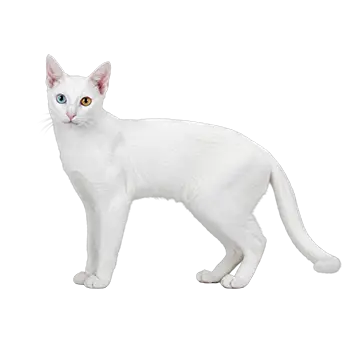

The First 24 Hours

The first day of a Khao Manee kitten's life is among the most critical. These kittens are born with their eyes sealed shut and their ear canals closed, relying entirely on warmth, touch, and scent to navigate toward their mother. A healthy Khao Manee newborn should begin nursing within the first hour or two of life. During this time, the queen will clean each kitten, stimulate breathing, and sever the umbilical cord naturally.

It is essential to observe the litter closely without excessive handling during these early hours. Each kitten should be checked for obvious abnormalities, strong movement, and the ability to latch onto a nipple. Khao Manee kittens are born with pure white coats, making it easier to spot any discoloration or bruising that could signal a problem. Weigh each kitten gently using a small kitchen scale and record the birth weight as a baseline for tracking growth.

The queen should be allowed to bond undisturbed with her litter in a warm, quiet, dimly lit area. If a kitten fails to nurse or appears significantly weaker than its littermates, contact a veterinarian promptly. Colostrum intake within the first twelve to sixteen hours is vital, as it provides essential antibodies that protect against infection during the vulnerable early weeks.

Keep the ambient temperature of the nesting area around 85 to 90 degrees Fahrenheit for the first several days. Khao Manee kittens cannot regulate their own body temperature at birth, and even brief chilling can lead to life-threatening hypothermia. A heating pad set on low beneath a layer of bedding, or a heat lamp positioned safely above the nesting box, can help maintain consistent warmth.

Nursing & Nutrition

Nursing is the cornerstone of newborn Khao Manee survival. Kittens should nurse every one to two hours during the first week, gradually extending intervals as they grow. The queen's milk provides a perfect balance of protein, fat, and antibodies specifically tailored to feline development. Monitor each kitten to confirm it is latching effectively and gaining weight steadily, ideally around seven to ten grams per day during the first week.

If the queen is unable to nurse due to illness, injury, or insufficient milk production, you will need to step in with a kitten milk replacer formulated specifically for cats. Never use cow's milk or other dairy substitutes, as they can cause severe digestive distress and nutritional deficiencies. Bottle-feed using a specially designed kitten nursing bottle, holding the kitten in a natural belly-down position to prevent aspiration.

By the third week, you may notice kittens beginning to show curiosity about their mother's food, though they are not yet ready for solid nutrition. True weaning typically begins around four weeks of age when a gruel made from high-quality kitten food mixed with warm water or kitten milk replacer can be introduced in a shallow dish. The transition from nursing to solid food should be gradual, taking place over several weeks to avoid gastrointestinal upset.

Throughout the nursing period, ensure the queen has access to high-quality, calorie-dense food and fresh water at all times. Lactation places enormous nutritional demands on the mother cat, and her diet directly affects the quality and quantity of her milk. Inadequate maternal nutrition is one of the most common causes of failure to thrive in nursing kittens.

Developmental Milestones

Khao Manee kittens progress through a rapid series of developmental milestones during their first eight weeks. Understanding the typical timeline helps caregivers identify delays or health concerns early. During the first week, kittens are essentially immobile, relying on a paddling motion to crawl toward warmth and their mother's body. Their primary activities are nursing and sleeping.

By days ten through fourteen, the eyes begin to open, revealing the striking eye colors that this breed is known for. All kittens are born with blue eyes, but Khao Manee kittens may develop their characteristic odd-eyed or jewel-toned eye colors over the coming weeks and months. The ears begin to unfold and the ear canals open around the same time, introducing the kitten to auditory stimulation for the first time.

Between weeks two and three, kittens begin to stand on wobbly legs and take their first tentative steps. Their baby teeth start to emerge around three weeks, signaling the early stages of readiness for the eventual introduction of soft foods. Social awareness increases noticeably as kittens begin to interact with their littermates through gentle play, pawing, and vocalizations.

From weeks four through eight, development accelerates dramatically. Kittens become increasingly coordinated, running, climbing, and pouncing with growing confidence. Litter box training can begin around four weeks as kittens develop voluntary control over elimination. By eight weeks, most Khao Manee kittens are fully mobile, eating solid food, and displaying the playful, outgoing personalities that define the breed.

Temperature & Environment

Environmental control is one of the most important aspects of newborn Khao Manee care. Neonatal kittens cannot thermoregulate effectively until they are roughly three to four weeks old, making them highly susceptible to both chilling and overheating. During the first week, the nesting area should be maintained at approximately 85 to 90 degrees Fahrenheit, gradually decreasing to around 80 degrees by the second week and 75 degrees by the fourth week.

The nesting box should be placed in a quiet, draft-free room away from household traffic, loud noises, and other pets. Use soft, washable bedding that provides traction for the kittens' developing legs. Avoid loose fabrics or materials with loops that could entangle tiny claws. The box itself should have sides high enough to contain the kittens but low enough for the queen to enter and exit comfortably.

Humidity levels should remain moderate, around 55 to 65 percent, to prevent dehydration and respiratory irritation. In dry climates or during winter months when indoor heating reduces humidity, a small humidifier placed near the nesting area can help. Avoid placing the nesting box near heating vents, windows, or exterior walls where temperature fluctuations are most pronounced.

Cleanliness is paramount in the nesting environment. Change bedding daily or whenever it becomes soiled. The queen will typically keep the kittens clean by grooming them and consuming waste during the first few weeks, but the surrounding area should be kept sanitary to reduce the risk of bacterial or parasitic infections.

Early Socialization

The socialization window for kittens is remarkably brief, spanning roughly from two to seven weeks of age, making early and gentle exposure to handling critically important. Khao Manee kittens are naturally social and people-oriented, but this genetic predisposition must be nurtured through consistent, positive human interaction during the neonatal period to fully develop.

Begin handling kittens gently for short periods starting around the end of the first week, limiting sessions to a few minutes at a time. Wash your hands before and after handling to minimize the risk of transferring pathogens. Speak softly and move slowly, allowing the kittens to become accustomed to human scent, touch, and voice. As they grow, gradually increase the duration and variety of handling, including gentle touches on the paws, ears, and belly.

From three weeks onward, introduce kittens to a wider range of sensory experiences in a controlled manner. Varied but gentle sounds, different surface textures underfoot, and brief exposure to household sights and smells all contribute to building a confident, well-adjusted adult cat. Khao Manee kittens that receive thorough early socialization are more likely to grow into the affectionate, outgoing companions the breed is celebrated for.

Littermate interaction is equally vital during this period. Play fighting, chasing, and mutual grooming among siblings teaches bite inhibition, social boundaries, and communication skills that are difficult to develop later. Singleton kittens or those separated from the litter too early may require extra socialization effort from their human caregivers to compensate for the missed peer interactions.

Health Screening & Vet Visits

A veterinary examination should be scheduled within the first few days of life for any Khao Manee litter, particularly if complications occurred during delivery or if any kittens appear weak or undersized. The initial veterinary visit typically includes a general physical assessment, checking for congenital defects such as cleft palate, heart murmurs, or umbilical hernias.

One health consideration that is particularly relevant to the Khao Manee breed is congenital deafness. White-coated cats, especially those with blue eyes, carry a higher risk of partial or complete hearing loss. Your veterinarian can perform a preliminary assessment, and a BAER (Brainstem Auditory Evoked Response) test can be arranged once the kittens are old enough, typically around five to six weeks, to provide a definitive evaluation of hearing ability.

Deworming protocols generally begin at two weeks of age and are repeated at regular intervals as directed by your veterinarian. Fecal examinations help identify common intestinal parasites that can compromise growth and health in young kittens. Vaccination schedules typically begin around six to eight weeks, with core vaccines protecting against feline panleukopenia, calicivirus, and herpesvirus administered in a series of boosters.

Keep a daily health log for each kitten, recording weight, appetite, stool consistency, activity level, and any concerns. Consistent weight gain is one of the most reliable indicators of overall health in neonatal kittens. A kitten that fails to gain weight or begins losing weight should be evaluated by a veterinarian without delay.

When to Worry

Knowing the warning signs that indicate a newborn Khao Manee kitten is in distress can make the difference between a swift recovery and a tragic outcome. Neonatal kittens are fragile, and their condition can deteriorate rapidly. Persistent crying or vocalization, especially a high-pitched or weak cry, often signals hunger, pain, or inability to regulate body temperature.

Refusal to nurse or a sudden drop in nursing frequency is one of the earliest red flags. A kitten that was previously nursing well but becomes lethargic and disinterested in feeding may be developing an infection, experiencing low blood sugar, or suffering from dehydration. Feel the kitten's mouth and gums; they should be warm and moist. Cold, pale, or tacky gums indicate a medical emergency.

Monitor for signs of fading kitten syndrome, a broad term for the rapid decline sometimes seen in neonates during the first two weeks of life. Symptoms include progressive weakness, isolation from the litter, low body temperature, labored breathing, and failure to gain weight. While the causes of fading kitten syndrome are varied and sometimes untreatable, early veterinary intervention significantly improves the chances of survival.

Diarrhea, vomiting, nasal or ocular discharge, abdominal distension, and difficulty breathing all warrant immediate veterinary attention. It is always better to err on the side of caution with neonatal kittens. Keep your veterinarian's emergency contact information readily available, and do not hesitate to seek professional guidance at the first sign of trouble.

Always consult a qualified professional before making any health-related decisions. This content is provided for informational reference only and should not replace professional guidance specific to your animal.