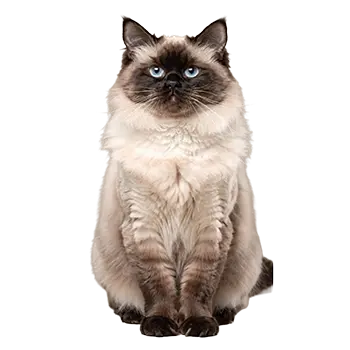

The juvenile period in Himalayans spans roughly three to twelve months of age and encompasses some of the most dramatic physical changes the cat will undergo. During these months, a Himalayan kitten transitions from a small, round-bodied youngster into a young cat with the beginnings of the breed's substantial bone structure and heavy cobby build. Growth rates vary between individuals, but most Himalayans gain weight steadily throughout this period, reaching approximately sixty to seventy percent of their adult weight by ten months. Full physical maturity, including the development of the complete double coat and full facial breadth, often does not arrive until two to three years of age.
The coat undergoes remarkable transformation during the juvenile months. The relatively short, fine kitten fur gives way to the dense, flowing double coat that is one of the breed's most recognizable features. The undercoat thickens significantly between four and eight months, and guard hairs lengthen to create the characteristic full ruff around the neck and chest. Color-point markings continue to deepen and clarify as the kitten matures, with the contrast between the pale body and darker extremities becoming increasingly defined. Environmental temperature influences the intensity of point coloring — cats in cooler environments may develop darker, richer points.
Facial development during the juvenile stage reflects the breed's brachycephalic heritage. The muzzle remains short and broad, and the nose profile becomes more distinctly flat as the skull reaches its adult proportions. The large, round eyes achieve their full, expressive shape, and the vivid blue eye color that is a hallmark of the breed reaches its peak saturation. Ear furnishings — the tufts of fur inside and at the tips of the ears — grow longer and more luxuriant, framing the face and contributing to the breed's overall appearance.
Skeletal growth slows gradually through the juvenile months but does not cease entirely until well past the first year. During this extended growth period, nutrition must support ongoing bone and muscle development without encouraging excessive weight gain. Himalayans have a natural tendency toward a heavier body type, and the foundation for lifelong weight management is established during these formative months. Regular weigh-ins at your veterinary visits help ensure the kitten is growing along a healthy curve.