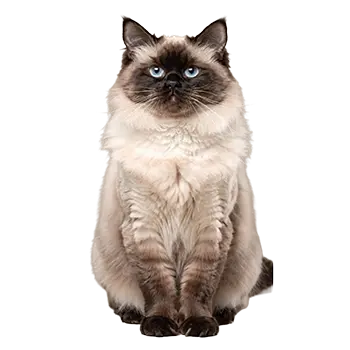

A Himalayan reaches full physical maturity between two and three years of age, settling into the substantial, cobby body type that defines the breed. Adult males typically weigh between nine and fourteen pounds, while females range from seven to eleven pounds, though individual variation is considerable depending on lineage and overall frame size. The fully developed Himalayan presents a stocky, low-slung silhouette with short, thick legs, a broad chest, and a round, massive head set on a short, powerful neck. Every element of the breed's conformation radiates solidity and presence.
The coat reaches its full glory in adulthood — a long, flowing double coat with a dense, soft undercoat and fine, glossy guard hairs. Color-point markings have matured to their deepest expression, with rich pigmentation on the ears, face mask, paws, and tail contrasting against the lighter body. The breed is recognized in a wide range of point colors including seal, blue, chocolate, lilac, flame, cream, tortoiseshell, and lynx patterns. Body coat color may darken somewhat with age, particularly in cats that spend time in cooler environments, due to the temperature-sensitive nature of the color-point enzyme.
Temperamentally, the adult Himalayan is one of the most placid and companionable of all cat breeds. These cats form deep attachments to their owners and prefer to be near their people rather than independent. They are not typically demanding or vocal, instead communicating their needs through soft chirps, gentle head-butting, and a willingness to simply be present in the same room. Despite their calm demeanor, adult Himalayans retain a playful streak and will engage enthusiastically with interactive toys, particularly wand toys and small objects they can bat across the floor.
Understanding the adult Himalayan's baseline personality and physical characteristics is essential for recognizing deviations that may signal health problems. A normally social cat that begins hiding, a consistently clean cat that starts avoiding the litter box, or a cat whose coat suddenly becomes dull and matted are all exhibiting behavioral changes that warrant investigation. Familiarity with what is normal for your individual cat is your most powerful diagnostic tool.