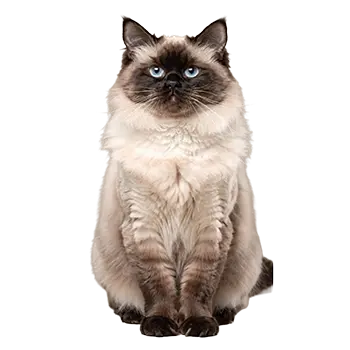

Recognizing the Final Stage

The transition from manageable senior decline to the end-of-life stage in a Himalayan is often gradual, marked by an accumulation of changes rather than a single defining event. Chronic conditions that have been managed for months or years — kidney disease, heart disease, respiratory compromise — may begin to resist previously effective treatments or progress despite optimal medical management. The cat's overall resilience diminishes, and recovery from minor setbacks such as a bout of reduced appetite or a mild infection takes longer than it once did. Recognizing this shift is important because it allows you to recalibrate your goals from curative treatment toward comfort-focused care.

Physical indicators that a Himalayan is entering its final stage include sustained weight loss that does not respond to dietary adjustments, progressive muscle wasting that is visible even through the thick coat, declining appetite that persists across multiple food offerings and warming strategies, and increasing difficulty with mobility or maintaining basic hygiene. The coat may become dull, matted, and unkempt as the cat lacks the energy or flexibility to groom itself. Respiratory effort may increase, particularly in cats whose brachycephalic anatomy has always placed additional burden on the airway.

Behavioral changes accompany the physical ones. A Himalayan that has always been affectionate and social may begin withdrawing to quiet, secluded locations. Conversely, some cats become more clingy and vocal in their final weeks, seeking reassurance and closeness. Changes in litter box habits — either difficulty reaching the box or a loss of the instinct to use it — are common as the body weakens. Sleep patterns may shift dramatically, with the cat spending most of its time resting and showing minimal interest in play or interaction.

None of these signs alone necessarily means the end is imminent, but their convergence paints a picture that warrants an honest conversation with your veterinarian about your cat's trajectory. This is not a conversation most owners welcome, but it is one of the most important you will have. Understanding where your Himalayan stands allows you to make informed decisions about the remaining care — whether that means pursuing palliative treatment, transitioning to hospice, or beginning to consider the timing of humane euthanasia.

Quality of Life Assessment

Evaluating quality of life in a cat that cannot articulate its own experience is one of the most challenging responsibilities a pet owner faces. Cats are evolutionary stoics — their survival instincts drive them to conceal vulnerability — and the Himalayan's naturally calm, quiet demeanor can make it even harder to gauge distress. Structured quality-of-life assessment tools provide a framework for making this evaluation as objective and consistent as possible, reducing the risk that love and hope will delay a decision that compassion demands.

Several veterinary-developed quality-of-life scales assess daily well-being across multiple dimensions, commonly including pain, hunger, hydration, hygiene, happiness, mobility, and the balance of good days versus bad days. Scoring these dimensions regularly — daily or every few days during the end-of-life period — creates a longitudinal record that reveals trends obscured by the natural variability of any single day. A cat may have an unexpectedly good afternoon that lifts your spirits, but the scale reveals that good hours are becoming increasingly rare and brief within a broader pattern of decline.

For a Himalayan specifically, consider the cat's engagement with the activities and interactions that have defined its personality throughout its life. Does the cat still seek your company, respond to your voice, or purr when held? Does it show any interest in food, even if consumption is reduced? Can it reach its resting spots, litter box, and water without distress? Is the coat maintainable with gentle grooming, or has matting become so severe that the cat is uncomfortable? Is breathing comfortable at rest, or does the cat show signs of respiratory distress even when still? The answers to these questions, tracked over time, provide the most honest picture of your cat's lived experience.

Discuss your quality-of-life assessments with your veterinarian at each visit. Your veterinarian brings clinical expertise and objectivity that complement your intimate knowledge of the cat's personality and habits. Together, you can establish benchmarks — specific thresholds below which the balance of suffering to comfort tips in a direction that demands action. Having these conversations early, before a crisis forces a rushed decision, gives you the time and clarity to act in your cat's best interest when the moment arrives.

Palliative and Hospice Care

Palliative care focuses on maximizing comfort and quality of life when curative treatment is no longer feasible or when the burden of aggressive treatment outweighs its benefits. For a Himalayan in the end-of-life stage, palliative management typically involves pain control, nutritional support, hydration maintenance, environmental modification, and attentive symptom management tailored to the cat's specific conditions. The goal is not to extend life at any cost but to ensure that the time remaining is as comfortable and dignified as possible.

Pain management is the foundation of effective palliative care. Cats experience pain from arthritis, organ disease, dental pathology, and other conditions, but they rarely cry out or limp in the way that might prompt immediate recognition. Subtle signs of pain in a Himalayan include reluctance to be touched in certain areas, facial tension, reduced purring, withdrawal, hunched posture, and diminished interest in interaction. Your veterinarian can prescribe appropriate analgesics, which may include nonsteroidal anti-inflammatory drugs formulated for cats, gabapentin for neuropathic or generalized pain, buprenorphine for more significant discomfort, or combinations tailored to the individual's response. Never administer pain medications without veterinary guidance, as many human drugs are toxic to cats.

Nutritional and hydration support becomes central as appetite and kidney function decline. Offer highly palatable foods in small, frequent meals — warming food gently, adding a splash of low-sodium broth, or hand-feeding small amounts can encourage intake in a cat with waning interest. If the cat is dehydrated due to kidney disease, subcutaneous fluid administration at home can be performed on a schedule recommended by your veterinarian. This technique involves placing a small needle under the skin and allowing a prescribed volume of balanced electrolyte solution to absorb, which helps the cat feel more comfortable and maintain hydration between feedings.

Environmental adjustments for a hospice Himalayan should prioritize ease of access and physical comfort. Place food, water, and a low-entry litter box within a few steps of the cat's preferred resting area. Provide deeply cushioned bedding in a warm, draft-free location. If the cat is no longer able to groom itself, gently wipe its face, clean around the eyes and nose, and keep the coat free of soiling with damp cloths and careful spot-cleaning. The dignity of cleanliness matters, and maintaining it is an act of respect and care for a companion that has always been fastidious.

Understanding Euthanasia

Euthanasia is the deliberate, painless ending of life performed by a veterinarian to prevent further suffering when quality of life has declined beyond the point of meaningful comfort. It is one of the most difficult decisions a pet owner will ever face, and it is also one of the most profound acts of love and responsibility. Understanding the process — what happens, what to expect, and how to prepare — can help reduce fear and allow you to be fully present for your Himalayan in its final moments.

The procedure itself is gentle and quick. Most veterinarians administer a sedative first, either by injection or orally, to relax the cat and eliminate any anxiety or awareness of the subsequent steps. Once the cat is deeply sedated and comfortable, a concentrated solution of pentobarbital is injected intravenously, typically into a vein in the front leg. This barbiturate causes rapid, painless loss of consciousness followed by cessation of heart and brain function within seconds. The cat does not experience pain, fear, or suffocation. Some muscle twitching or a final deep breath may occur after clinical death as the nervous system shuts down — these are reflexive movements, not signs of awareness or distress.

You may choose to be present during the procedure, to step out after the sedation takes effect, or to say your goodbyes beforehand and not be present at all. There is no right or wrong choice, only the one that feels manageable for you. Many owners find comfort in holding their cat during the process, speaking softly and providing the physical closeness that has defined their relationship. Others find the experience too painful to witness and prefer to remember their cat in life. Your veterinarian and veterinary staff will support whatever decision you make without judgment.

The timing of euthanasia is often the most agonizing aspect. A widely shared perspective in veterinary palliative care is that it is better to be a week too early than a day too late. Waiting until the cat is in obvious, unrelievable distress means the cat has already suffered beyond what was necessary. The quality-of-life assessments you have been conducting, combined with your veterinarian's clinical judgment, provide the most reliable guide. If the bad days consistently outnumber the good, if the cat is no longer able to engage in the basic activities that give life meaning, or if pain and distress cannot be adequately controlled, the compassionate choice is clear even when the emotional burden is immense.

Practical Arrangements and Aftercare

Making practical arrangements in advance allows you to focus on your Himalayan's comfort and your own emotional needs when the time comes, rather than navigating logistics while grieving. Decide ahead of time where you would like the procedure to take place, what aftercare option you prefer for your cat's remains, and what support you will need in the hours and days following the loss.

Many veterinary practices offer in-home euthanasia services, which allow the cat to pass in the comfort and familiarity of its own environment surrounded by the people and scents it knows. This option can significantly reduce the stress of transport for a cat that is already fragile and uncomfortable, and it provides a more private and controlled setting for the family. If in-home service is not available in your area, ask your veterinary clinic about scheduling the appointment at a quiet time and using a private room to minimize waiting-room stress.

Aftercare options for the cat's remains include private cremation with return of ashes, communal cremation without return of ashes, and burial in a pet cemetery or on private property where local regulations permit. Private cremation allows you to keep the ashes in an urn, scatter them in a meaningful location, or incorporate them into memorial keepsakes. If you choose cremation, confirm with the provider that private cremation means your cat is cremated individually, as terminology can vary between services. Some families choose to create a memorial — a planted garden, a framed photograph, a paw print casting, or a donated item in the cat's name — that provides a tangible focus for remembrance.

Before or shortly after the appointment, you may want to collect personal mementos. A clipping of fur from the cat's ruff, a paw print impression made with nontoxic clay or ink, and photographs taken in a comfortable setting can become treasured keepsakes. Some families prepare a small written tribute or compile a photo collection that chronicles the cat's life from kittenhood through its final days. These rituals of remembrance are deeply personal, and there is no prescribed way to honor a life — only the way that feels meaningful to you.

Navigating Grief and Healing

The loss of a Himalayan that has been a daily companion for a decade or more leaves a tangible absence in the home and in the rhythms of daily life. The quiet presence that followed you from room to room, the warm weight on your lap each evening, the ritual of daily grooming — these threads are woven so deeply into the fabric of routine that their sudden absence can feel disorienting and overwhelming. Grief for a pet is real, valid, and deserving of the same respect and space given to any significant loss.

The grieving process is not linear and does not follow a predictable timeline. You may experience waves of sadness interspersed with periods of normalcy, sudden tears triggered by finding a stray tuft of fur or reaching for a food bowl that is no longer there, guilt over the timing of the euthanasia decision or over moments you wish you had handled differently, and anger at the unfairness of a too-short life. All of these responses are normal. Grief is not a problem to be solved or a phase to be hurried through — it is the natural consequence of having loved deeply.

Seek support from people who understand the bond between humans and animals. Friends and family members who have experienced pet loss are often the most empathetic listeners. Pet loss support groups, both in-person and online, provide a community of people navigating similar emotions. Some counselors and therapists specialize in pet bereavement and can offer professional guidance if grief becomes overwhelming or interferes with daily functioning. If you have children in the home, be honest with them about what has happened in age-appropriate terms, and give them space to express their own sadness.

Other pets in the household may also respond to the loss. Cats that shared living space with the deceased Himalayan may show behavioral changes including searching, vocalization, altered eating habits, or clinginess. These responses are not always indicators of grief in the human sense, but they reflect a disruption in the social environment that the surviving cat needs time to adjust to. Maintain normal routines, offer additional attention and reassurance, and monitor the surviving pet's health and behavior closely during the transition period. In time, the household will find a new equilibrium — different from before, but stable.

Honoring a Life Well Lived

The final chapter of a Himalayan's life, though marked by loss, is also an opportunity to reflect on the fullness of the years shared. The quiet companionship, the evening routines, the gentle personality that made the breed such a cherished household presence — these are the qualities that endure in memory long after the practical details of care have faded. Honoring your cat's life is not about grand gestures but about acknowledging the significance of a relationship that enriched your daily existence.

Some owners find meaning in channeling their experience into support for others. Volunteering with a breed rescue organization, donating to feline health research, or mentoring first-time Himalayan owners through the challenges of grooming and breed-specific health care transforms personal loss into communal contribution. Organizations dedicated to polycystic kidney disease research, brachycephalic health initiatives, and feline hospice care development all benefit from the involvement of people who understand the breed intimately and care deeply about its future.

The decision of whether and when to welcome another cat into your home is deeply personal, and there is no correct timeline. Some people find that a new cat helps fill the silence and restore the rhythms that gave structure to their days. Others need weeks, months, or longer before they are ready to open their hearts again. Neither response is right or wrong. If you do choose to adopt another Himalayan or any other cat, you are not replacing the one you lost — you are honoring the love you shared by extending it to another animal in need of a home.

Whatever path you take after loss, carry forward the knowledge you gained as a Himalayan guardian. The attention to grooming, the vigilance around kidney health, the patience with brachycephalic quirks, the understanding of a breed that communicates through presence rather than drama — these are skills and insights earned through years of devoted care. They are part of your cat's legacy, passed from the animal that taught you to the future cats and people who will benefit from what you learned.

Always consult a qualified professional before making any health-related decisions. This content is provided for informational reference only and should not replace professional guidance specific to your animal.