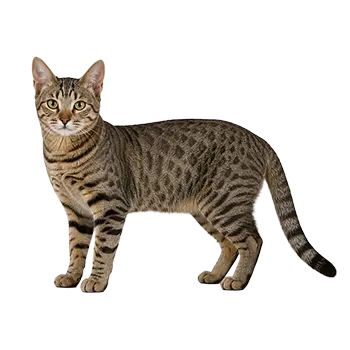

When a Dragon Li Becomes Senior

Current feline life stage guidelines describe a cat as mature from roughly seven to ten years, senior from ten onward, and often reserve the term geriatric for cats past fifteen. Against a typical Dragon Li lifespan of twelve to fifteen years, this means the senior period is not a brief coda but a fifth or more of the whole life. The transition is gradual and, in this breed, easy to miss.

The Dragon Li's stoicism is the central clinical fact of its old age. A landrace cat descended from generations of working animals does not advertise weakness, and this breed is notably self-contained even by feline standards. It will not limp conspicuously, cry, or seek sympathy. It will simply stop jumping onto the counter, and the household will conclude that it has mellowed. Mellowing is not a diagnosis. Reduced activity in an older cat is arthritis until proven otherwise.

The changes that do appear are quiet. Sleeping more, and in warmer places. Playing in shorter bursts. Grooming less thoroughly, so that the coat over the lumbar spine and the base of the tail loses its polish and begins to clump, which is often the first visible sign of spinal pain because those are the areas a cat must flex to reach. A slight loss of muscle over the hindquarters and along the spine, so the vertebrae become easier to feel. A greying of the muzzle, which in a brown mackerel tabby is subtle.

Owners are the best diagnostic instrument available, because they see the cat every day and the veterinarian sees it for ten minutes a year. Keep notes. What was this cat doing eighteen months ago that it does not do now? Which surfaces has it stopped using? Has it started taking the sofa as a step to the windowsill that it used to reach in a single jump? Those observations, written down, are worth more than any single blood panel.

Physical Changes of Age

Sarcopenia, the age-related loss of lean muscle mass, begins in cats around eleven or twelve and can proceed even in a cat whose weight on the scale is unchanged, because fat replaces muscle. This is why muscle condition scoring, performed by palpating over the skull, scapulae, spine, and pelvis, is a separate assessment from body condition scoring and is arguably the more important of the two in a senior. In a Dragon Li, whose whole build is muscular, the loss is proportionally more visible once you know to look.

Digestive efficiency declines with age. Cats over twelve commonly show reduced ability to digest fat and protein, which means an older Dragon Li can be eating the same amount and extracting less from it. Combined with sarcopenia, this makes unexplained weight loss in a senior cat a serious finding rather than a benign consequence of slowing down, and it inverts the advice given to middle-aged cats: after about eleven, the risk of being underweight overtakes the risk of being overweight.

Senses dull gradually. Hearing loss is common and often presents as a cat that has become louder, since it can no longer modulate its own volume, or that startles when approached from behind. Iris atrophy and lenticular sclerosis change the appearance of the eye without much affecting vision; cataracts and hypertensive retinal detachment do affect it, and the latter is an emergency. Reduced sense of smell blunts appetite, which is why warming food to body temperature is one of the most effective interventions available for an inappetent senior.

The claws change too, and this catches many owners out. Older cats scratch less and their nails grow thicker and are shed less effectively, so claws can overgrow and curl into the pads, causing a painful infection that is entirely silent until the cat is lame. Check every claw, including the dewclaws, every two weeks in a cat over ten. The skin thins, the coat loses lustre, and footpads may become dry and cracked.

Nutrition for the Senior Cat

There is no legal or nutritional definition of senior cat food, and the category is a marketing construct rather than a formulation standard. Some senior diets restrict protein and phosphorus for renal support; others increase protein to counter sarcopenia. These are opposite strategies, and choosing between them requires knowing which disease, if any, the cat has. Do not switch a healthy senior Dragon Li onto a senior diet reflexively; feed to the individual, guided by bloodwork.

For a healthy senior with normal renal parameters, a highly digestible, energy-dense, high-quality-protein diet is the current mainstream recommendation, because protein restriction in a cat that does not need it accelerates muscle loss. For a cat with diagnosed chronic kidney disease, a therapeutic renal diet with controlled phosphorus is one of the few interventions with a demonstrated survival benefit, and phosphorus control is the element that appears to matter most.

Appetite management becomes a daily craft. Warm the food to roughly body temperature to release aroma. Use wide, shallow, low-sided dishes that do not press on the whiskers and do not require an arthritic neck to reach down into a bowl; raising the dish two or three inches helps a cat with cervical spondylosis considerably. Offer small meals more often. Move the food away from the litter box and away from other cats. Persistent inappetence is never a normal part of aging and warrants investigation, because a cat that stops eating can develop hepatic lipidosis within days.

Water intake rises in importance as renal concentrating ability falls. Multiple stations, wide dishes, a fountain, and wet food all help. Increased thirst and increased urination in a senior cat is a specific and important clinical sign pointing toward chronic kidney disease, diabetes mellitus, or hyperthyroidism, and it should trigger a veterinary visit rather than the purchase of a bigger water bowl.

The Common Geriatric Diseases

Chronic kidney disease is the leading identified cause of death in older cats and affects a substantial minority of cats over ten, rising steeply thereafter. Clinical signs, meaning increased thirst, increased urination, weight loss, and inappetence, do not appear until roughly two-thirds of functional nephrons are gone, which is why routine screening matters so much. The SDMA assay detects loss earlier than creatinine, and staging by the IRIS system directs treatment. It is progressive and incurable, but a cat diagnosed early and managed on phosphorus control and hydration can live comfortably for years.

Hyperthyroidism is the most common endocrine disease of older cats and is caused, in the overwhelming majority, by a benign functional adenoma of the thyroid. The presentation is almost a caricature: weight loss despite a ravenous appetite, hyperactivity, a poor unkempt coat, increased vocalization, vomiting, and a fast heart rate. It is highly treatable, with radioactive iodine offering a genuine cure in most cases, and with methimazole, surgery, and iodine-restricted diets as alternatives. It frequently masks concurrent kidney disease, which becomes apparent only once the thyroid is controlled.

Osteoarthritis is nearly universal and almost universally missed. Radiographic studies find degenerative joint disease in the large majority of cats over twelve, most of whom were never suspected of being in pain. Cats do not limp reliably; they reduce their world instead. Elbows, hips, stifles, and the lumbosacral spine are typical sites. Modern treatment is genuinely effective, and the monoclonal antibody frunevetmab, alongside environmental modification and weight control, has changed what is achievable. Never give a cat human analgesics; paracetamol is lethal to cats, and ibuprofen is nearly so.

Others round out the list. Diabetes mellitus, driven largely by obesity, is common and sometimes reversible with early aggressive management. Hypertension, usually secondary to kidney disease or hyperthyroidism, can cause sudden blindness through retinal detachment and warrants blood pressure measurement at every senior visit. Dental disease and tooth resorption cause substantial chronic pain. Neoplasia rises in incidence, and lymphoma is the most common feline cancer. Hypertrophic cardiomyopathy may declare itself late as congestive failure or as the sudden, agonizing hind-limb paralysis of aortic thromboembolism.

Adapting the Home

Almost every accommodation an aging Dragon Li needs is a workaround for stiff joints. Provide steps or ramps to the favorite window seat and bed, because a cat that can no longer make the jump will not ask for help; it will simply stop going. Cut a low entry into the litter box or buy one with a lowered lip, since climbing over a six-inch wall with an arthritic lumbosacral spine is the most common cause of litter box avoidance in old cats and is routinely misread as spite.

Size the box up and put more of them out. A senior cat should not have to travel far or navigate stairs to reach a toilet, so there should be a box on every floor the cat uses. Use a soft, fine-grained, unscented litter, which is kinder to sensitive paws than large-pellet products. Keep it immaculate; an aging cat's tolerance for a soiled box is lower, not higher.

Warmth becomes a real welfare consideration. Reduced muscle mass, thinner skin, and lower activity mean older cats feel cold, and warmth eases arthritic joints. Provide a heated bed on a low setting, or a well-sited soft bed near a radiator with a route the cat can manage without jumping. Give it a bed with raised sides for support and low access.

Keep the environment predictable. Do not rearrange furniture in a household with a cat whose vision and hearing are declining; the cat is navigating from memory. Leave a night light on the route to the litter box and the water bowl. Keep food, water, litter, and bed within a compact core territory rather than spread across the house. And keep the enrichment going in a reduced form: short, gentle play sessions, food puzzles with easier mechanisms, and a window perch reachable by steps do more for a senior Dragon Li's morale than any supplement will.

Cognitive Health and Behavior Change

Feline cognitive dysfunction syndrome is a genuine neurodegenerative condition, with amyloid deposition and neuronal loss on histopathology, and it becomes considerably more common past fifteen. The signs are collected under the acronym DISHAAL: disorientation, altered interaction, disrupted sleep-wake cycles, house soiling, altered activity, anxiety, and learning or memory loss. A cat standing in a corner facing the wall, or howling at three in the morning in an empty hallway, is a familiar and distressing picture.

The diagnosis is one of exclusion, and that matters. Every one of those signs is also produced by hypertension, hyperthyroidism, pain, brain tumor, or sensory loss, and most of those are treatable. Nocturnal vocalization in particular is far more often deafness, hypertension, or hyperthyroidism than it is dementia. The workup, meaning bloodwork, thyroid panel, blood pressure, and urinalysis, comes before the conclusion.

Where cognitive dysfunction is genuinely present, management is supportive rather than curative. Predictable routine, gentle enrichment that does not frustrate, environmental navigation aids, and reduced household change all help. Diets and supplements containing antioxidants, medium-chain triglycerides, and omega-3 fatty acids have modest evidence behind them. Some cats benefit from pheromone diffusers, and some from anxiolytic medication. Discuss options with your veterinarian rather than assembling a supplement regimen from the internet.

Other behavior changes in a senior Dragon Li deserve a similarly literal reading. Increased clinginess in a normally self-sufficient breed often reflects anxiety from failing senses. Increased irritability or a sudden objection to being picked up is usually pain. Withdrawal to a hiding place is a cardinal sign of feline illness at any age and is a red flag in an old cat. In a stoic breed, any behavior change is a message, and the message is almost always physical.

The Senior Monitoring Schedule

From seven years, move to a full examination every six months rather than annually. A cat ages considerably in a year, and semiannual visits catch the trend rather than the endpoint. Each visit should include weight recorded to the tenth of a pound, body and muscle condition scoring, a full oral examination, abdominal palpation, thyroid palpation, cardiac and thoracic auscultation, and blood pressure measurement.

Annual laboratory screening from seven and semiannual from about twelve should include a complete blood count, a serum biochemistry panel including SDMA, total T4, a urinalysis with specific gravity, and a urine protein-to-creatinine ratio where indicated. Urine specific gravity is one of the most informative and most frequently omitted tests in feline medicine; a cat losing concentrating ability shows it in the urine before the blood changes. Retroviral status should be known.

Build a home monitoring habit alongside it. A monthly weight on a digital baby scale, recorded, is the single most valuable thing an owner can do, because sustained weight loss precedes the clinical signs of most feline geriatric disease by months. Track water intake by measuring what goes into the bowl and what remains. Count the urine clumps in the box. Photograph the cat in profile every few months; the change is invisible day to day and obvious across a year.

Bring the notes to the appointment. A veterinarian presented with a weight graph showing a steady eight percent decline over six months has a different conversation from one presented with a cat that seems fine. And take the carrier training you did in adolescence out of storage: leave the carrier out permanently as furniture, feed in it, and let the cat sleep in it, so that a twice-yearly visit is a mild inconvenience rather than an ordeal that both you and the cat begin to avoid.

Always consult a qualified professional before making any health-related decisions. This content is provided for informational reference only and should not replace professional guidance specific to your animal.