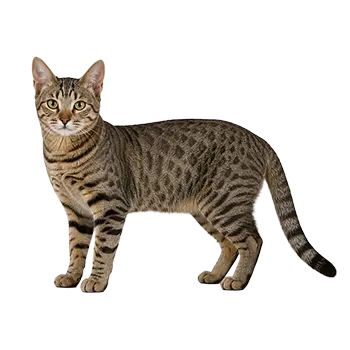

Breed Status and the Case for Breeding

The Dragon Li occupies an unusual position. In China it is not a rare cat at all; the Li Hua Mao is the ordinary domestic cat of the country, a landrace that has existed for a very long time and was formalized as a breed by the Cat Aficionado Association in the early 2000s. Outside China it is genuinely scarce. The Cat Fanciers' Association accepted the breed into its Miscellaneous class in 2010, and the Western population has remained tiny, with few active catteries and a correspondingly narrow gene pool.

This creates a specific responsibility. In a numerically large breed, one poor breeding decision is diluted. In a population of a few hundred registered animals, a single popular sire can distort the entire pedigree base within two generations, and the breed's principal asset, which is the robust genetic diversity of a natural landrace, can be squandered in the process of formalizing it. Anyone considering breeding Dragon Li should think in terms of population management, not litters.

The practical implications are unglamorous. Track coefficients of inbreeding across the whole pedigree, not just three generations. Resist the temptation to concentrate on a winning male. Where registry rules and import realities allow, seek out unrelated lines, including working with breeders in China, and maintain a written breeding plan with stated goals. Preserving the type, meaning the ticked brown mackerel tabby, the athletic rectangular build, the broad head, and the temperament, while keeping the gene pool open is the entire assignment.

And the threshold question is whether to breed at all. Breeding cats well is expensive, time-consuming, emotionally taxing, and financially negative. It requires a mentor, a veterinarian with feline reproductive experience, registry membership, a queening space, a plan for every kitten including the ones nobody wants, and a commitment to take any of them back at any point in their lives. If any of those is missing, the responsible answer is to neuter the cat and enjoy it.

Selecting and Screening Breeding Cats

A breeding Dragon Li should be physically and behaviorally sound before anything else is considered. Given the breed's slow maturation, do not evaluate a cat's conformation or breed it before its physical development is well advanced; many breeders wait until eighteen months to two years for a first mating in a queen and later still in a male, both to see the finished animal and because a queen bred at her first cycle is a kitten raising kittens.

Health screening should include a cardiac evaluation by echocardiogram performed by a cardiologist, since hypertrophic cardiomyopathy is the most common feline heart disease and affects breeds broadly rather than selectively. Both cats should be tested for feline leukemia virus and feline immunodeficiency virus, be current on vaccination well before mating rather than during pregnancy, be free of parasites and dermatophytes, and have a documented blood type. Blood typing is the cheapest test on the list and prevents neonatal isoerythrolysis, which kills type A kittens born to a type B queen who has been mated to a type A male.

Temperament is a health trait in this breed. The Dragon Li's natural reserve toward strangers is correct and desirable; genuine fearfulness, defensive aggression, or a queen who cannot cope with the presence of her own household is not, and it is substantially heritable. Breeding a nervous cat produces nervous kittens, and no amount of socialization at three weeks fully undoes it.

Apply the same rigor to the pedigree. Know the coefficient of inbreeding of the proposed pairing over as many generations as the records allow. Know what the ancestors died of and at what age; longevity data is the most underrated tool available to a breeder and is free. Record everything, including the litters that went badly, and share it. A breed this small survives on breeders being honest with one another.

Estrus, Mating, and Conception

The queen is a seasonally polyestrous, induced ovulator, and both halves of that sentence matter. Seasonally polyestrous means she cycles repeatedly during the breeding season, which in the northern hemisphere runs roughly from late winter to early autumn and is triggered by increasing day length; a cattery with artificial lighting can effectively abolish the season. Induced ovulator means she does not release eggs on a schedule but in response to the physical stimulus of mating, typically requiring several matings over a day or more to produce a reliable luteinizing hormone surge.

A cycle consists of proestrus, lasting a day or two and often unnoticed, and estrus proper, lasting about a week. A Dragon Li in estrus is unmistakable: loud, persistent, rolling, treading with the hindquarters, elevating the rear and deflecting the tail when the lumbar area is stroked, and often unusually affectionate. Bloody discharge is not part of the feline cycle and is abnormal. If no mating occurs, the queen returns to estrus after an interval of one to three weeks and does so repeatedly, which is exhausting for her and everyone else.

Bring the queen to the stud rather than the reverse, since males are territorial and perform poorly away from home. Introduce through a barrier first, and supervise. Mating itself is brief, noisy, and to the observer alarming; the barbed penis stimulates ovulation and the queen's post-coital reaction, a shriek followed by rolling and an attempt to strike the male, is entirely normal. Allow multiple matings over one to two days. Because ovulation is induced and estrus is prolonged, superfecundation is possible, meaning a single litter can have more than one father if more than one male has access.

Repeated estrus without mating carries real cost. Persistently cycling queens are at increased risk of cystic endometrial hyperplasia and pyometra, a life-threatening uterine infection that presents as lethargy, inappetence, and sometimes purulent discharge, and which is a surgical emergency. This is one of several reasons that a queen who is not going to be bred should be spayed rather than left intact indefinitely.

Pregnancy and Prenatal Care

Feline gestation runs approximately sixty-three to sixty-seven days from mating, with a normal range of about sixty-one to seventy. Pregnancy can be confirmed by abdominal ultrasound from around day sixteen to eighteen, which also assesses fetal viability by heartbeat, and skeletal mineralization becomes radiographically visible from about day forty to forty-five, which is the only reliable way to count kittens. That count matters enormously at queening, since it is the only way to know when the litter is finished.

The classic early sign is pinking-up of the nipples at around three weeks. Some queens show a transient inappetence in the third to fourth week. Weight gain becomes obvious in the second half of gestation, with a typical queen putting on one to two pounds. Transition her to a growth or kitten formulation from about week four and feed to appetite from week six, since the compressed abdomen means she needs small frequent meals rather than large ones.

Do not vaccinate, deworm, or medicate during pregnancy without veterinary direction. Modified live vaccines are contraindicated, several common medications are teratogenic, and this is precisely why the vaccination and parasite status should have been sorted out before mating. Griseofulvin is a well-known example of a drug that causes fetal deformity, and many flea products are not licensed for pregnant queens.

Introduce the queening box at least two weeks before the due date and site it in a quiet, warm, dim room the queen already likes. If you do not choose the location, she will, and her choice is usually the back of a wardrobe. Make it large enough for her to stretch out fully, with high sides, one low entry, and a pig rail or ledge around the interior to prevent her from crushing a kitten against the wall. Line it with disposable bedding. Let her sleep in it so it is hers before it is needed, and start taking her rectal temperature twice daily in the final week; a drop below about 99 degrees Fahrenheit typically precedes labor by twelve to twenty-four hours.

Queening and Delivery

Labor proceeds in three stages. The first stage lasts from a few hours to a day, and involves uterine contractions that are not yet visible, restlessness, panting, nesting behavior, refusal of food, and often a marked need for the presence of her person. Dragon Li queens, being closely bonded to their own household and reserved with everyone else, frequently want their owner nearby and no one else, and that request should be honored. Keep the room quiet, warm, and dim, and stay out of the way.

The second stage is active delivery. Visible abdominal straining should produce a kitten within roughly thirty minutes; the queen may then rest for anywhere from ten minutes to a couple of hours before the next. Kittens may present head-first or tail-first, and tail-first presentation is normal in cats rather than a malpresentation. The queen should tear the amniotic sac, sever the cord, and lick the kitten vigorously to stimulate breathing. The third stage, passage of the placenta, alternates with the second; account for one placenta per kitten, since a retained placenta causes metritis.

Have a kit ready and know what is in it: clean towels, unwaxed dental floss and blunt scissors for tying and cutting a cord the queen ignores, a bulb syringe, a digital gram scale, iodine for cord stumps, a heat source, and your veterinarian's out-of-hours number written on the box. If the queen does not open a sac within a minute, open it yourself, wipe the face clear, and rub the kitten briskly with a towel along the ribs. Never swing a kitten to clear fluid; it causes brain injury.

Know the dystocia criteria and act on them rather than waiting to see. Call the veterinarian if there is strong straining for thirty minutes with no kitten produced, weak intermittent straining for two hours with no kitten, more than three to four hours between kittens when radiographs say more remain, a kitten visibly lodged in the canal, green or black discharge before any kitten has been born, foul-smelling or frankly bloody discharge, or a queen who is collapsed, trembling, or in visible distress. Eclampsia, meaning hypocalcemia, presents as restlessness, panting, tremors, and seizure, usually in the weeks after birth rather than during, and is an emergency; do not attempt to prevent it by supplementing calcium during pregnancy, which makes it more likely rather than less.

Postpartum Care of the Queen

The days after delivery belong to the queen. Offer her food and water within the box, since many queens will not leave their litter to eat for the first day. She needs a growth-formula diet fed free-choice throughout lactation, commonly at two to three times maintenance calories at peak around weeks three to four, and a lactating Dragon Li, being a lean and active breed, can lose condition fast if that is under-supplied. Weigh her weekly.

Watch her as closely as the kittens. Lochia, a reddish-brown vaginal discharge, is normal for one to three weeks and should be odorless; a foul, purulent, or bright red discharge suggests metritis. Palpate the mammary chain daily for a hot, hard, painful, or discolored gland, which indicates mastitis and needs immediate treatment; kittens nursing from an infected gland can be poisoned by the milk. Take her temperature if she seems dull. Restlessness, panting, stiffness, or tremors in the first three weeks postpartum is eclampsia until proven otherwise and is a genuine emergency.

A veterinary check within a day or two confirms that the uterus is emptying, that milk production is adequate, and that no kitten was left behind. Discuss the timing of the next season; queens can return to estrus while still nursing, and back-to-back breeding is a serious welfare failure. A sensible ceiling in a well-run cattery is around three litters in two years, with registries in many jurisdictions imposing their own limits, and a hard rule to retire a queen from breeding while she is still in excellent health rather than when she stops producing.

Handle the litter briefly and gently from the second week, with the queen's tolerance as your guide, and let her set the pace. Some Dragon Li queens are relaxed about interference and some are emphatically not. A queen who growls, moves kittens, or blocks the box entrance is telling you something, and pushing past it risks the litter.

Raising and Placing the Litter

Weaning begins around three to four weeks and completes by seven to eight. Introduce a slurry of wet kitten food and milk replacer, thicken it over two to three weeks, and provide a shallow, low-sided litter tray from about four weeks. Non-clumping litter is safer for kittens who will taste it. The queen will handle most of the teaching, and Dragon Li kittens, being investigative and quick, generally require little instruction.

Socialization is a breeder's obligation, not an optional extra, and in this breed it is the difference between a discerning adult and a fearful one. The sensitive window from two to seven weeks must be filled deliberately: gentle daily handling, paw and mouth contact, household noise, floor surfaces, a carrier introduced as a bed, and a rotating cast of visitors of different ages and appearances. Kittens raised in a quiet outbuilding are not socialized regardless of how much the breeder loves them.

Kittens should not be placed before twelve weeks. Eight is a legal minimum in some jurisdictions and is a poor standard; the period from eight to twelve weeks is when a kitten consolidates bite inhibition and social skill with its littermates and queen, and the behavioral cost of early removal shows up years later. By twelve weeks a kitten should be fully weaned, litter trained, dewormed, and have had at least two vaccinations, with a veterinary health certificate.

Place deliberately. Screen homes, ask what happens when the cat still needs exercise at three in the morning, be honest about the breed's reserve with strangers and its hunting drive, and put in writing that you will take the cat back at any age for any reason. Register the litter with the appropriate body, provide the pedigree, and place pet-quality kittens on a neuter contract or, better, neutered before they leave. A breed with a Western population this small cannot afford unplanned litters from pet homes, and it cannot afford breeders who lose track of where their cats ended up.

Always consult a qualified professional before making any health-related decisions. This content is provided for informational reference only and should not replace professional guidance specific to your animal.