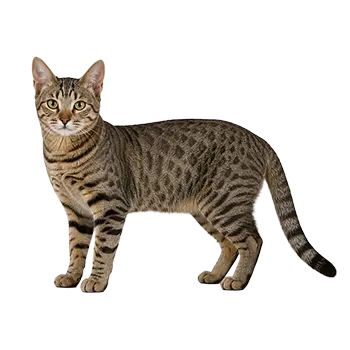

The Dragon Li is a natural landrace breed from China, and queens of this line tend to be capable, instinctive mothers with few of the delivery complications seen in heavily engineered pedigree cats. Even so, the first day of life is the most dangerous day a kitten will ever have. Litters usually number three to five kittens. Each one should be observed shortly after birth to confirm that the amniotic sac has been cleared from the face, that the umbilical cord has been severed cleanly an inch or so from the body wall, and that breathing is quiet and unobstructed.
The single most important event of the first day is a successful latch. Colostrum, the antibody-rich first milk produced in roughly the first sixteen to twenty-four hours, is the only source of passive immunity a kitten will receive, and the neonatal gut can only absorb those immunoglobulins intact for a very short window. Watch each kitten nurse rather than assuming it has. A first-time Dragon Li queen may need nothing more than quiet company, but a kitten that has not fed within two hours of birth should be repositioned at a rear nipple, which usually produces the most milk, and the veterinarian should be called if it still will not take hold.
Weigh every kitten at birth and write the number down. A healthy Dragon Li newborn typically weighs between 90 and 120 grams, reflecting the breed's medium-to-large substance. Daily weighing on a digital gram scale for the first two weeks is the most reliable early warning system available to a breeder. Handling should otherwise be minimal on day one; the queen needs an undisturbed period to bond with her litter, clean them, and settle into a nursing rhythm.
Keep the nesting box in a warm, dim, quiet room. Newborns are born blind and deaf, cannot shiver, and depend entirely on their mother and littermates for heat. A kitten that has drifted to the cold edge of the box and gone quiet is in more danger than one that is crying loudly. Return strays to the huddle, and resist the urge to invite family members in to see the litter until the queen has visibly relaxed.