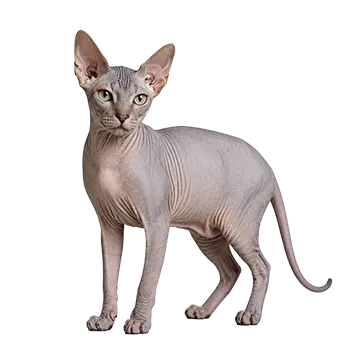
Growth & Physical Development

The juvenile period for a Donskoy cat spans roughly from three months to around one year of age, though some individuals continue filling out well into their second year. During this stage, the kitten transforms from a small, somewhat awkward youngster into a lean, muscular adolescent with increasingly defined features. The characteristic wrinkled skin becomes more pronounced as the body grows, and the breed's distinctive wedge-shaped head and large ears become more prominent.

Donskoy cats come in four recognized coat varieties, and the juvenile period is when coat changes become most apparent. Kittens born with the rubber bald type remain completely hairless, while those with the flocked variety may lose their ultra-fine down during these months. Velour-coated kittens often see their soft wavy hair thin out and eventually disappear from much of the body, and brush-coated individuals retain a wiry partial coat. Understanding which coat variety your Donskoy carries helps set expectations for their adult appearance.

Weight gain should be steady and proportional during adolescence. A healthy juvenile Donskoy typically weighs between four and eight pounds, depending on sex and individual genetics. Males tend to be noticeably larger than females. Monitor growth by weighing monthly and noting any sudden plateaus or spikes, which could indicate nutritional imbalances or health concerns.

Muscular development becomes increasingly visible in this breed because there is no fur to conceal the body's contours. You may notice the chest broadening, the legs lengthening, and the overall physique taking on the athletic, elegant build that characterizes the adult Donskoy. Regular play and activity support healthy muscle and bone development during this critical growth phase.

Nutrition & Diet Transition

As the Donskoy transitions from kittenhood to adolescence, nutritional needs shift to support rapid growth, high energy levels, and the unique metabolic demands of a hairless breed. Donskoy cats have a higher basal metabolic rate than most coated breeds because they expend more energy maintaining body temperature. This means they typically require more calories per pound of body weight than their furred counterparts.

A high-quality kitten food rich in animal-based protein should remain the dietary foundation through at least the first year. Look for foods where a named animal protein is the first ingredient and that provide a fat content sufficient to support both energy needs and skin health. The omega fatty acids found in quality animal fats play a particularly important role in maintaining the supple, healthy skin that is so visible on a hairless breed.

Feeding frequency can gradually decrease from four meals per day at three months to two or three meals per day by six months. Free feeding is generally not recommended for Donskoy cats because their higher caloric needs can lead to overconsumption and weight gain if food is constantly available. Measured portions at scheduled times allow you to monitor intake and adjust quantities based on the individual cat's growth rate and activity level.

Fresh water should always be available, and some Donskoy cats benefit from a pet water fountain that encourages increased hydration. Adequate water intake supports kidney function, helps regulate body temperature, and contributes to healthy skin. Discuss with your veterinarian whether any dietary supplements are appropriate for your individual cat, as nutritional needs can vary based on coat type, activity level, and overall health status.

Tractor Supply Co

Behavioral Changes

Adolescence brings a surge of energy, curiosity, and occasional mischief that can catch even experienced cat owners off guard. The Donskoy is an inherently playful and intelligent breed, and the juvenile period amplifies these traits considerably. Expect your young Donskoy to be in near-constant motion during waking hours, investigating every cabinet, climbing every surface, and testing the boundaries of acceptable behavior.

Social behavior becomes more complex during this stage. Donskoy cats are known for forming exceptionally strong bonds with their human families, and adolescent Donskoys may become particularly clingy or demanding of attention. They often follow their owners from room to room, vocalize to initiate interaction, and seek out physical contact whenever possible. This breed's social nature means they can become anxious or destructive if left alone for extended periods without companionship or enrichment.

Territory-related behaviors may emerge as the cat matures, particularly in intact males. Spraying, increased vocalization, and heightened interest in doors and windows can signal the onset of sexual maturity. These behaviors typically appear between five and nine months of age and are one of many reasons to discuss spay or neuter timing with your veterinarian.

Adolescent Donskoys also begin developing more refined play preferences. Some become avid fetchers, others prefer puzzle toys that challenge their intelligence, and many develop a fondness for interactive play with wand toys or laser pointers. Observing your cat's play style helps you provide the types of enrichment that keep them mentally satisfied and physically engaged.

Training Priorities

The Donskoy's intelligence and desire to please make them one of the more trainable cat breeds, and the juvenile period is an ideal time to establish good habits. Positive reinforcement training, using treats, praise, and play as rewards, is far more effective than punishment-based approaches. Donskoy cats are sensitive to tone of voice and respond well to enthusiastic encouragement.

Litter box training is typically well established by the time a Donskoy reaches the juvenile stage, but adolescence can bring regression if environmental changes or stress disrupt routines. Ensure the litter box is in a quiet, accessible location and is kept scrupulously clean. Hairless cats may be more sensitive to certain litter textures against their bare skin, so experiment with different types if your cat shows reluctance to use the box.

Scratching behavior is natural and necessary for claw maintenance, stretching, and territorial marking. Provide sturdy scratching posts in multiple locations and reward your Donskoy for using them. If the cat begins scratching furniture, redirect the behavior calmly and consistently to an appropriate surface rather than scolding, which can damage the trust bond this breed values so highly.

Many Donskoy owners successfully teach their cats to walk on a harness and leash, come when called, and perform simple tricks such as sitting or shaking paws. These training activities serve a dual purpose by providing mental stimulation and strengthening the bond between cat and owner. Keep training sessions short, positive, and frequent for the best results, ending each session on a successful note.

Exercise & Activity

Juvenile Donskoy cats possess remarkable energy levels that require appropriate outlets to prevent boredom-driven destruction. Daily interactive play sessions of at least 15 to 20 minutes, twice per day, are a minimum for this active breed. Wand toys that mimic prey movement, crinkle balls, and interactive puzzle feeders all help channel the adolescent Donskoy's natural hunting instincts into constructive activities.

Vertical space is particularly important for this breed. Cat trees, wall-mounted shelves, and elevated perches give the Donskoy opportunities to climb, jump, and survey their territory from above. These structures also provide exercise through climbing and encourage natural feline behaviors. Choose cat trees with soft, fabric-covered platforms rather than rough sisal on the resting surfaces, as the Donskoy's bare skin can be irritated by abrasive materials.

Because Donskoy cats lack the sun protection that fur provides, outdoor exercise should be carefully managed. Direct sun exposure can cause sunburn on their exposed skin, while cold temperatures pose an even greater risk due to their lack of insulation. If you wish to provide outdoor time, supervised sessions in a secure enclosure during mild weather, or leash walks during appropriate conditions, are the safest approaches.

Enrichment rotation keeps the adolescent mind engaged. Introduce new toys regularly, rearrange climbing structures periodically, and offer novel experiences like cardboard boxes, paper bags, or food puzzles to maintain your Donskoy's interest. A bored Donskoy is a destructive Donskoy, and the investment in enrichment pays dividends in a calmer, happier household.

Spay/Neuter Considerations

The decision of when to spay or neuter a Donskoy cat should be made in consultation with your veterinarian, taking into account the individual cat's health, development, and living situation. Most veterinarians recommend the procedure between four and six months of age, before the onset of sexual maturity and the associated behavioral changes. Early spaying or neutering also eliminates the risk of certain reproductive cancers and prevents unwanted litters.

Intact Donskoy males can develop strong-smelling urine, territorial spraying habits, and an increased desire to roam and fight. These behaviors are driven by hormones and can become deeply ingrained if the cat is left intact for an extended period. Neutering typically reduces or eliminates these behaviors, particularly when performed before they become habitual.

Female Donskoys that are not spayed will experience regular heat cycles, which in this breed can be particularly vocal and dramatic. Queens in heat may call loudly, become restless, assume mating postures, and attempt to escape the home. Repeated heat cycles without breeding can also contribute to uterine infections and other reproductive health issues over time.

If you are considering keeping your Donskoy intact for future breeding purposes, discuss this thoroughly with your veterinarian and a breed mentor. Responsible breeding of Donskoy cats requires genetic testing, health screening, and a deep understanding of the breed's unique coat genetics. The decision to breed should never be taken lightly, and the welfare of both the parent cats and potential offspring must be the primary consideration.

Socialization & Exposure

Continued socialization during the juvenile period builds upon the foundation laid in kittenhood and is essential for developing a confident, well-adjusted adult Donskoy. While the prime socialization window closes around seven to nine weeks of age, adolescent cats remain receptive to new experiences and benefit greatly from ongoing positive exposure to varied people, environments, and stimuli.

Introduce your juvenile Donskoy to visitors of different ages, appearances, and energy levels. Because this breed is naturally sociable, most Donskoy cats enjoy meeting new people, but each introduction should be on the cat's terms. Allow the cat to approach at their own pace and reward calm, confident interactions with treats or affection. Forced interactions can create fear associations that are difficult to overcome later.

Exposure to common household events and sounds helps prevent fear-based reactions in adulthood. Vacuum cleaners, blenders, doorbells, television, and music should all become part of the Donskoy's normal acoustic landscape. Introduce these sounds gradually and pair them with positive experiences such as treats or play so the cat learns to associate them with good things rather than threats.

If your Donskoy will be visiting a groomer, traveling in a carrier, or attending veterinary appointments, practice these experiences regularly during the juvenile period. Short car rides, brief sessions in the carrier at home, and gentle handling that mimics veterinary examinations all help the cat become comfortable with situations that many adult cats find stressful. The Donskoy's naturally trusting temperament gives you a head start, but consistent positive exposure ensures that trust extends to a wide range of life experiences.

Always consult a qualified professional before making any health-related decisions. This content is provided for informational reference only and should not replace professional guidance specific to your animal.