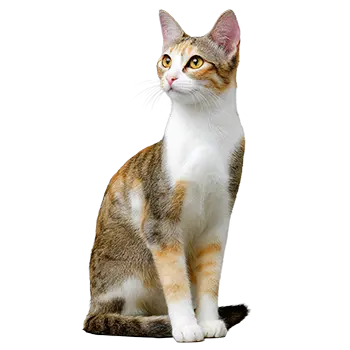

Growth & Physical Development

The juvenile period for an Aegean cat spans roughly from eight weeks to twelve months of age, a stretch of rapid physical transformation during which the kitten's body approaches its adult proportions. Aegeans are a medium-sized breed, and most individuals reach their full skeletal frame by ten to twelve months, though muscle mass and coat density may continue to fill in for several months beyond that. Males tend to be slightly larger than females, typically finishing between nine and twelve pounds, while females settle between seven and ten pounds.

Growth during this period is not perfectly linear. Aegean kittens often experience noticeable growth spurts interspersed with brief plateaus, and their appetite will fluctuate accordingly. A kitten that seems ravenous one week and comparatively disinterested in food the next is usually responding to its body's changing energy demands rather than signaling a health problem. Consistent monitoring of body condition — feeling the ribs and observing the waistline from above — is more informative than fixating on exact weight targets.

The Aegean's semi-longhaired coat undergoes significant changes during the juvenile months. Kittens are born with a relatively fine, soft coat that gradually gives way to the denser, more textured adult fur. The bicolor or tricolor patterns that define the breed become more clearly delineated as the kitten matures, and the characteristic white patches with color markings sharpen in contrast. Seasonal coat changes may also begin to appear toward the end of the first year, reflecting the breed's adaptation to the Mediterranean climate with its warm summers and cool, damp winters.

Skeletal development during this stage means that an Aegean kitten's joints and growth plates remain vulnerable to injury from excessive jumping or rough play on hard surfaces. While the breed is naturally athletic and sure-footed — traits refined through generations of island living — caution is warranted with very high cat trees or unsupervised access to tall furniture until the kitten is closer to eight or nine months old and the long bones have reached near-adult density.

Nutrition for the Growing Kitten

Nutritional demands during the juvenile period are substantially higher per unit of body weight than at any other life stage except lactation. A growing Aegean kitten requires a diet formulated specifically for kittens, with elevated protein levels to support muscle development, adequate fat for energy and coat health, and balanced calcium-to-phosphorus ratios for proper bone mineralization. Commercial kitten foods labeled as meeting AAFCO growth standards provide a reliable nutritional foundation.

Feeding frequency should reflect the kitten's age and stomach capacity. From eight to twelve weeks, offer four meals per day. Between three and six months, three meals per day is appropriate. After six months, most Aegean kittens transition comfortably to two meals per day, a schedule that can continue into adulthood. Free-choice feeding — leaving dry food available at all times — is an option for very active kittens who self-regulate well, but it carries a risk of overconsumption in individuals with lower activity levels.

Wet food should constitute a meaningful portion of the juvenile Aegean's diet, ideally at least half of total caloric intake. The moisture content supports urinary tract health, which is relevant for all cats, and the higher protein density of wet food aligns with feline metabolic requirements. Many Aegean owners find that their kittens show a particular enthusiasm for fish-based flavors, a preference that may reflect the breed's historical association with Greek fishing villages, though poultry- and meat-based formulas are equally nutritious and should be rotated to prevent fixation on a single protein source.

Fresh water must be available at all times. Some Aegean kittens are fascinated by running water, a trait consistent with the breed's well-documented affinity for water. A cat water fountain can encourage adequate hydration while providing a source of enrichment. Avoid giving milk or dairy products, as most cats become lactose intolerant after weaning and dairy can cause diarrhea. Treats should not exceed ten percent of daily caloric intake and should be nutritionally appropriate — avoid human food scraps, which can introduce harmful ingredients and encourage begging.

Behavioral Development & Play

The juvenile Aegean is a whirlwind of energy, curiosity, and rapidly developing social intelligence. Between two and seven months, play behavior becomes increasingly complex and purposeful, transitioning from the clumsy batting and tumbling of early kittenhood into coordinated stalking, pouncing, and ambush sequences that mirror adult hunting patterns. This play is not merely entertainment — it is the mechanism through which the kitten refines motor skills, practices problem-solving, and learns the social rules that govern interactions with other cats and with people.

Aegeans are known for their sociability and their strong attachment to human family members, and these traits become strikingly apparent during the juvenile period. The kitten will seek out companionship actively, following household members from room to room, inserting itself into activities, and vocalizing to solicit attention. This breed communicates with a varied repertoire of chirps, trills, and soft meows that many owners find more conversational than demanding. Responding to these vocalizations with engagement reinforces the bond and encourages the confident, outgoing temperament the breed is prized for.

Provide a rich array of interactive toys to channel the juvenile Aegean's energy constructively. Wand toys with feather or fabric attachments satisfy predatory instincts and allow you to direct play sessions. Puzzle feeders and treat-dispensing toys engage the breed's considerable intelligence and reduce boredom-driven mischief. Rotate toys regularly to maintain novelty, as Aegean kittens are quick to lose interest in objects they have thoroughly investigated.

Adolescence, roughly six to twelve months of age, brings a hormonal surge that can temporarily intensify certain behaviors. Intact males may begin spraying or showing territorial aggression, while intact females may exhibit restlessness, increased vocalization, and rolling behavior as they approach their first estrous cycle. These behaviors are strong signals that the time for spaying or neutering has arrived if the cat is not intended for a responsible breeding program. The procedure typically smooths out hormonally driven behaviors and prevents unwanted litters.

Training & Household Habits

Aegean cats are intelligent, responsive, and eager to please, making the juvenile period an ideal time to establish household routines and basic training. Litter box habits are usually well established before a kitten arrives in its new home at twelve weeks, but the transition to a new environment may require reinforcement. Place the litter box in a quiet, accessible location and show the kitten where it is upon arrival. Use unscented, fine-grained litter initially, as heavily perfumed or coarse substrates can deter use.

Scratching behavior emerges strongly during the juvenile months as the kitten's claws grow and it develops the natural urge to stretch, condition its claws, and mark territory. Provide sturdy scratching posts or boards — sisal rope and corrugated cardboard are popular surfaces — and position them near the kitten's preferred resting areas and along common travel paths. When the kitten scratches an inappropriate surface, redirect it calmly to the designated post rather than punishing it. Positive reinforcement with treats or praise when the kitten uses the correct surface accelerates learning.

Basic cue training is entirely feasible with juvenile Aegeans and provides valuable mental stimulation. Many individuals learn to respond to their name, come when called, sit on cue, and even retrieve small objects. Use small, high-value food rewards delivered immediately after the desired behavior, and keep training sessions short — two to three minutes at a time is sufficient for a kitten's attention span. Clicker training works exceptionally well with this breed because it provides the precise timing that connects the reward to the behavior.

Establish boundaries early for behaviors you do not want in the adult cat. If kitchen counters, dining tables, or certain rooms are off-limits, enforce those boundaries consistently from the beginning rather than allowing access now and attempting to retract it later. Double-sided tape on counter edges, closed doors, and consistent redirection are more effective than punishment, which can damage the trust between kitten and owner and is counterproductive with a breed that thrives on positive human interaction.

Vaccination & Preventive Health

The juvenile period encompasses the critical phase of primary vaccination and the establishment of a lifelong preventive health routine. Core vaccines for kittens — feline panleukopenia, feline calicivirus, and feline herpesvirus (rhinotracheitis) — are typically administered in a series of three doses starting at six to eight weeks of age, with boosters at three- to four-week intervals until the kitten reaches sixteen weeks. A rabies vaccination is given at twelve to sixteen weeks depending on local regulations. Your veterinarian will create a schedule tailored to the kitten's specific needs and risk profile.

Non-core vaccines may be recommended based on the Aegean kitten's lifestyle and environment. Feline leukemia virus vaccination is generally advised for kittens that will have any outdoor access or contact with cats of unknown status. Feline immunodeficiency virus and chlamydophila vaccines are considered on a case-by-case basis. Discuss your kitten's expected living situation candidly with your veterinarian so that vaccine decisions reflect actual risk rather than a one-size-fits-all protocol.

Parasite prevention extends beyond the deworming begun during the neonatal period. Flea prevention should be initiated as soon as the kitten reaches the minimum age and weight specified by the chosen product, typically around eight weeks and two pounds. Kittens that will spend time outdoors — and the Aegean's adventurous, exploratory nature makes supervised outdoor access appealing to many owners — also need tick prevention. Intestinal parasite screening via fecal examination should be performed at least twice during the first year.

Spaying or neutering is generally recommended between four and six months of age for cats not intended for breeding. The procedure eliminates the risk of reproductive cancers, prevents unwanted litters, and reduces or eliminates hormonally driven behaviors such as spraying, roaming, and yowling. Discuss the optimal timing with your veterinarian, as individual development varies. A pre-surgical examination including baseline blood work confirms that the kitten is healthy enough for anesthesia.

Socialization & Environmental Enrichment

While the most sensitive socialization window closes around seven weeks of age, the juvenile period remains a vital time for broadening an Aegean kitten's experiences and cementing the social confidence established during the neonatal weeks. Every positive encounter with a new person, animal, sound, or environment during this stage adds to the kitten's behavioral repertoire and reduces the likelihood of fear-based reactions in adulthood.

Introduce the kitten to as many different people as possible during its first months in your home — men, women, children of various ages, people wearing hats or uniforms, visitors with different voices and energy levels. Each interaction should be gentle and voluntary; never force the kitten into a situation that visibly frightens it. Allow it to approach, investigate, and retreat at its own pace. Food rewards and calm praise paired with new experiences build positive associations.

If you have other pets, introductions should be managed carefully regardless of the Aegean's naturally sociable disposition. Use scent swapping — exchanging bedding between the new kitten and resident animals — before any face-to-face meeting. Initial visual contact through a baby gate or cracked door allows both parties to assess each other without the risk of a physical altercation. Short, supervised sessions with gradual increases in duration are safer and more effective than a single, unrestricted introduction. Most Aegeans integrate well with other cats and with cat-friendly dogs, given patient management.

Environmental enrichment is not optional for this intelligent, active breed — it is a necessity. Vertical space in the form of cat trees, shelves, or window perches allows the kitten to climb, survey its territory, and exercise. Window perches overlooking outdoor activity provide hours of visual stimulation. Rotate puzzle toys, crinkle tunnels, and interactive feeding devices regularly. The Aegean's well-documented affinity for water means that a dripping faucet, a shallow basin of water with floating toys, or supervised access to a bathtub with a small amount of water can provide a unique and breed-appropriate form of enrichment that few other cats enjoy.

Preparing for the Transition to Adulthood

As the Aegean kitten approaches its first birthday, the frenetic energy of early kittenhood begins to modulate into the steadier, more purposeful activity level of a young adult. Growth slows, the adult coat reaches its full density and texture, and behavioral patterns stabilize. This transitional period is an appropriate time to evaluate the cat's overall health, adjust its diet, and confirm that household routines are working well for both the cat and the family.

Schedule a comprehensive veterinary examination around twelve months of age. This visit should include a thorough physical examination, a review of vaccination status to confirm that the primary series is complete, a fecal parasite screen, and a dental assessment. The veterinarian may also recommend baseline blood work — a complete blood count and chemistry panel — to establish normal reference values for the individual cat, which will be invaluable for comparison if health issues arise later in life.

Dietary transition from kitten food to an adult maintenance formula is generally appropriate around twelve months for Aegean cats. The switch should be made gradually over seven to ten days, mixing increasing proportions of adult food with decreasing proportions of kitten food to avoid gastrointestinal upset. Select a high-quality adult cat food with animal-source protein as the primary ingredient and minimal reliance on carbohydrate fillers. Continue offering both wet and dry food to support hydration and dental health.

Assess the cat's weight and body condition at the time of dietary transition. An Aegean in ideal condition has ribs that are easily felt but not prominently visible, a visible waist when viewed from above, and a slight abdominal tuck when viewed from the side. Overweight adolescent cats are at increased risk of developing obesity in adulthood, and this is the moment to establish portion sizes and feeding habits that will maintain a healthy body condition throughout the cat's life.

Reflect on the behavioral patterns that have emerged over the past year and address any that may be problematic before they become entrenched adult habits. Jumping on counters, excessive nocturnal activity, or rough play with hands can all be redirected more easily in a twelve-month-old cat than in one that has practiced these behaviors for several years. The investment in consistent training during the juvenile period pays dividends in a well-mannered, enjoyable adult companion.

Always consult a qualified professional before making any health-related decisions. This content is provided for informational reference only and should not replace professional guidance specific to your animal.