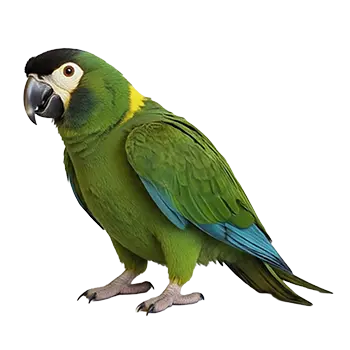

Weaning is one of the most consequential periods in a young Yellow-Collared Macaw's life, marking the gradual shift from complete dependence on hand-feeding formula or parental crop feedings to independent consumption of solid foods. In this mini macaw species, the weaning window typically begins between eight and ten weeks of age and may extend to twelve or fourteen weeks depending on the individual bird's pace of development. Rushing this process creates lasting psychological and physiological damage, while allowing the bird to set its own pace produces a more confident and well-adjusted companion.
The first signs of weaning readiness appear when the chick begins to refuse formula or reduce the volume it accepts at individual feedings, while simultaneously showing active interest in solid food items placed in or near its enclosure. A Yellow-Collared Macaw chick approaching weaning will pick up, mouth, and manipulate objects with increasing dexterity, using its feet and beak in the coordinated fashion characteristic of psittacines. Place small, soft food items such as warm cooked sweet potato, mashed banana, soaked pellets, and finely chopped leafy greens on a flat dish where the chick can explore them at will.
Do not abruptly withdraw formula feedings in an attempt to force the chick onto solid food. This practice, sometimes called forced weaning or abundance weaning's opposite, causes dangerous weight loss, dehydration, and intense psychological stress that can manifest as chronic anxiety, feather-destructive behavior, or food aversion later in life. Instead, maintain formula feedings on the chick's existing schedule while offering solid foods between meals. As the chick begins eating measurable quantities of solid food and its formula intake naturally declines, gradually reduce the number of daily formula feedings from three to two, then from two to one, and finally eliminate the last feeding only when the chick is consistently maintaining or gaining weight on solid food alone.
Monitor the chick's weight daily throughout the weaning process. A modest weight dip of five to eight percent from the chick's peak pre-weaning weight is considered normal and reflects the transition from the calorie-dense formula diet to the less concentrated solid diet. Weight losses exceeding ten percent, or a sustained downward trend over several consecutive days, indicate the weaning is progressing too quickly or the chick is not consuming enough solid food to meet its caloric needs. Resume supplemental formula feedings immediately in these cases and consult your avian veterinarian if the weight does not stabilize within forty-eight hours.