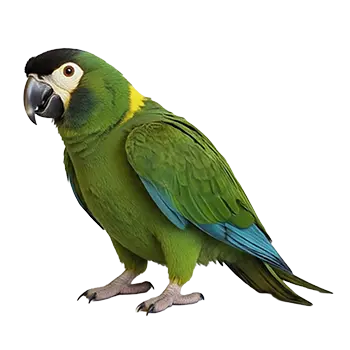

Sexual Maturity & Breeding Readiness

Yellow-Collared Macaws typically reach sexual maturity between two and a half and four years of age, though the onset of hormonal behavior and physical readiness for successful reproduction do not always coincide. A bird that displays courtship behaviors at two years of age may not be physiologically prepared for the demands of egg production, incubation, and chick rearing until somewhat later. Responsible breeders wait until both members of a prospective pair have reached full physical maturity and demonstrate consistent, stable hormonal cycling before allowing breeding attempts.

Signs of sexual maturity in Yellow-Collared Macaws include increased vocalization during the breeding season, regurgitation directed at the mate or at a favored object, territorial behavior around the cage or enclosure, increased interest in dark, enclosed spaces that mimic nesting cavities, and in females, a subtle widening of the pelvic bones that can be detected through gentle palpation by an experienced avian veterinarian. Males may display wing spreading, head bobbing, and eye pinning as part of their courtship repertoire. These behaviors intensify with photoperiod changes, typically increasing as day length extends in spring and early summer.

Before committing to a breeding program, both prospective parent birds should undergo comprehensive health screening. This includes a complete physical examination, blood work including complete blood count and biochemistry panel, testing for Psittacine Beak and Feather Disease, Avian Polyomavirus, and Chlamydia psittaci, and a fecal analysis for parasites. Breeding a bird that carries a contagious disease risks transmitting the pathogen to the mate, the developing embryos, or the hatched chicks, with potentially devastating consequences for the entire clutch and any other birds in the household or aviary.

DNA sexing is essential for any breeding pair, as Yellow-Collared Macaws are monomorphic, meaning males and females are visually identical in plumage, size, and general appearance. Surgical sexing has largely been replaced by DNA sexing performed on a blood sample or a freshly plucked feather, which provides definitive sex identification without the risks associated with anesthesia and endoscopy. Pairing two birds of the same sex is a surprisingly common mistake in monomorphic species and results in either no eggs at all or infertile eggs from two females that bond and attempt to nest.

Pair Bonding & Compatibility

Successful breeding of Yellow-Collared Macaws depends heavily on the compatibility and strength of the pair bond between the two birds. Unlike some domesticated animals where breeding is a managed event between any male and female of the species, parrots are pair-bonding species that form deep, selective partnerships. A Yellow-Collared Macaw will not reliably breed with a mate it has not chosen to bond with, and forcing incompatible birds into a breeding situation creates stress, aggression, and the potential for serious physical injury.

The pair bonding process should be allowed to develop naturally over an extended period. Begin by housing the two birds in separate cages positioned side by side where they can see and hear each other without direct physical contact. This visual introduction period allows the birds to assess each other and begin developing interest without the risk of aggression that can occur when unfamiliar macaws are placed together in a shared space. Look for positive indicators such as mutual preening attempts through the cage bars, synchronized feeding behavior, and calm body language when the birds are near each other.

After several weeks of positive interaction through separate cages, the birds can be introduced in a neutral space outside either bird's established territory. Supervise these initial direct meetings closely and be prepared to separate the birds immediately if aggression occurs. Positive signs during supervised meetings include mutual preening, food sharing, side-by-side perching with relaxed body posture, and gentle beak contact. Chasing, lunging, biting, and aggressive vocalizations indicate that the birds are not yet compatible and may never form a viable pair bond. Some pairs bond quickly within a few weeks of introduction, while others require months of gradual acquaintance. Patience during this process pays significant dividends in breeding success.

Once a pair bond is established, the bonded pair should be housed together in a spacious breeding enclosure that provides room for flight, exercise, and the eventual installation of a nest box. The enclosure should be located in a quiet area of the home or aviary, away from heavy foot traffic, loud noises, and the presence of other birds that might create territorial stress. A bonded pair of Yellow-Collared Macaws that feels secure in its environment and comfortable with its mate is far more likely to proceed through the full breeding cycle successfully than a pair that is stressed by environmental disturbances or interpersonal conflict.

Not all pairings will result in a successful bond, and some individuals may prove to be challenging breeders regardless of the mate provided. Behavioral incompatibility, health issues, past trauma, or individual temperament can all prevent a bird from bonding effectively. If repeated introduction attempts over several months fail to produce positive bonding indicators, the responsible decision is to abandon the pairing and either try a different mate or accept that one or both birds may not be suitable breeding candidates.

Nest Box Setup & Environment

Providing an appropriate nest box is one of the most important practical steps in preparing for Yellow-Collared Macaw breeding. The nest box serves not only as the physical site for egg laying, incubation, and chick rearing but also as a powerful environmental cue that stimulates the hormonal cascade leading to reproductive behavior. The timing of nest box introduction, its construction, placement, and internal preparation all influence whether the pair will inspect, accept, and ultimately use it for breeding.

For Yellow-Collared Macaws, a vertical or L-shaped wooden nest box measuring approximately 10 inches wide by 10 inches deep by 24 inches tall is suitable. The entrance hole should be approximately 3 to 3.5 inches in diameter, large enough for the bird to enter and exit comfortably but small enough to create the sense of an enclosed, protected cavity. An interior ladder or a series of wire mesh steps running from the entrance hole to the bottom of the box allows the hen to descend and ascend without damaging the eggs. The box should be constructed from untreated hardwood or exterior-grade plywood, as softwoods splinter easily and treated lumber may contain chemicals harmful to the birds.

Line the bottom of the nest box with a substrate of approximately three to four inches of clean, untreated wood shavings such as aspen or pine. Avoid cedar shavings, which contain aromatic oils that can irritate the respiratory systems of both adult birds and developing chicks. Some breeders add a concave depression in the center of the substrate to help keep the eggs centered and prevent them from rolling to the edges of the box where they may not be properly incubated. The substrate should be replaced or refreshed between clutches and inspected periodically during incubation for excessive soiling or moisture accumulation.

Mount the nest box on the outside of the breeding enclosure, high on the wall, with the entrance hole aligned to a cage opening. External mounting provides easier access for the breeder to inspect the nest without disturbing the interior of the flight cage, and the elevated position satisfies the bird's instinctive preference for a high nesting site that feels secure from ground-level threats. Ensure the box is mounted securely to prevent wobbling or shifting, which can cause the pair to abandon the nest. A hinged inspection door on the side or back of the box allows the breeder to check on eggs and chicks with minimal disturbance.

Introduce the nest box when you are prepared to commit to the full breeding cycle, including the possibility of hand-rearing if the parents fail to care for the chicks adequately. The presence of a nest box stimulates hormonal changes in both the male and female, and removing it after the pair has begun breeding behavior can cause significant hormonal disruption and stress. Timing the introduction to coincide with the natural breeding season, typically early spring in the Northern Hemisphere when day length is increasing, maximizes the likelihood of a successful breeding attempt.

Egg Laying, Incubation & Monitoring

Once the pair has accepted the nest box and copulation has been observed, the female Yellow-Collared Macaw will typically begin laying eggs within ten to fourteen days. The clutch size for this species ranges from two to four eggs, with three being the most common number. Eggs are laid at intervals of approximately forty-eight hours, meaning the full clutch is deposited over a period of four to eight days. The eggs are white, oval, and approximately 30 millimeters in length, smaller than those of the large macaw species but proportionate to the Yellow-Collared Macaw's body size.

Incubation begins in earnest when the hen settles on the clutch, which may occur after the first egg is laid or, in some pairs, not until two or more eggs have been deposited. The incubation period for Yellow-Collared Macaws is approximately 24 to 26 days from the onset of consistent sitting. During this time, the hen remains in the nest box for the majority of each day, leaving only briefly to eat, drink, and defecate. The male takes on the role of provider, feeding the hen at the nest box entrance and standing guard on a nearby perch. Minimal disturbance of the pair during incubation is essential, as excessive interference can cause nest abandonment, egg breakage, or chronic stress that impairs the breeding process.

Egg candling, the practice of shining a focused light through the shell to assess embryonic development, can be performed cautiously at approximately seven to ten days into incubation. Fertile eggs at this stage will show a visible network of blood vessels and a developing embryo, while infertile eggs appear uniformly translucent or contain a distinct, unmoved yolk shadow. Candle eggs quickly, handling them gently and returning them to the nest immediately to minimize temperature disruption. Mark each egg with a soft pencil to track individual development and identify any that cease developing during the incubation period.

Environmental conditions during incubation require careful management. The breeding room should be maintained at a stable temperature between 70 and 78 degrees Fahrenheit with moderate humidity. Temperature extremes in either direction can compromise embryonic development or cause the hen to spend excessive time off the nest attempting to thermoregulate. Excessive noise, vibrations, or the presence of unfamiliar people or animals near the breeding enclosure can trigger nest abandonment, particularly in first-time breeding pairs. Routine cage maintenance, feeding, and water changes should be performed at consistent times to establish a predictable pattern that the pair can accommodate without alarm.

Dead-in-shell, where embryos develop partially but fail to hatch, is a common source of disappointment in aviculture. Contributing factors include inadequate humidity during the final days of incubation, nutritional deficiencies in the hen's diet prior to and during laying, improper incubation temperature, genetic abnormalities, and bacterial contamination of the egg through a cracked or porous shell. If dead-in-shell losses occur across multiple eggs or clutches, a thorough review of environmental conditions, diet, and parental health with your avian veterinarian is warranted to identify and correct the underlying cause.

Chick Rearing Decisions

The decision of whether to allow Yellow-Collared Macaw parents to raise their chicks naturally or to pull the chicks for hand-rearing is one of the most consequential choices a breeder faces. Each approach has distinct advantages and trade-offs, and the right decision depends on the breeder's goals, the parents' temperament and experience, the intended purpose of the chicks, and the breeder's own level of experience and commitment to the intensive demands of neonatal hand-feeding.

Parent-rearing offers the significant advantage of natural feeding, warmth regulation, and social development that no human caregiver can fully replicate. Chicks raised by attentive parents receive instinctive crop feedings at the optimal temperature, volume, and frequency, and they learn essential avian social behaviors including vocalization patterns, flock communication, and species-appropriate body language from their parents and siblings. Parent-raised chicks tend to develop stronger immune systems, better feather quality, and more psychologically stable temperaments as adults, provided they also receive regular gentle human socialization to ensure tameness.

Hand-rearing produces chicks that are typically more intensely bonded to humans and more immediately comfortable with handling, which makes them more appealing to pet buyers seeking a tame, interactive companion. However, hand-rearing is extraordinarily demanding, requiring round-the-clock feeding during the first weeks, meticulous hygiene, precise temperature management of both formula and brooder, and the experience to recognize and respond to the subtle signs of feeding problems, crop dysfunction, or emerging illness in a neonatal parrot. Inexperienced hand-feeders risk crop burns, aspiration pneumonia, malnutrition, and bacterial infections that can kill chicks rapidly.

A middle-ground approach practiced by many experienced breeders involves allowing the parents to raise the chicks for the first two to three weeks, during which time the chicks receive the benefits of natural parental care including the initial immune-boosting crop secretions, and then pulling the chicks for hand-rearing to complete the socialization and taming process. This approach requires that the parents be experienced and reliable sitters and feeders, and that the breeder has the skill to manage the transition from parental feeding to hand-feeding formula without causing undue stress or nutritional disruption.

Regardless of the rearing method chosen, the breeder bears responsibility for every chick produced. This includes providing appropriate veterinary care, ensuring proper socialization and weaning, screening potential buyers or adopters for knowledge and commitment, and being willing to take back any bird that a buyer can no longer care for. Breeding without a clear plan for placing every chick in a permanent, suitable home contributes to the overpopulation of parrots in rescue organizations and sanctuaries, a chronic problem that responsible aviculture must actively work to prevent.

Breeding Health & Complications

Breeding places significant physiological demands on both the male and female Yellow-Collared Macaw, and the health risks associated with reproduction require vigilant monitoring and prompt veterinary intervention when problems arise. A proactive approach to breeding health management protects the welfare of the parent birds and maximizes the likelihood of producing healthy, viable chicks.

Egg binding is the most acute and immediately dangerous reproductive complication in female parrots. It occurs when a fully formed egg cannot pass through the oviduct and cloaca, becoming physically trapped within the reproductive tract. Egg binding can be caused by calcium deficiency, inadequate muscle tone, obesity, oversized or malformed eggs, chronic reproductive activity, or environmental stressors that cause the hen to retain the egg. Signs of egg binding include straining, tail bobbing, fluffed feathers, lethargy, inability to perch, swelling of the abdomen, and cessation of droppings. Egg binding is a veterinary emergency. Without intervention, a bound egg can compress vital organs, obstruct waste elimination, and lead to shock and death within hours.

Calcium supplementation before and during the breeding season is one of the most effective preventive measures against egg binding and other reproductive complications. The hen draws heavily on her calcium reserves to form eggshells, and if dietary calcium is insufficient, her body will mobilize calcium from her bones, weakening the skeletal structure and potentially leaving insufficient calcium for the muscle contractions needed to expel the egg. Provide calcium-rich foods such as dark leafy greens, broccoli, and cooked egg with shell throughout the breeding season, supplement with a veterinary-approved calcium source, and ensure the hen has access to a cuttlebone or mineral block at all times.

Prolapsed cloaca, where the inner tissue of the cloaca protrudes through the vent, is another serious complication that can occur during or after egg laying. The protruding tissue is vulnerable to drying, infection, and trauma, and the condition requires immediate veterinary attention to clean, reduce, and secure the prolapsed tissue. Recurrence is common, and the underlying cause, which may include straining from egg binding, chronic reproductive activity, or weak musculature, must be addressed to prevent repeated episodes.

The male bird's health during the breeding season also requires attention, though his risks are less acute than the female's. The demands of feeding the incubating hen, defending the nest territory, and subsequently helping to feed growing chicks can deplete the male's nutritional reserves and suppress his immune function if his diet is inadequate. Ensure the male has access to a high-quality, varied diet throughout the breeding season and monitor his weight and body condition alongside the female's. Signs of stress or illness in the male, including weight loss, lethargy, or feather condition changes, should be evaluated promptly, as a debilitated male cannot fulfill his role in supporting the hen and the chicks.

Ethics & Responsibility in Breeding

Breeding Yellow-Collared Macaws carries ethical obligations that extend well beyond the technical aspects of pair management, incubation, and chick rearing. The decision to bring new parrot lives into existence should be made thoughtfully, with full awareness of the long-term consequences for the birds produced, the species as a whole, and the broader landscape of avian welfare. Responsible breeding is defined not by the number of chicks produced but by the quality of care provided, the health and welfare of every bird involved, and the commitment to placing each chick in a permanent, suitable home.

The market for companion parrots is not unlimited, and parrot rescue organizations and sanctuaries across the country are perpetually at or beyond capacity with surrendered, abandoned, and neglected birds. Before breeding any parrot, a responsible aviculturist evaluates the current demand for the species, identifies specific, committed buyers or adopters for each anticipated chick, and has a contingency plan for any chicks that do not find homes. Breeding speculatively, producing clutches with the hope that buyers will materialize, contributes directly to the surplus of unwanted parrots and the suffering that accompanies displacement, rehoming stress, and institutional care.

Genetic responsibility requires maintaining detailed records of each bird's lineage and avoiding pairings between closely related individuals. Inbreeding in small parrot populations can increase the prevalence of genetic health problems, reduce immune competence, and lower reproductive fitness over successive generations. If your breeding stock originates from a small number of founder birds, actively seek unrelated bloodlines to introduce genetic diversity. Cooperative breeding programs that share pedigree information between breeders are invaluable for maintaining the long-term genetic health of captive Yellow-Collared Macaw populations.

Buyer screening is a non-negotiable component of responsible breeding. Every prospective buyer should demonstrate adequate knowledge of Yellow-Collared Macaw care requirements, possess an appropriate living situation, and express a realistic understanding of the decades-long commitment involved in owning a parrot. Responsible breeders ask detailed questions about the buyer's experience, housing, veterinary plans, and expectations. They also include a take-back clause in their sales agreements, guaranteeing that if the buyer can no longer care for the bird at any point in its life, the breeder will accept the bird back rather than allow it to be rehomed to an unknown or inadequate situation.

Breeding should never be undertaken to generate income as a primary motivation. The costs associated with proper avian veterinary care, high-quality nutrition, appropriate housing, DNA sexing, disease testing, hand-feeding supplies, and the significant time investment required for responsible chick rearing routinely exceed the revenue generated from chick sales, particularly for a species like the Yellow-Collared Macaw that commands a moderate rather than premium price in the companion bird market. Breeders who cut corners on veterinary care, nutrition, or housing in order to improve profit margins are compromising the welfare of the birds in their care and producing chicks that may carry health or behavioral problems into their new homes.

Always consult a qualified professional before making any health-related decisions. This content is provided for informational reference only and should not replace professional guidance specific to your animal.