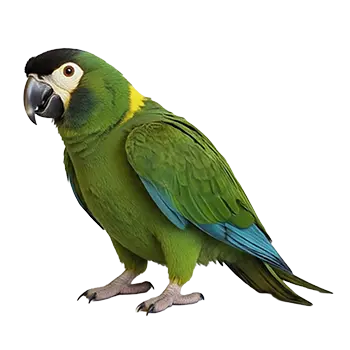

Understanding the Adult Yellow-Collared Macaw

The Yellow-Collared Macaw reaches full physical and behavioral maturity between eighteen months and two years of age, at which point the bird enters a prolonged prime period that can span two decades or more with proper care. As a member of the mini macaw group within the genus Primolius, the adult Yellow-Collared Macaw is a compact, muscular bird measuring fourteen to sixteen inches from head to tail tip, with a weight that typically stabilizes between 120 and 150 grams. Its vivid green plumage, accented by the namesake band of golden-yellow feathers across the nape, the dark blue-tipped flight feathers, and the reddish-brown forehead patch, makes it one of the more visually striking small macaws kept in aviculture.

Adult Yellow-Collared Macaws are characterized by bold, energetic personalities that combine genuine affection with a streak of independent mischief. Unlike some of the larger macaw species that tend toward dramatic emotional displays, Yellow-Collared Macaws express their intelligence and social needs through persistent curiosity, inventive play, and a fondness for physical interaction that includes wrestling with hands, hanging upside down, and initiating games of peek-a-boo or chase. Their moderate talking ability allows many individuals to learn a vocabulary of twenty to fifty words or phrases, though clarity of speech varies considerably between birds.

The adult years are when the relationship between bird and caregiver reaches its full depth. The bond established during the juvenile period matures into a complex social partnership built on trust, routine, and mutual understanding. Yellow-Collared Macaws are perceptive birds that read their owners' emotional states, respond to changes in household dynamics, and develop preferences and dislikes that remain remarkably consistent over time. Investing in the quality of this relationship during the prime adult years pays dividends throughout the bird's life, as a secure, well-bonded macaw is more resilient to the stresses that inevitably accompany changes in living situation, household composition, or daily routine.

Physically, the adult Yellow-Collared Macaw should present a sleek, well-muscled body with smooth, glossy plumage free of stress bars, frayed edges, or bare patches. The eyes should be bright with a pale yellowish-white iris, the beak should be symmetrical and free of flaking or discoloration, and the feet should be smooth with strong, evenly worn nails. Any deviation from this baseline warrants investigation, as outward physical appearance in parrots closely reflects internal health status.

Optimal Adult Nutrition

Feeding an adult Yellow-Collared Macaw well requires moving beyond the growth-focused nutrition of the juvenile stage toward a maintenance diet that supports sustained health, immune function, feather quality, and energy for the bird's active lifestyle without promoting the weight gain that leads to obesity and its associated complications. Nutritional errors during the adult years are among the most common and preventable causes of health problems in captive parrots, and correcting a long-established dietary pattern is significantly harder than maintaining a proper diet from the start.

A high-quality formulated pellet should remain the foundation of the adult diet, comprising approximately 60 to 70 percent of daily food intake by volume. Select a pellet formulated for small to medium parrots, avoiding those designed for large macaws or those containing artificial colors, flavors, or excessive sugar. Some adult Yellow-Collared Macaws that were weaned onto pellets accept them without issue, while birds converted from seed-based diets may require patient, gradual transition strategies. Mixing pellets with favored foods and progressively increasing the pellet ratio over several weeks is often more effective than an abrupt switch.

Fresh vegetables should constitute approximately 20 to 25 percent of the daily diet. Emphasize nutrient-dense options such as dark leafy greens including kale, mustard greens, and dandelion greens, along with orange and red vegetables such as sweet potato, bell peppers, and carrots that provide essential beta-carotene. Cruciferous vegetables like broccoli and cauliflower offer additional vitamins and minerals. Raw or lightly steamed preparations retain the most nutritional value. Introduce variety consistently, as a diverse vegetable intake ensures a broad spectrum of micronutrients that no single food item can provide.

Fruits should be offered in moderation, accounting for no more than five to ten percent of daily intake, due to their sugar content. Tropical fruits such as papaya, mango, and guava are excellent choices that many Yellow-Collared Macaws find irresistible. Berries, including blueberries, raspberries, and blackberries, provide antioxidants with relatively low sugar content. Always remove seeds from fruits such as apples and cherries, as these contain compounds that are potentially toxic to parrots.

Seeds and nuts occupy a small but important niche in the adult diet, best used as training rewards and enrichment items rather than dietary staples. A Yellow-Collared Macaw that fills up on sunflower seeds and safflower seeds will develop a caloric surplus with deficiencies in vitamin A, calcium, and other essential nutrients. Restrict seed and nut offerings to small portions of walnuts, almonds, or pine nuts, and ensure they are raw and unsalted. Avoid peanuts in the shell unless you can verify they are free of Aspergillus mold, which produces aflatoxins that are extremely dangerous to psittacines.

Behavioral Management & Enrichment

An adult Yellow-Collared Macaw is an intelligent, social animal that requires daily mental stimulation and structured interaction to maintain psychological health. Behavioral problems in captive parrots almost always stem from unmet needs rather than inherent temperament flaws, and the most common unmet needs are insufficient social interaction, inadequate mental stimulation, and a lack of opportunities for natural behaviors such as foraging, chewing, and exploration. Addressing these needs proactively prevents the development of problematic behaviors that can strain the human-bird relationship.

Foraging enrichment should be a daily fixture of the adult Yellow-Collared Macaw's routine. In the wild, these birds spend a significant portion of their waking hours searching for, extracting, and processing food. In captivity, a bird that receives its entire daily ration in an open food dish completes the task of eating in minutes and then has nothing to occupy its considerable mental energy for the rest of the day. Foraging toys that require the bird to manipulate, disassemble, or puzzle through barriers to access food items replicate the cognitive challenge of natural foraging. Wrap treats in paper, hide pellets inside foraging boxes, skewer vegetables on stainless steel kabob holders, and rotate toys frequently to maintain novelty.

Chewing is a biological necessity for macaws, not a destructive habit. The powerful beak of even a mini macaw like the Yellow-Collared is designed for cracking seeds, stripping bark, and excavating nest cavities in the wild. Provide an ongoing supply of safe, chewable materials including untreated wood blocks, natural fiber rope toys, palm leaf shredders, and vine balls. Without appropriate chewing outlets, the bird will redirect this drive toward furniture, molding, electrical cords, or other household items, creating a management problem that is the caregiver's failure to provide, not the bird's failure to behave.

Structured out-of-cage time remains essential throughout the adult years. A minimum of three to four hours daily of supervised interaction outside the cage allows the bird to exercise, explore, socialize, and engage with its human family in a more natural and enriching context than cage life permits. Establish consistent rules about which surfaces and areas are accessible, and use positive reinforcement to guide the bird toward acceptable behaviors during free time. A dedicated play stand equipped with toys, perches, and food cups provides a safe base station for out-of-cage activity.

Vocalization management deserves specific attention with Yellow-Collared Macaws, which can produce surprisingly loud calls for their size. Morning and evening contact calls are normal flock behavior and should not be punished or suppressed, as they serve an important social function. However, excessive screaming that extends beyond these natural calling periods is almost always a learned behavior reinforced by the caregiver's response, even negative responses such as yelling back or rushing to the cage count as reinforcement from the bird's perspective. The most effective approach is to reinforce quiet behavior and acceptable vocalizations with attention and treats while calmly ignoring excessive screaming, a process that requires patience and consistency but produces lasting results.

Routine Health Maintenance

Preventive healthcare is the cornerstone of maintaining an adult Yellow-Collared Macaw in peak condition throughout its prime years. Unlike dogs and cats, whose illness often produces visible symptoms relatively early, parrots are prey species that instinctively mask signs of weakness until a disease process is significantly advanced. This means that by the time a parrot appears visibly ill to its owner, the condition may have been developing for days or weeks. Regular veterinary examinations and attentive daily monitoring by the caregiver together provide the best defense against this inherent diagnostic challenge.

Schedule a comprehensive wellness examination with your avian veterinarian at least once annually, with twice-yearly visits recommended for birds over ten years of age. The annual examination should include a thorough physical assessment, a complete blood count, a blood chemistry panel measuring liver and kidney function markers, and a fecal analysis. Periodic radiography may be recommended to evaluate organ size and density, particularly for detecting the early stages of atherosclerosis, fatty liver disease, or reproductive abnormalities, conditions that are common in captive psittacines but may not produce clinical signs until they reach an advanced stage.

Daily monitoring at home complements veterinary care. Observe your bird's droppings each time you change cage paper. Normal Yellow-Collared Macaw droppings consist of a dark green to brownish formed fecal component, a white chalky urate portion, and a small amount of clear liquid urine. Changes in color, consistency, volume, or frequency of droppings can provide early indications of digestive, hepatic, renal, or infectious problems. Similarly, monitor food and water consumption, as a sudden decrease or increase in either can be clinically significant.

Grooming is a component of health maintenance that involves both the bird's natural preening behavior and the caregiver's periodic interventions. Most adult Yellow-Collared Macaws maintain their plumage effectively through self-preening, but regular misting baths or shallow water dishes encourage bathing behavior that keeps feathers clean and skin healthy. Nail trimming is necessary when nails become overgrown and risk catching on fabric or cage components, and beak trimming is occasionally required if the beak does not wear evenly through normal chewing activity. Both procedures should ideally be performed by your avian veterinarian or an experienced avian groomer to avoid injury to the vascular quick.

Household safety awareness is an ongoing responsibility. Nonstick cookware and appliances coated with polytetrafluoroethylene produce fumes when overheated that are rapidly fatal to parrots. Scented candles, air fresheners, aerosol cleaning products, and cigarette smoke all pose respiratory hazards. Ceiling fans, open water containers, uncovered windows, toxic houseplants, and unsupervised access to small objects that can be ingested represent physical dangers. A comprehensive household safety audit conducted periodically helps ensure that no new hazards have been inadvertently introduced.

Hormonal Cycles & Seasonal Behavior

Adult Yellow-Collared Macaws experience seasonal hormonal fluctuations that influence their behavior, vocalization patterns, and physical condition. Understanding these cycles helps caregivers distinguish between normal hormonal behavior and genuine behavioral problems, and allows for environmental adjustments that minimize the disruption hormonal surges can cause to the household.

In many captive Yellow-Collared Macaws, hormonal activity intensifies during the spring and early summer months, triggered by increasing day length and environmental cues such as warm temperatures, abundant food, and the availability of enclosed dark spaces that the bird perceives as potential nesting sites. Hormonal birds may become more territorial around their cage, display increased aggression toward certain household members while becoming intensely affectionate toward their preferred person, regurgitate food as a courtship display, engage in masturbatory behavior on toys or perches, and become noticeably louder and more persistent in their vocalizations.

Managing hormonal behavior begins with controlling the environmental triggers that stimulate reproductive readiness. Limit the bird's exposure to light to ten to twelve hours per day by covering the cage or moving it to a quiet, darkened room at a consistent evening hour. Remove any objects that the bird treats as a mate or nest, including huts, tents, boxes, and even specific toys that elicit courtship behavior. Avoid petting the bird on the back, under the wings, or near the vent, as these areas are erogenous zones that stimulate hormonal responses. Limit the bird's contact to head scratches and neck rubs, which are interpreted as social rather than sexual interactions.

Dietary modification can also help moderate hormonal intensity. Reduce or eliminate warm, soft foods during peak hormonal periods, as these can mimic the regurgitated food exchanged between mating pairs and reinforce breeding-readiness cues. Increase the proportion of raw vegetables and reduce high-fat foods such as seeds and nuts. Some avian veterinarians also recommend temporarily adjusting the caloric intake slightly downward during hormonal periods to signal to the bird's endocrine system that conditions are not optimal for reproduction.

Female Yellow-Collared Macaws may lay eggs even in the absence of a mate, a phenomenon known as chronic egg laying that carries significant health risks including calcium depletion, egg binding, and reproductive tract infections. If your female begins laying, do not immediately remove the eggs, as this often stimulates the bird to produce replacement clutches, compounding the calcium loss. Instead, allow the bird to sit on the eggs until she loses interest, typically after three to four weeks, while implementing the environmental modifications described above to discourage future laying cycles. Consult your avian veterinarian if egg laying becomes frequent, as hormonal intervention may be necessary to protect the bird's health.

Social Dynamics & Household Integration

A Yellow-Collared Macaw in its prime adult years is a deeply social creature whose quality of life is inextricably linked to the quality of its relationships with the humans and, potentially, other animals in its household. These mini macaws form intense, enduring bonds with their preferred companions and can experience genuine emotional distress when those relationships are disrupted by changes in schedule, household composition, or living arrangements. Building a stable social framework that accommodates the bird's needs while respecting the realities of human life is one of the most important and nuanced aspects of adult macaw care.

The tendency toward single-person bonding is a well-documented trait in Yellow-Collared Macaws and many other parrot species. While the bird will naturally develop a strongest attachment to one individual, actively involving all household members in the bird's daily care, training, and socialization helps prevent the extreme one-person fixation that can lead to aggression toward other family members and overdependence on the favored person. Each household member should participate in feeding, offering treats, conducting short training sessions, and providing positive social interaction on a regular basis.

Introducing an adult Yellow-Collared Macaw to other household pets requires caution, patience, and permanent supervision during any direct or indirect contact. Dogs and cats, regardless of their apparent temperament, are predatory species whose prey drive can be triggered instantaneously by a bird's sudden movements or vocalizations. Even a single bite or paw strike from a dog or cat can be fatal to a mini macaw due to the bacteria present in mammalian saliva and the fragile avian skeletal structure. If your household includes dogs or cats, ensure the macaw's cage is positioned where it cannot be accessed or toppled by other animals, and never allow direct unsupervised contact regardless of how well the animals appear to tolerate each other.

Housing multiple parrots in the same household introduces additional social complexity. Yellow-Collared Macaws can coexist peacefully with other parrot species in the same room, provided each bird has its own cage, food stations, and dedicated interaction time with the caregiver. Housing two Yellow-Collared Macaws or a Yellow-Collared Macaw with another macaw species in the same cage is generally inadvisable unless the birds were raised together and have demonstrated a stable, non-aggressive relationship, as territorial disputes between macaws can result in serious injuries.

Life changes such as moving to a new home, the arrival of a new baby, the departure of a household member, or changes in work schedules all affect the adult macaw's emotional equilibrium. Whenever possible, introduce changes gradually. Maintain the bird's established routines as consistently as possible during transitions, and provide extra enrichment and social time during periods of household upheaval. A Yellow-Collared Macaw that feels secure in its daily routine can adapt to significant life changes with minimal behavioral fallout, while a bird whose routine is abruptly disrupted may respond with increased screaming, aggression, or feather-destructive behavior.

Long-Term Planning & Commitment

Caring for an adult Yellow-Collared Macaw is a commitment that extends for decades, and responsible ownership requires planning that looks well beyond the immediate future. With a potential lifespan of thirty to forty years in captivity, a Yellow-Collared Macaw acquired as a young bird may be a companion through multiple major life transitions, including career changes, relocations, marriages, divorces, the birth and departure of children, and retirement. Acknowledging this timeline from the outset and making provisions for the bird's long-term welfare is a fundamental aspect of ethical parrot ownership.

Financial planning for a long-lived parrot should account for ongoing costs that accumulate significantly over the bird's lifetime. Annual veterinary examinations, periodic blood work, and occasional emergency care represent the healthcare baseline. High-quality pellets, fresh produce, and a rotating supply of toys and enrichment items are recurring expenses. Cage replacement or upgrading, grooming supplies, and potential boarding costs during travel add to the annual budget. Setting aside a dedicated fund for avian veterinary emergencies, which can easily reach several hundred to over a thousand dollars for complex diagnostics and treatment, provides a financial buffer that prevents cost from becoming a barrier to necessary medical care.

Estate planning for a parrot may seem unusual, but it is a critical responsibility for any owner of a long-lived bird. Identify and cultivate a relationship with at least one trusted individual who is willing and prepared to assume care of the macaw if you become unable to do so through illness, incapacity, or death. Discuss the bird's specific needs, behavioral characteristics, dietary requirements, and veterinary history with this person. Some parrot owners formalize this arrangement through legal instruments such as a pet trust, which designates funds and a caregiver for the bird's continued care. Parrot rescue organizations and sanctuaries serve as a last resort but should not be the default plan, as the transition from a bonded household to a rescue environment is profoundly stressful for a socially bonded bird.

Lifestyle compatibility should be honestly assessed on an ongoing basis. The bird's needs do not diminish as the novelty of ownership fades, and a Yellow-Collared Macaw that was an exciting new addition at age two still requires the same daily interaction, enrichment, and veterinary care at age fifteen and twenty-five. Travel, career demands, and shifting personal interests can all create pressure on the time and energy available for the bird's care. If circumstances change to the point where adequate care is no longer feasible, rehoming the bird to a qualified, committed adopter is a more responsible choice than allowing the quality of care to deteriorate gradually.

Investing in the ongoing education of the caregiver is as important as investing in the bird's direct care. Avian medicine, nutrition science, and behavioral understanding continue to advance, and practices that were considered standard a decade ago may have been refined or replaced by improved approaches. Subscribe to reputable avian care publications, join parrot owner communities that emphasize evidence-based husbandry, and maintain an open dialogue with your avian veterinarian about new developments that might benefit your bird. The commitment to learning alongside your Yellow-Collared Macaw ensures that the care you provide evolves to match the best available knowledge throughout the bird's long life.

Always consult a qualified professional before making any health-related decisions. This content is provided for informational reference only and should not replace professional guidance specific to your animal.