Yellow-Collared Macaw Species Guide - Furry Critter Network

Yellow-Collared Macaw

Quick Facts

🔬 Scientific Name
Primolius auricollis
📊 Care Level
Advanced
😊 Temperament
Playful, Affectionate, Energetic
📏 Adult Size
15-16 inches
⏱️ Lifespan
30-50 years
🔊 Noise Level
Moderate to Loud
🗣️ Talking Ability
Limited to Moderate
🍽️ Diet Type
Pellet-based
🌍 Origin
South America (Brazil, Bolivia, Paraguay, Argentina)
🏠 Min Cage Size
36x24x48 inches
📐 Size
Medium

Yellow-Collared Macaw - Names & Recognition

The Yellow-Collared Macaw, scientifically classified as Primolius auricollis, derives its common name from the distinctive narrow yellow collar or band of feathers encircling the back of the neck, one of its most identifying features. This species is also known by several alternate names including Golden-Collared Macaw, emphasizing the golden-yellow hue of the collar, and historically was called Cassin's Macaw after the American ornithologist John Cassin who described the species. In South American countries within its native range, it's known as "Maracanã-de-colar" in Portuguese-speaking Brazil, and "Guacamayo de Collar" or "Maracaná Cuello Dorado" in Spanish-speaking regions.

Taxonomically, the Yellow-Collared Macaw underwent significant reclassification in recent decades. Historically placed in the genus Ara along with large macaws, and later in the genus Propyrrhura, it is now classified in the genus Primolius, which comprises the smaller "mini macaws" or "dwarf macaws." This genus includes several other small to medium macaw species sharing similar characteristics. Primolius auricollis belongs to the family Psittacidae within the order Psittaciformes. No subspecies are currently recognized, though some individual variation exists across the species' range.

The scientific name auricollis derives from Latin, with "auri" meaning gold or golden and "collis" meaning neck or collar, directly referencing the bird's most distinctive physical feature. The species was formally described in 1853, though indigenous peoples throughout its South American range had known these parrots for millennia. The taxonomic history reflects evolving understanding of macaw relationships, with molecular studies confirming that smaller macaws form a distinct group separate from the large Ara macaws despite superficial similarities.

The Yellow-Collared Macaw is part of a group sometimes called mini macaws, which includes species like the Severe Macaw, Blue-Headed Macaw, and Red-Bellied Macaw. These smaller macaws share certain characteristics including more manageable size, somewhat quieter vocalizations compared to large macaws, and similar care requirements, making them popular alternatives for people seeking macaw personality without the extreme demands of species like Scarlet or Blue-and-Gold Macaws. However, the term "mini macaw" can be somewhat misleading, as these birds still require substantial commitment, space, and care despite being smaller than their giant relatives.

Yellow-Collared Macaw Physical Description

The Yellow-Collared Macaw is a compact, elegant macaw measuring approximately 15 to 16 inches in length from beak to tail tip, with the tail accounting for roughly half of this total length. This makes them substantially smaller than large macaws like Scarlets (32-36 inches) but still medium-sized compared to most companion parrots. Adults typically weigh between 230 to 290 grams (approximately 8 to 10 ounces), making them considerably lighter and more manageable to handle than their larger macaw cousins. The body structure is slender and graceful with proportionally long tail feathers, relatively small head, and the characteristic powerful curved beak of macaws scaled appropriately for their size.

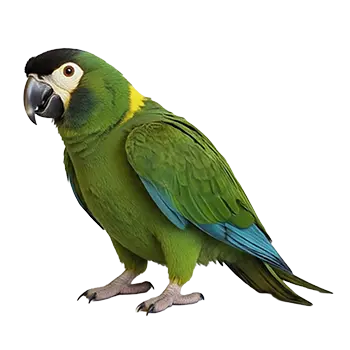
The overall plumage is predominantly dark green, creating an attractive base color covering most of the body including the head, neck, back, chest, and wing coverts. This green coloration is rich and lustrous in healthy birds, appearing almost emerald in good lighting. The most distinctive and diagnostic feature is the narrow but clearly visible band of bright yellow feathers forming a collar around the back and sides of the neck, for which the species is named. This yellow collar is most prominent on the nape and sides of the neck, sometimes extending slightly onto the upper back, and provides instant species identification. The collar varies somewhat in width and intensity between individuals but is always present and visible.

The forehead shows a brownish or olive tinge distinct from the brighter green of the rest of the head. The crown and cheeks are green, while some individuals show subtle blue tingeing on the lower cheeks and throat area. The facial area features extensive bare skin patches typical of macaws, though less extensive than in large macaw species. The bare facial skin is white to pale yellowish-white, crossed by fine lines of small dark feathers creating subtle patterns. This naked facial skin can flush slightly pink when birds are excited or displaying emotion, providing visual cues to mood and arousal level.

The wings display beautiful coloration patterns most visible during flight or when wings are spread. The primary flight feathers show blue coloration on the outer webs and dark gray-blue on the inner webs, creating striking blue flashes during flight. The secondary flight feathers are green with blue tips. The underwing coverts display yellow-olive coloration visible during flight. When perched with wings folded, the wing tips extend nearly to the tail tip, emphasizing the bird's streamlined, elegant proportions.

The tail is long and strongly graduated, with the central tail feathers being longest. The upper surface of the tail is dark green transitioning to blue-green toward the tips, while the undersurface shows golden-olive to brownish coloration. The tail feathers are narrow and pointed, creating the distinctive long, tapering macaw silhouette even in this smaller species. In flight, the tail is spread for maneuvering, displaying its full length and subtle color gradations.

The beak is powerful, dark gray to black, and follows the characteristic strongly hooked macaw shape. While substantially smaller than large macaw beaks, it remains powerful and capable of delivering painful bites, cracking nuts, and causing significant damage to wooden toys and household items if not properly supervised. The upper mandible is longer and more strongly curved than the lower, meeting in a sharp point effective for manipulating food and exploring objects. The beak continues growing throughout life, requiring appropriate materials for natural wear.

The eyes are dark brown to reddish-brown with dark pupils, giving the bird an alert, intelligent expression. The eyes are surrounded by the characteristic bare facial patches. Eye color may subtly intensify with age and can indicate mood, with rapid pupil dilation (eye pinning) signaling excitement, arousal, or agitation. The iris is relatively small compared to some parrot species, contributing to the bird's alert appearance.

The legs and feet are gray, arranged in the typical zygodactyl parrot configuration with two toes pointing forward and two backward, providing excellent grip for climbing, perching, and manipulating objects. The feet are proportionally strong and dexterous, frequently used as "hands" to hold food items while eating or to grasp and manipulate objects during play and exploration. The nails are gray to black, continuously growing and requiring periodic trimming in captive birds lacking sufficient natural wear.

Sexual dimorphism is virtually absent in Yellow-Collared Macaws, with males and females appearing essentially identical in size, coloration, and structure. Visual sexing is unreliable even for experienced aviculturists, making DNA testing through blood sample or feather analysis the only definitive method for gender determination. Some sources suggest males may average very slightly larger or show marginally heavier beaks, but these differences are too subtle and inconsistent for reliable identification.

Juvenile Yellow-Collared Macaws closely resemble adults in overall plumage but may display slightly duller coloration that intensifies through successive molts as birds mature. Young birds may show darker irises that lighten subtly over the first year or two. Juveniles can sometimes be identified by shorter tail feathers that haven't yet grown to full adult length, and they may display slightly less defined yellow collars that become more prominent with age. The bare facial skin may appear less extensive in very young birds, gradually reaching adult proportions as they mature.

Yellow-Collared Macaws do not exhibit established color mutations in captivity, maintaining their natural green body plumage with the characteristic yellow collar, blue flight feathers, and subtle facial markings. Individual variation exists in the exact shade of green, intensity and width of the yellow collar, and extent of blue on the wings and head, but these represent natural variation within the species rather than selectively bred mutations. The lack of color mutations helps maintain species recognition and ensures all birds display the attractive natural coloration.

Affection Level
Yellow-Collared Macaws form deep, loving bonds with their owners and crave physical affection including cuddling, head scratches, and close contact. They are notably affectionate for macaw species, often seeking to be near their favorite people constantly. These birds display genuine attachment through preening, gentle nibbling, and contented vocalizations when with their bonded humans, making them wonderfully interactive companions.
Sociability
Highly social birds that thrive on interaction with their human family and enjoy being included in household activities. Yellow-Collared Macaws need several hours of daily engagement and do not tolerate isolation well. They typically bond well with multiple family members and are generally less prone to extreme one-person bonding than large macaws, making them more adaptable to family situations while still requiring substantial social interaction.
Vocalization
Yellow-Collared Macaws are notably quieter than large macaw species, though they still possess surprisingly loud voices for their size. They engage in natural calling sessions particularly at dawn and dusk, but these are typically shorter and less intense than large macaws. Their vocalizations include contact calls, playful sounds, and occasional screaming, making them more suitable for various living situations than their larger relatives while still requiring noise tolerance.
Intelligence
Intelligent birds demonstrating good problem-solving abilities, quick learning, and capacity for understanding routines and commands. Yellow-Collared Macaws can learn tricks, solve puzzle toys, and adapt to training well. While not as cognitively complex as African Greys or large macaws, they show impressive intelligence requiring regular mental stimulation through training, foraging activities, and environmental enrichment to prevent boredom and associated behavioral problems.
Exercise Needs
Extremely active, energetic birds requiring several hours of daily out-of-cage time for flight, climbing, and vigorous play. Yellow-Collared Macaws are athletic and constantly moving, needing substantial physical activity to maintain health and prevent obesity. Their high energy levels and need for exercise rival larger macaws despite their smaller size, demanding committed owners who can provide consistent opportunities for extensive physical activity and play.
Maintenance Level
These mini macaws require considerable maintenance including daily interaction, cage cleaning, fresh food preparation, toy rotation, and management of their energetic personalities. They are messy eaters who scatter food and create debris. While less demanding than large macaws in terms of space and volume, they still require significant daily care, regular veterinary attention, and substantial commitment making them appropriate only for experienced bird owners willing to invest time and resources.
Trainability
Highly trainable birds that respond enthusiastically to positive reinforcement methods and enjoy learning new behaviors. Yellow-Collared Macaws excel at trick training, can learn basic commands reliably, and show good focus during training sessions. Their playful nature and food motivation make them excellent training partners for patient handlers. They retain learned behaviors well and enjoy the mental stimulation that training provides, strengthening bonds with their owners.
Independence
Yellow-Collared Macaws have relatively low independence, requiring substantial daily attention and interaction from their owners. While they can entertain themselves with toys for short periods, they strongly prefer companionship and become distressed when left alone for extended durations. They need several hours of direct interaction daily and are not suitable for people with full-time jobs unless arrangements ensure adequate engagement throughout the day.

Natural Habitat & Range

Yellow-Collared Macaws inhabit interior South America, with their range extending across portions of Brazil (primarily the Pantanal region and adjacent areas), eastern Bolivia, northern Paraguay, and northeastern Argentina. This distribution encompasses a substantial area of approximately 2 million square kilometers, though the species occurs patchily within this range rather than uniformly throughout. The range is generally bounded by the Amazon Basin to the north (where they do not occur) and extends south to approximately 30 degrees south latitude in Argentina. The species is endemic to South America and does not occur naturally in Central America or outside the continent.

This species occupies diverse habitats within its range including gallery forests along rivers and streams, palm groves and palm savannas (particularly areas dominated by Mauritia and Acrocomia palms), forest edges and clearings, deciduous woodlands, scrublands with scattered trees, and seasonally flooded areas. Yellow-Collared Macaws show strong association with palm-rich habitats, as palm fruits and nuts comprise important dietary components. They adapt well to human-modified landscapes and are frequently found in agricultural areas, cattle ranches with remaining trees, parks, and suburban areas where suitable food sources and nesting sites exist. The species typically inhabits lowland areas from sea level to approximately 2,000 feet elevation, occasionally ranging slightly higher in foothill regions.

The climate throughout the Yellow-Collared Macaw's range is predominantly tropical to subtropical, characterized by warm to hot temperatures with seasonal variation. Temperatures typically range from 60-95°F depending on season and location, with cooler temperatures during winter months in southern portions of the range. Most areas experience distinct wet and dry seasons, with the wet season generally running from October to March and the dry season from April to September, though timing and intensity vary by location. Annual rainfall ranges from approximately 40 to 60 inches in most areas, supporting the mix of woodland and savanna habitats the species prefers.

In their natural habitat, Yellow-Collared Macaws are highly social birds typically encountered in pairs, small family groups of 3-6 birds, or flocks of 10-20 individuals. They are less gregarious than some large macaw species, with flocks generally remaining smaller and more dispersed. Bonded pairs maintain close contact, often observed flying together in synchronized flight patterns and engaging in mutual preening and affectionate behaviors. Pairs typically remain together year-round rather than only during breeding season, displaying the strong pair bonds characteristic of macaws. These birds are frequently seen perched prominently in dead trees or palm crowns, making them relatively easy to observe in appropriate habitat.

The daily activity pattern begins at dawn when pairs or small groups leave roosting sites with characteristic macaw vocalizations, though their calls are notably less loud and raucous than large macaw species. Yellow-Collared Macaws are agile, swift fliers capable of rapid, direct flight between feeding areas and roosting sites. Morning hours are spent foraging for fruits, nuts, seeds, and flowers, with palm fruits featuring prominently in their diet throughout the year. They feed primarily in tree canopies and palm crowns, using their powerful beaks to crack hard palm nuts and extract seeds. Their smaller size compared to large macaws allows them to access food sources on smaller branches and in areas where larger species cannot reach.

Wild Yellow-Collared Macaws feed on a varied diet including fruits from numerous tree species, palm nuts and fruits (particularly Mauritia and Acrocomia species), seeds, flowers, nectar, leaf buds, and occasionally insects encountered while foraging. Their diet varies seasonally based on fruiting patterns and food availability. Like other macaws, they may visit clay licks where they consume mineral-rich clay from exposed banks, behavior believed to help neutralize toxins in unripe fruits and supplement dietary minerals. However, clay lick usage appears less frequent and prominent in this species compared to large macaws.

During midday heat, birds rest quietly in shaded locations, conserving energy and engaging in social behaviors including preening, gentle vocalizations, and pair bonding activities. Feeding activity resumes in late afternoon, with birds returning to traditional roosting sites at dusk. Roosting sites are typically tall trees or palm groves offering good visibility and protection from predators. The same roosting locations may be used consistently if undisturbed.

Breeding typically occurs during the wet season when food availability peaks, varying by location but generally falling between October and March in most regions. Yellow-Collared Macaws nest in natural tree cavities, particularly favoring cavities in dead palm trees which provide suitable dimensions and protection. They also readily accept appropriate nest boxes in areas where natural cavities are limited, making nest box programs effective conservation and population management tools. Competition for suitable nest sites can occur with other cavity-nesting species. Both adults participate in nest site selection and defense, with pairs defending territories around nest sites during breeding season.

The female typically lays 2-4 eggs which she incubates alone for approximately 24-26 days while the male brings food. Both parents feed chicks after hatching, with young fledging at approximately 70-80 days of age, somewhat faster than large macaw species. Fledged juveniles remain with parents for several additional weeks to months, learning foraging skills and appropriate social behaviors before becoming independent. Family groups may remain together through the non-breeding season.

The conservation status of Yellow-Collared Macaw is currently listed as Least Concern by the IUCN Red List, reflecting its relatively large range, adaptability to human-modified habitats, and apparently stable population. Population estimates suggest several tens of thousands of individuals remain in the wild. However, the species faces ongoing threats including habitat loss from deforestation and agricultural conversion, particularly loss of palm-rich habitats, illegal trapping for the pet trade though this pressure is less intense than for more colorful large macaws, and potential climate change effects on habitat suitability. The species' adaptability to human-modified landscapes and willingness to use nest boxes has helped populations persist in areas where other less adaptable species have declined.

In some regions, particularly Brazil's Pantanal, Yellow-Collared Macaws remain relatively common and can be readily observed in appropriate habitat. Conservation efforts including protected areas, sustainable land management practices maintaining scattered trees and palms in agricultural landscapes, nest box programs, and monitoring of wild populations help ensure the species' continued survival. The species' smaller size and less spectacular coloration compared to large macaws may actually benefit conservation by reducing trapping pressure targeting the most colorful species for illegal trade.

Temperament

Yellow-Collared Macaws possess delightful, engaging personalities combining the playful, affectionate, intelligent characteristics of large macaws with a somewhat more manageable, less intense temperament making them excellent choices for experienced bird owners seeking macaw qualities without the extreme demands of their giant cousins. These charming mini macaws are renowned for their friendly, outgoing natures, strong bonds with their owners, high energy levels, and relatively adaptable dispositions. However, they remain demanding parrots requiring substantial daily interaction, extensive enrichment, and committed long-term care, making them appropriate only for experienced owners willing to meet their considerable needs.

Affection and bonding are prominent characteristics of Yellow-Collared Macaw temperament. These birds form deep, loving attachments to their owners and crave physical contact including cuddling, head scratches, and close proximity. They are notably cuddly for macaw species, often snuggling contentedly with their favorite people and displaying genuine pleasure through soft vocalizations and relaxed body language during affectionate interactions. Yellow-Collared Macaws typically show their affection through gentle preening of their owners' hair, eyebrows, or fingers, regurgitation behavior toward bonded humans (a sign of affection), and constant proximity-seeking behavior. This strong bonding creates deeply rewarding relationships for owners willing to invest substantial time in daily interaction.

While Yellow-Collared Macaws form strong bonds, they are generally less prone to extreme one-person bonding than some Amazon parrot species or even large macaws, often accepting and showing affection toward multiple family members. However, individual variation exists, with some birds showing clear favorites while others bond more equally. This relative flexibility makes them somewhat more adaptable to family situations compared to species notorious for selecting one person and rejecting all others. Consistent socialization with multiple family members from an early age helps prevent excessive one-person bonding.

Playfulness and high energy define much of Yellow-Collared Macaw behavior. These birds are constantly active, investigating their environment, playing with toys, climbing, hanging upside down, and engaging in acrobatic displays. They are natural entertainers who seem to perform deliberately for their owners' amusement, repeating behaviors that elicit laughter or attention. Yellow-Collared Macaws enjoy interactive play with their humans including gentle wrestling, chase games, retrieve games, and training sessions. Their playful nature requires owners who can provide several hours of daily active engagement and play.

Intelligence is clearly evident in Yellow-Collared Macaw behavior. These smart birds quickly learn household routines, understand cause-and-effect relationships, recognize individual people, solve puzzle toys, and demonstrate good problem-solving abilities when presented with challenges. While perhaps not quite as cognitively complex as African Greys or large macaws, they show impressive intelligence requiring regular mental stimulation. Bored Yellow-Collared Macaws develop behavioral problems including screaming, feather plucking, and destructive behaviors, making environmental enrichment through toys, foraging activities, and training essential for their wellbeing.

Vocalization in Yellow-Collared Macaws is moderate compared to large macaws, representing one of their advantages as companion birds. While they still possess loud voices capable of producing ear-piercing calls, their volume and frequency are notably less than Scarlet or Blue-and-Gold Macaws. They engage in natural calling particularly at dawn and dusk, but these sessions are typically shorter (10-20 minutes) and less intense than large macaw calling. Their voices include contact calls, playful chattering, occasional screaming when excited or seeking attention, and various other vocalizations. While not quiet birds by any standard, they are considerably more tolerable than large macaws, making them more suitable for various living situations including single-family homes where extreme volume would be problematic.

Talking ability in Yellow-Collared Macaws is limited to moderate, with most individuals learning vocabularies of 10-30 words and phrases. Some birds become quite good mimics, while others show minimal interest in speech. Their pronunciation tends to be clearer than large macaws but less extensive than Amazon parrots or African Greys. Talking ability should not be a primary motivation for choosing this species, as it varies considerably and many birds remain relatively quiet regarding speech. However, their playful vocalizations, contact calls, and interactive nature provide plenty of auditory interest even without extensive talking.

Social needs are substantial with Yellow-Collared Macaws requiring several hours of daily direct interaction and inclusion in family activities. They do not tolerate being ignored or isolated, quickly becoming distressed when their social needs aren't met. However, they can entertain themselves with toys for reasonable periods compared to some species, making them somewhat more manageable for working owners who can provide morning and evening interaction along with mid-day enrichment through foraging toys and environmental complexity. Pairs of Yellow-Collared Macaws can provide each other company, though they still need substantial human interaction and may bond less closely with humans if kept as pairs.

Destructiveness is characteristic of all macaws including Yellow-Collared varieties. They possess powerful beaks for their size, capable of systematically destroying wooden toys, branches, and household items. This destructive tendency is normal, healthy behavior providing essential beak exercise and mental stimulation. Owners must provide constant supply of appropriate destruction outlets including wood toys, natural branches, and foraging materials, while maintaining vigilant supervision during out-of-cage time preventing damage to furniture, woodwork, or dangerous household items.

Bite potential must be respected despite their smaller size. Yellow-Collared Macaws can deliver painful bites capable of causing bleeding, bruising, and requiring medical attention in some cases. While their bite force is substantially less than large macaws and they are generally less aggressive, they can and will bite when frightened, territorial, or during hormonal periods. Learning to read their body language including eye pinning, raised feathers, open beak, and forward-leaning posture helps prevent bites by recognizing and respecting warning signals.

Hormonal behavior during breeding season affects Yellow-Collared Macaws as it does other parrots, though effects are often less dramatic than in large macaws or Amazons. During spring or year-round in some individuals, birds may become more territorial, somewhat more aggressive, engage in increased vocalization, and display regurgitation behavior. Managing hormonal behavior through consistent routines, avoiding nest-like spaces, limiting petting to head and neck only, ensuring adequate sleep, and maintaining appropriate diet helps minimize hormonal challenges.

Temperament varies between individuals, with some Yellow-Collared Macaws displaying bold, confident personalities while others are more cautious or sensitive. Most fall somewhere in the middle, showing friendly, outgoing natures with appropriate socialization and handling. Early socialization, consistent positive interactions, and appropriate handling during the critical early development period help shape well-adjusted, friendly adults. Birds from reputable breeders who provide extensive handling and socialization typically make better companions than parent-raised or poorly socialized birds.

Yellow-Collared Macaws require owners who can provide several hours of daily interaction, appropriate large caging, extensive toy budgets, willingness to tolerate moderate noise levels, commitment to 30-50 years of care, and ability to work with energetic, demanding personalities. They are inappropriate for first-time bird owners, anyone without prior parrot experience, people with limited time or resources, or those seeking quiet, independent companions. However, for experienced owners willing to meet their needs, Yellow-Collared Macaws offer wonderful companionship combining the beauty and personality of macaws with somewhat more manageable size and volume, making them excellent choices for people desiring macaw characteristics in a less extreme package.

Care Requirements

Yellow-Collared Macaws require spacious, durable housing appropriate for their medium size, high activity level, and powerful beaks despite being smaller than large macaws. The absolute minimum cage dimensions are 36 inches wide by 24 inches deep by 48 inches tall, though larger cages are strongly preferred and provide better quality of life for these active birds. Ideally, cages should measure at least 48 inches wide by 30 inches deep by 60 inches tall or larger, providing sufficient space for wing extension, short flights between perches, extensive climbing, varied perch arrangements, and adequate room for the substantial toy collection these intelligent birds require. Bar spacing should measure 5/8 to 3/4 inch to prevent head entrapment while being narrow enough to prevent escape, and bars must be thick enough to withstand the considerable beak strength of mini macaws who can bend or damage inadequate caging.

Cage material selection is important for safety and durability. Stainless steel cages represent the best choice, being extremely durable, free from toxic coatings, resistant to rust, and easy to clean thoroughly. Powder-coated steel cages are acceptable if the coating is bird-safe and intact, though Yellow-Collared Macaws may eventually chip coating over years of use. Avoid zinc-coated or galvanized cages entirely, as zinc toxicity can cause serious illness or death. The cage must feature secure locks that intelligent Yellow-Collared Macaws cannot manipulate - barrel locks or padlocks work well, as these clever birds quickly learn to open simple latches.

Cage location significantly influences wellbeing and behavior. Position the cage in frequently used rooms where family activity occurs, such as living rooms or family rooms, as these social birds must feel included in household activities and develop behavioral problems when isolated. Avoid direct window placement where temperature fluctuations, drafts, and predator views cause stress. Position one side against a wall providing security and a safe retreat corner. Place the cage at approximately human eye level on the primary perches, preventing dominance issues from excessive height while ensuring the bird feels secure.

Kitchen placement is absolutely forbidden due to deadly toxic fume risks from heated non-stick cookware (Teflon/PTFE releases invisible fumes instantly fatal to birds above 350°F), self-cleaning ovens, and other cooking hazards. Even careful precautions cannot eliminate unacceptable kitchen risks.

Perch variety is essential for Yellow-Collared Macaw foot health and enrichment. Provide perches of varying diameters ranging from approximately 3/4 inch to 1.5 inches, allowing varied grip positions and preventing pressure sores. Natural wood branches from safe tree species including manzanita, java wood, dragonwood, and fruit tree branches make excellent perches satisfying chewing instincts while providing varied textures. Rope perches add variety though require monitoring for fraying. Provide minimum 4-5 perches at different heights, positioned allowing easy movement while ensuring tail clearance and preventing fecal contamination of food and water dishes.

Toys are absolutely essential for Yellow-Collared Macaw mental and physical health. These intelligent, highly active birds require extensive, constantly varied environmental enrichment preventing boredom that leads to screaming, aggression, and self-destructive behaviors. Provide substantial variety including wooden blocks and branches for chewing and destruction, rope toys for climbing and shredding, foraging toys hiding treats, puzzle toys testing intelligence, bells and noise-making toys, swings for acrobatic play, and leather items for manipulation. Rotate toys every 1-2 weeks maintaining novelty, keeping 6-8 toys available while storing others. Budget for continuous toy replacement as destruction is healthy, normal behavior requiring constant supply of appropriate outlets.

Out-of-cage time is absolutely essential, with minimum 3-4 hours daily required outside cages for exercise, flight, social interaction, and exploration. Yellow-Collared Macaws denied adequate freedom develop obesity, cardiovascular problems, and behavioral issues including aggression and feather plucking. Provide large, sturdy play gyms or tree stands equipped with varied perches, challenging toys, foraging opportunities, and food and water dishes. The play area becomes territory outside the cage, reducing demand for constant shoulder sitting while allowing independent play near family activities.

Bird-proofing is critical for safety during supervised out-of-cage time. Remove or secure ceiling fans (leading cause of parrot injury and death), ensure windows and doors are closed or screened, remove toxic plants, secure electrical cords, remove small objects, prevent toilet access, cover mirrors and windows preventing collision, eliminate kitchen access, and address household-specific hazards. Never allow unsupervised out-of-cage time regardless of trustworthiness, as accidents happen instantly.

Environmental conditions affect comfort and health. These South American birds tolerate temperatures between 65-85°F comfortably, preferring warmth over cold. Avoid sudden temperature changes and drafts. Maintain humidity 40-60% supporting respiratory health and feather condition using humidifiers in dry climates or during heating seasons. Full-spectrum avian lighting for 10-12 hours daily regulates circadian rhythms, supports mood and behavior, enables vitamin D synthesis, and enhances color vision. Natural sunlight through screened openings provides ideal lighting when temperatures safely permit.

Cage cleaning requires daily and weekly maintenance. Daily tasks include removing cage tray liners, removing uneaten fresh foods after 2-4 hours, washing food and water bowls with hot soapy water, and spot-cleaning heavily soiled areas. Weekly, perform thorough cage cleaning including scrubbing all bars and surfaces, cleaning all perches, washing or replacing soiled toys, and thorough tray washing. Monthly, perform deep cleaning and structural inspection. Yellow-Collared Macaws are messy eaters who fling food creating substantial debris, requiring protective coverings or mats around cages.

Bathing opportunities should be provided multiple times weekly, as Yellow-Collared Macaws generally enjoy water and benefit from regular bathing for feather maintenance. Some birds enjoy shower perches in human showers (lukewarm water only, no soaps), while others prefer spray baths from clean spray bottles, bathing dishes, or gentle misting. Observe individual preferences and provide preferred methods. Regular bathing maintains optimal feather condition, supports healthy skin, and provides enriching sensory stimulation. Never force bathing on reluctant birds, but continue offering opportunities as preferences may change.

Feeding & Nutrition

Proper nutrition forms the foundation of Yellow-Collared Macaw health, longevity, feather quality, and overall wellbeing throughout their 30-50 year lifespans. In their natural South American habitats, these mini macaws consume seasonally varied diets dominated by palm fruits and nuts, along with other fruits, seeds, flowers, and leaf buds. Replicating appropriate dietary diversity in captivity requires commitment to daily fresh food preparation and understanding of species-specific nutritional requirements.

High-quality, scientifically formulated pellets designed for small to medium parrots should comprise approximately 60-70% of the Yellow-Collared Macaw's daily diet, providing balanced nutrition with appropriate protein levels (typically 12-14% for non-breeding adults), healthy fats, essential vitamins including critical vitamin A, and minerals preventing selective eating and nutritional deficiencies. Choose pellets from reputable manufacturers including Harrison's Bird Foods, TOPS Parrot Food, Roudybush, or similar research-based brands, selecting pellet sizes appropriate for mini macaws. Avoid artificially colored fruit-flavored pellets containing excessive sugar.

Yellow-Collared Macaws raised on seed-based diets may initially resist pellets, requiring gradual conversion over several weeks. Begin by mixing small pellet amounts with familiar foods, gradually increasing proportions while decreasing seeds. Offer pellets when birds are hungriest, typically early morning. Some owners moisten pellets slightly or warm them marginally enhancing palatability during conversion. Persistence proves essential, as birds may resist for weeks before accepting pellets.

Fresh vegetables should constitute approximately 20-25% of daily intake, providing essential vitamins, minerals, antioxidants, and fiber. Prioritize dark leafy greens rich in vitamin A and calcium including kale, collard greens, mustard greens, dandelion greens, and Swiss chard. Orange vegetables including carrots, sweet potatoes, and butternut squash provide beta-carotene converted to vitamin A. Offer cruciferous vegetables including broccoli and cauliflower for immune support. Bell peppers of all colors, green beans, snap peas, sprouted legumes, corn, and fresh herbs provide additional variety. Chop vegetables into appropriate pieces or offer chunks for manipulation. Some birds prefer vegetables lightly steamed while others consume only raw produce. Rotate vegetables daily providing varied nutrition and preventing boredom.

Fruits should comprise approximately 10-15% of diet due to natural sugar content. Appropriate fruits include berries, pomegranate, papaya, mango, cantaloupe, honeydew, apples, pears, oranges, grapes (halved preventing choking), kiwi, and banana (limited). Remove toxic apple seeds and stone fruit pits containing cyanide. Wash all produce thoroughly removing pesticide residues or choose organic options.

Healthy whole grains and properly cooked legumes supplement the diet beneficially. Offer cooked quinoa, brown rice, oats, barley, whole wheat pasta, and millet. Properly cooked beans including black beans, kidney beans, and chickpeas provide protein and fiber (never offer raw beans containing toxic lectins). Many Yellow-Collared Macaws enjoy warm grain and vegetable mixtures prepared in batches and frozen in portions for convenience.

Nuts serve as excellent treats and training rewards but must be strictly limited due to high fat content. Appropriate nuts include almonds, walnuts, pecans, pine nuts, and hazelnuts. Offer maximum 2-3 small nuts daily to prevent obesity. In-shell nuts provide excellent foraging enrichment and beak exercise. Always choose unsalted, unflavored nuts from reputable sources, discarding any showing mold or rancidity.

Seed-based diets should be avoided as primary nutrition, though small amounts supplement pellet-based diets as treats without problems. Historical seed-only diets caused severe nutritional deficiencies, obesity, fatty liver disease, and shortened lifespans. Seeds are extremely high in fat while deficient in vitamin A, calcium, and essential nutrients. If offering seeds, choose very limited varieties including safflower, strictly limited sunflower, and pumpkin seeds as occasional treats.

Certain foods are strictly toxic to Yellow-Collared Macaws and must never be offered. Absolute prohibitions include chocolate (extremely toxic), avocado (causes heart failure), caffeine, alcohol, excessive salt, onions and garlic (cause anemia), rhubarb leaves, apple seeds and stone fruit pits (cyanide), raw beans (toxic lectins), and foods containing xylitol. Avoid sharing food from human mouths due to bacterial contamination, and never feed anything containing added salt, sugar, or artificial additives.

Calcium supplementation deserves attention, especially for females who may lay eggs. Provide cuttlebone or mineral blocks for voluntary intake. Dark leafy greens provide dietary calcium. Some birds benefit from calcium supplements in water, though consult veterinarians before supplementing avoiding hypercalcemia.

Vitamin supplementation is generally unnecessary with balanced pelleted diets and fresh foods. Over-supplementation causes toxicity, particularly with fat-soluble vitamins. If your bird eats limited diet or blood tests reveal deficiencies, targeted supplementation under veterinary guidance may be appropriate.

Fresh, clean water must be constantly available in clean bowls changed at least once daily. Some owners prefer water bottles keeping water cleaner. Avoid water additives unless prescribed for specific conditions.

Foraging opportunities transform feeding into enriching activities mimicking natural behaviors. Hide vegetables in foraging toys, wrap foods requiring unwrapping, stuff produce into cardboard requiring destruction, scatter food among crinkled paper, or use puzzle feeders. Vary difficulty maintaining challenge and interest.

Monitor weight meticulously using accurate gram scales, weighing at consistent times daily. Adult Yellow-Collared Macaws typically weigh 230-290 grams though individual variation exists. Sudden weight loss exceeding 10% suggests serious illness requiring immediate veterinary attention, while gradual gain indicates dietary adjustment needs. Work with avian veterinarians determining optimal weight ranges and adjusting diet accordingly. Strict portion control, emphasis on vegetables over high-fat foods, and maintaining high activity levels prove essential for healthy weight throughout their lifespans.

Yellow-Collared Macaw Health & Lifespan

Yellow-Collared Macaws are generally hardy birds capable of living 30 to 50 years or more with proper care, requiring long-term commitment spanning multiple decades. Despite their fundamental hardiness when well-maintained, these mini macaws are susceptible to various health conditions requiring vigilant monitoring and comprehensive preventive care throughout their lives. Psittacosis (chlamydiosis), caused by Chlamydia psittaci bacteria, can affect Yellow-Collared Macaws and poses zoonotic risk to humans, producing respiratory symptoms, lethargy, and digestive problems in birds while potentially causing severe flu-like illness in people, requiring prompt antibiotic treatment for both birds and exposed individuals when infection is diagnosed. Aspergillosis, a fungal respiratory infection caused by Aspergillus species in moldy environments, represents a serious threat to macaws kept in conditions with poor ventilation, high humidity, or contaminated food and bedding, producing respiratory distress that proves difficult to treat once established and often requires prolonged antifungal medication. Proventricular Dilatation Disease (PDD), a viral infection affecting digestive and nervous systems, can occur in all parrot species including mini macaws, causing progressive weight loss despite good appetite, neurological symptoms, and eventual death without cure, making prevention through careful bird sourcing and quarantine essential. Feather plucking behavior can develop in Yellow-Collared Macaws experiencing inadequate mental stimulation, insufficient social interaction, poor nutrition, chronic stress, or underlying medical conditions including skin infections or internal diseases, requiring comprehensive veterinary examination and behavioral modification to address multiple potential causes. Psittacine Beak and Feather Disease (PBFD), while less common in macaw species than some other parrots, remains a concern as this viral infection progressively destroys the immune system, causes abnormal feather growth and beak deformities, and has no cure, making prevention through testing and avoiding exposure critical. Heavy metal toxicity from zinc, lead, or other metals in galvanized caging, certain toys, hardware, or household items can cause serious neurological symptoms including seizures, digestive upset, and potentially fatal organ damage requiring immediate chelation therapy under veterinary supervision. Vitamin A deficiency can develop in birds fed inadequate diets lacking fresh vegetables, leading to respiratory infections, poor immune function, oral abscesses, and increased disease susceptibility requiring dietary correction and potential supplementation under veterinary guidance. Obesity can affect captive Yellow-Collared Macaws who receive inadequate exercise or excessive high-fat treats, leading to secondary problems including fatty liver disease, cardiovascular issues, and reduced lifespan without proper weight management through appropriate diet and increased activity levels. Beak and nail overgrowth occurs in birds lacking sufficient materials for natural wear, requiring regular veterinary trimming to maintain proper length and function preventing eating difficulties or injury from excessively long nails. Regular veterinary checkups with experienced avian veterinarians form the essential foundation of preventive health care for Yellow-Collared Macaws, with annual wellness examinations recommended for young and middle-aged adults and potentially twice-yearly exams for senior birds over 25-30 years old to monitor for age-related changes and detect disease early when treatment is most effective. During wellness visits, veterinarians perform thorough physical examinations including weight assessment, body condition scoring, plumage evaluation, respiratory assessment, beak and nail examination, and may recommend diagnostic testing including complete blood counts, blood chemistry panels, radiographs, and disease screening appropriate for individual birds based on age, health history, and risk factors. Proper diet and nutrition prove absolutely critical for maintaining Yellow-Collared Macaw health, with balanced pelleted diets formulated for small to medium parrots supplemented by fresh vegetables, moderate fruits, limited nuts as treats, and avoidance of seed-based diets providing essential nutrients for strong immune function, healthy feathers, and prevention of obesity and nutritional diseases. Environmental enrichment through varied toys, challenging foraging activities, puzzle feeders, substantial out-of-cage time, training sessions, and social interaction prevents stress-related health problems, reduces behavioral issues that compromise physical health, and supports psychological wellbeing essential for these intelligent, active birds requiring constant mental stimulation. Cage cleanliness prevents exposure to bacterial, fungal, and parasitic pathogens through daily removal of droppings and food debris, regular perch and toy cleaning, weekly thorough cage sanitization with bird-safe disinfectants, and prompt replacement of contaminated items preventing disease transmission. UV lighting exposure supports vitamin D3 synthesis essential for calcium absorption and bone health, with full-spectrum avian lights providing necessary wavelengths for 10-12 hours daily or supervised access to natural unfiltered sunlight through screened openings when weather safely permits. Annual wellness exams establish baseline health parameters including normal weight ranges and typical blood values, allowing detection of subtle changes indicating disease before obvious symptoms appear, dramatically improving treatment success through early intervention. Fresh, clean water changed daily or twice daily prevents bacterial growth, ensures adequate hydration supporting all body systems, and helps flush metabolic wastes, with appropriately-sized water bowls or bottles required for these medium-sized birds. Exercise through several hours of daily out-of-cage flight time, vigorous climbing, and active play maintains healthy cardiovascular function, prevents obesity through calorie expenditure, strengthens muscles and bones, and provides essential physical and mental stimulation supporting overall wellness.

Regular veterinary checkups with experienced avian veterinarians form the essential foundation of preventive health care for Yellow-Collared Macaws, with annual wellness examinations recommended for young and middle-aged adults and potentially twice-yearly exams for senior birds over 25-30 years old to monitor for age-related changes and detect disease early when treatment is most effective. During wellness visits, veterinarians perform thorough physical examinations including weight assessment, body condition scoring, plumage evaluation, respiratory assessment, beak and nail examination, and may recommend diagnostic testing including complete blood counts, blood chemistry panels, radiographs, and disease screening appropriate for individual birds based on age, health history, and risk factors. Proper diet and nutrition prove absolutely critical for maintaining Yellow-Collared Macaw health, with balanced pelleted diets formulated for small to medium parrots supplemented by fresh vegetables, moderate fruits, limited nuts as treats, and avoidance of seed-based diets providing essential nutrients for strong immune function, healthy feathers, and prevention of obesity and nutritional diseases. Environmental enrichment through varied toys, challenging foraging activities, puzzle feeders, substantial out-of-cage time, training sessions, and social interaction prevents stress-related health problems, reduces behavioral issues that compromise physical health, and supports psychological wellbeing essential for these intelligent, active birds requiring constant mental stimulation. Cage cleanliness prevents exposure to bacterial, fungal, and parasitic pathogens through daily removal of droppings and food debris, regular perch and toy cleaning, weekly thorough cage sanitization with bird-safe disinfectants, and prompt replacement of contaminated items preventing disease transmission. UV lighting exposure supports vitamin D3 synthesis essential for calcium absorption and bone health, with full-spectrum avian lights providing necessary wavelengths for 10-12 hours daily or supervised access to natural unfiltered sunlight through screened openings when weather safely permits. Annual wellness exams establish baseline health parameters including normal weight ranges and typical blood values, allowing detection of subtle changes indicating disease before obvious symptoms appear, dramatically improving treatment success through early intervention. Fresh, clean water changed daily or twice daily prevents bacterial growth, ensures adequate hydration supporting all body systems, and helps flush metabolic wastes, with appropriately-sized water bowls or bottles required for these medium-sized birds. Exercise through several hours of daily out-of-cage flight time, vigorous climbing, and active play maintains healthy cardiovascular function, prevents obesity through calorie expenditure, strengthens muscles and bones, and provides essential physical and mental stimulation supporting overall wellness. Owners must familiarize themselves with normal Yellow-Collared Macaw appearance, behavior, droppings, vocalizations, and activity patterns to recognize subtle changes indicating illness, as birds instinctively hide symptoms until disease becomes advanced, making early detection challenging but critical for successful treatment. Warning signs requiring immediate veterinary attention include any changes in droppings including altered color, consistency, frequency, or presence of blood, decreased appetite or refusal to eat suggesting digestive or systemic problems, unexplained weight loss or gain detected through regular weighing, fluffed feathers or abnormal feather appearance indicating illness, lethargy or decreased activity suggesting disease, labored breathing, tail bobbing with respiration, or open-mouth breathing indicating respiratory distress, nasal or ocular discharge suggesting infection, changes in voice or loss of voice potentially indicating respiratory disease, swellings or lumps requiring evaluation, limping or favoring limbs indicating injury or infection, and behavioral changes including increased aggression, depression, or self-mutilation potentially indicating serious problems. Establishing relationships with qualified avian veterinarians before emergencies occur ensures immediate access to appropriate care when needed, as finding experienced specialists during crises proves difficult and treatment delays worsen outcomes. With conscientious preventive care, appropriate nutrition, regular veterinary monitoring, extensive daily exercise, substantial enrichment, and attentive observation for health changes, Yellow-Collared Macaws can enjoy long, healthy lives spanning three to five decades as beloved companions, making provisions in estate planning for their continued care an important consideration for responsible owners of these long-lived birds.

Common Health Issues

  • Psittacosis - Chlamydiosis, , caused by Chlamydia psittaci bacteria, can affect Yellow-Collared Macaws and poses zoonotic risk to humans, producing respiratory symptoms, lethargy, and digestive problems in birds while potentially causing severe flu-like illness in people, requiring prompt antibiotic treatment for both birds and exposed individuals when infection is diagnosed.
  • Aspergillosis, a fungal respiratory infection caused by Aspergillus species in moldy environments - Represents a serious threat to macaws kept in conditions with poor ventilation, high humidity, or contaminated food and bedding, producing respiratory distress that proves difficult to treat once established and often requires prolonged antifungal medication.
  • Feather plucking behavior can develop in Yellow-Collared Macaws experiencing inadequate mental stimulation - Insufficient social interaction, poor nutrition, chronic stress, or underlying medical conditions including skin infections or internal diseases, requiring comprehensive veterinary examination and behavioral modification to address multiple potential causes.
  • Psittacine Beak and Feather Disease - PBFD, , while less common in macaw species than some other parrots, remains a concern as this viral infection progressively destroys the immune system, causes abnormal feather growth and beak deformities, and has no cure, making prevention through testing and avoiding exposure critical.
  • Vitamin A deficiency can develop in birds fed inadequate diets lacking fresh vegetables - Leading to respiratory infections, poor immune function, oral abscesses, and increased disease susceptibility requiring dietary correction and potential supplementation under veterinary guidance.
  • Obesity can affect captive Yellow-Collared Macaws who receive inadequate exercise or excessive high-fat treats - Leading to secondary problems including fatty liver disease, cardiovascular issues, and reduced lifespan without proper weight management through appropriate diet and increased activity levels.
  • During wellness visits - Veterinarians perform thorough physical examinations including weight assessment, body condition scoring, plumage evaluation, respiratory assessment, beak and nail examination, and may recommend diagnostic testing including complete blood counts, blood chemistry panels, radiographs, and disease screening appropriate for individual birds based on age, health history, and risk factors.
  • Warning signs requiring immediate veterinary attention include any changes in droppings including altered color - Consistency, frequency, or presence of blood, decreased appetite or refusal to eat suggesting digestive or systemic problems, unexplained weight loss or gain detected through regular weighing, fluffed feathers or abnormal feather appearance indicating illness, lethargy or decreased activity suggesting disease, labored breathing, tail bobbing with respiration, or open-mouth breathing indicating respiratory distress, nasal or ocular discharge suggesting infection, changes in voice or loss of voice potentially indicating respiratory disease, swellings or lumps requiring evaluation, limping or favoring limbs indicating injury or infection, and behavioral changes including increased aggression, depression, or self-mutilation potentially indicating serious problems.

Preventive Care & Health Monitoring

  • Feather plucking behavior can develop in Yellow-Collared Macaws experiencing inadequate mental stimulation - Insufficient social interaction, poor nutrition, chronic stress, or underlying medical conditions including skin infections or internal diseases, requiring comprehensive veterinary examination and behavioral modification to address multiple potential causes.
  • Vitamin A deficiency can develop in birds fed inadequate diets lacking fresh vegetables - Leading to respiratory infections, poor immune function, oral abscesses, and increased disease susceptibility requiring dietary correction and potential supplementation under veterinary guidance.
  • Beak and nail overgrowth occurs in birds lacking sufficient materials for natural wear - Requiring regular veterinary trimming to maintain proper length and function preventing eating difficulties or injury from excessively long nails.\n\nRegular veterinary checkups with experienced avian veterinarians form the essential foundation of preventive health care for Yellow-Collared Macaws, with annual wellness examinations recommended for young and middle-aged adults and potentially twice-yearly exams for senior birds over 25-30 years old to monitor for age-related changes and detect disease early when treatment is most effective.
  • Proper diet and nutrition prove absolutely critical for maintaining Yellow-Collared Macaw health - With balanced pelleted diets formulated for small to medium parrots supplemented by fresh vegetables, moderate fruits, limited nuts as treats, and avoidance of seed-based diets providing essential nutrients for strong immune function, healthy feathers, and prevention of obesity and nutritional diseases.
  • Environmental enrichment through varied toys - Challenging foraging activities, puzzle feeders, substantial out-of-cage time, training sessions, and social interaction prevents stress-related health problems, reduces behavioral issues that compromise physical health, and supports psychological wellbeing essential for these intelligent, active birds requiring constant mental stimulation.
  • Cage cleanliness prevents exposure to bacterial - Fungal, and parasitic pathogens through daily removal of droppings and food debris, regular perch and toy cleaning, weekly thorough cage sanitization with bird-safe disinfectants, and prompt replacement of contaminated items preventing disease transmission.

Training & Vocalization

Yellow-Collared Macaws are intelligent, highly trainable birds that respond enthusiastically to positive reinforcement training, making them excellent candidates for trick training, basic commands, and interactive enrichment activities. These mini macaws demonstrate good capacity for learning, strong food motivation, playful engagement with training sessions, and ability to retain learned behaviors, making them rewarding training partners for patient, consistent handlers. Their smaller size compared to large macaws makes them more manageable during training while still providing the characteristic macaw personality and intelligence that makes training these species so enjoyable.

The foundation of all successful Yellow-Collared Macaw training is positive reinforcement using rewards the individual bird values highly. Most respond enthusiastically to small food treats including tiny pieces of favorite nuts (almonds, walnuts, pine nuts work excellently), preferred fruits offered in small portions, or special seeds reserved exclusively for training making them particularly valuable. Social rewards including enthusiastic verbal praise, gentle head scratches for birds enjoying physical affection, and undivided attention also motivate these social parrots. Clicker training proves highly effective with Yellow-Collared Macaws, using a distinct click sound to precisely mark desired behaviors followed immediately by rewards, creating clear communication accelerating learning.

Basic foundational behaviors every Yellow-Collared Macaw should master include the step-up command where birds reliably step onto offered hands or perches on verbal cue. Begin teaching by presenting your hand or perch at chest level while saying "step up" clearly, gently encouraging stepping if needed. Reward immediately for compliance. Practice multiple brief sessions daily maintaining positive associations. Reliable step-up is essential for safe handling, routine management, and building trust.

Recall training, teaching reliable flight to the handler on command, enhances safety during out-of-cage time while providing essential exercise. Begin in small confined spaces ensuring initial success. Hold visible treats, call the bird's name and "come" excitedly, and reward even slight movement toward you initially. Gradually increase distances as success rates improve, always practicing in thoroughly bird-proofed safe areas.

Yellow-Collared Macaws can learn impressive trick repertoires providing mental stimulation and showcasing their intelligence. Popular tricks include waving on command, turning circles, retrieving objects, playing basketball, spreading wings on cue, and performing sequences combining multiple behaviors. Their playful nature and athletic abilities make them natural performers. Break complex behaviors into small steps, rewarding each approximation toward complete behaviors. Keep training sessions brief (5-10 minutes) but conduct multiple sessions daily, always ending positively before frustration develops.

The talking ability of Yellow-Collared Macaws is limited to moderate compared to species renowned for speech like Amazon parrots or African Greys. Most individuals can learn vocabularies of approximately 10-30 words and phrases, though substantial individual variation exists with some birds learning more while others show minimal interest. Their pronunciation tends to be clearer than large macaws but less extensive than top talking species. Their natural vocalizations are primarily macaw-like calls, squawks, and chattering rather than melodious sounds.

Teaching Yellow-Collared Macaws to talk requires patient, consistent interaction rather than formal training. Talk to your bird frequently throughout daily activities, clearly enunciating words you want them to learn. Use words consistently in relevant contexts - "hello" when entering, "goodbye" when leaving, "step up" when offering perches, food names when presenting items. This contextual usage helps birds understand meanings. Most birds who will talk begin between 6 months to 2 years of age. Males may show slightly more talking interest than females, though this varies considerably.

Importantly, prospective owners should not choose Yellow-Collared Macaws primarily for talking ability. Their speech capabilities are limited, and focusing on talking as primary motivation will likely lead to disappointment. These birds offer many other rewards including beautiful appearance, playful personalities, strong bonding, and athletic grace. Many less demanding parrots demonstrate superior talking abilities if speech is the primary goal.

The vocalization challenge with Yellow-Collared Macaws is notably less extreme than large macaws, representing one of their significant advantages as companion birds. While they possess loud voices capable of producing ear-piercing calls, their volume and frequency are substantially less than Scarlet or Blue-and-Gold Macaws. Natural calling at dawn and dusk is instinctive behavior, with birds producing calls for approximately 10-20 minutes during these periods, considerably shorter than the 30-60 minute sessions typical of large macaws. This cannot be eliminated and must be accepted as normal behavior.

Beyond natural calling times, Yellow-Collared Macaws may become screamers if their needs aren't met or if screaming is inadvertently reinforced. Never shout at screaming birds, as this provides vocal interaction they seek and increases behavior. Instead, completely ignore screaming while heavily rewarding quiet behavior and acceptable vocalizations. Ensure birds receive adequate daily interaction (minimum 3-4 hours), extensive mental stimulation through toys and foraging, and consistent routines reducing anxiety.

While notably quieter than large macaws, Yellow-Collared Macaws are not quiet birds and still produce substantial noise. They are inappropriate for apartments or attached housing with shared walls, though they may work in single-family homes where large macaws would be impossible. Prospective owners must honestly assess noise tolerance and living situations before committing.

Socialization throughout the bird's life helps maintain good behavior and prevents development of fears or aggression. Expose young birds to varied people, environments, and experiences during critical early periods while monitoring for stress. Continue regular positive interactions with multiple family members preventing extreme one-person bonding. Well-socialized Yellow-Collared Macaws adapt more readily to necessary changes including veterinary visits and pet sitters.

Boundary setting and consistent rules are essential for managing these intelligent birds. Yellow-Collared Macaws test limits and can become bossy without clear leadership. Establish simple, consistent rules including no biting and appropriate behaviors earning rewards. Use brief calm time-outs for inappropriate behaviors. Never physically punish birds, as this damages trust and increases aggression. Effective training builds relationships based on mutual respect, clear communication, and overwhelmingly positive interactions rewarding desirable behaviors while calmly redirecting undesirable ones.

Children & Other Pets

Integrating Yellow-Collared Macaws into households with children or other pets requires careful consideration of safety concerns, realistic assessment of risks, and honest evaluation of whether these energetic, potentially nippy birds can safely coexist with vulnerable family members. While Yellow-Collared Macaws are smaller and generally less dangerous than large macaws, they still possess powerful beaks capable of inflicting painful bites, energetic personalities that may overwhelm young children, and demanding care requirements that may not mesh well with family dynamics. Responsible decision-making must prioritize safety for all household members including the bird.

Regarding children, Yellow-Collared Macaws are generally more suitable for families than large macaws but still require caution, particularly with young children. These medium-sized parrots possess beaks capable of delivering painful bites causing bleeding and requiring medical attention in some cases, though bites are typically less severe than large macaw injuries. Children under age 8-10 years generally lack the maturity, judgment, and impulse control necessary for consistently safe interactions with mini macaws. Young children's high-pitched voices, quick movements, and high energy can startle birds, increasing bite risk.

Families with older children and teenagers may successfully keep Yellow-Collared Macaws if children demonstrate maturity, genuine interest in proper bird care, and willingness to learn and respect boundaries. However, parents must recognize that primary care responsibility will fall on adults regardless of children's enthusiasm. Yellow-Collared Macaws live 30-50 years, requiring families to commit to decades of care extending beyond children's departure from home.

Establish strict safety rules for children's interactions including never putting faces near the bird, never teasing or agitating the bird, never disturbing the bird while eating or in cage territory, never handling without adult supervision, and immediately notifying adults of aggressive displays. Teach children to recognize warning signs including eye pinning, raised feathers, open beak, and forward-leaning posture. Young children should interact only through cage bars or from safe distances under constant supervision.

Yellow-Collared Macaws' bonding tendencies are generally less extreme than large macaws or Amazons, often accepting multiple family members. However, some individuals show clear favorites, potentially creating hurt feelings when birds prefer one family member. Consistent socialization with multiple people from early age helps prevent excessive favoritism.

Integrating Yellow-Collared Macaws with other household pets requires caution though is somewhat less risky than with large macaws due to smaller size. Dogs, even gentle ones, possess predatory instincts that can activate suddenly. Dog saliva contains bacteria potentially harmful to birds, meaning even minor injuries from playful interactions can introduce infections. Never allow dogs and birds unsupervised contact under any circumstances.

Some experienced multi-pet households successfully manage dogs and mini macaws through rigorous dog training, secure caging the dog cannot access, and prohibition on direct physical contact. Introduce dogs and birds extremely carefully, always with birds securely caged initially. Consistently reward calm behavior from dogs while correcting any predatory interest. Many professionals recommend maintaining permanent separation rather than risking interactions.

Cats present significant risks due to prey drives, stealth, agility, and deadly bacteria in saliva causing rapidly fatal infections from scratches or bites. Even declawed cats retain hunting instincts and can harm birds. Many experts recommend against keeping these species together due to inherent dangers.

Small mammals including rabbits, guinea pigs, hamsters, and ferrets should never interact with Yellow-Collared Macaws. The macaw's beak can injure or kill small animals, while their presence may stress the bird. Ferrets are particularly dangerous, possessing strong predatory instincts adapted for hunting birds. Keep small mammals and macaws in completely separate rooms with secure enclosures.

Regarding other birds, Yellow-Collared Macaws can sometimes coexist peacefully with other parrots in the same household, though caution and realistic expectations remain essential. Never house different species together in cages regardless of apparent compatibility. Even bonded pairs sometimes require separation during breeding season when aggression intensifies.

Supervised out-of-cage interactions between Yellow-Collared Macaws and other household birds require gradual introduction, constant supervision, and willingness to permanently separate birds showing aggression or incompatibility. Some parrots develop friendships, while others remain territorial. Never force interactions, provide separate play areas, always supervise, and be prepared to intervene immediately if interactions escalate.

The moderate vocalizations of Yellow-Collared Macaws are less likely to stress other pets than large macaw screaming, though their calls may still disturb noise-sensitive animals. Consider existing pets' temperaments and noise sensitivities before introducing vocal birds. Provide quiet retreat spaces where other pets can escape sounds when needed.

Successful multi-pet households with Yellow-Collared Macaws share characteristics including all animals having separate secure spaces, owners maintaining constant supervision during potential interactions, realistic expectations acknowledging inherent risks, and commitment to permanent separation if animals cannot safely coexist. The bird's wellbeing must be prioritized equally with other pets while recognizing parrots are vulnerable prey animals requiring protection from natural predators even within domestic settings. When considering introducing new pets or adding macaws to established households, proceed gradually and conservatively, prioritize safety above desires for inter-species friendships, and honestly assess whether household dynamics and existing pets allow successfully meeting these birds' substantial needs.