
Fledging & First Flight

The Turquoisine Parakeet reaches fledging age at approximately four to five weeks old, though individual variation of a few days in either direction is normal. Fledging is one of the most dramatic transitions in a young bird's life, marking the shift from a sedentary nest-bound existence to active flight and independent movement. For caregivers, it is also a period that demands careful environmental preparation, because a clumsy first-time flyer in an unsafe room can sustain serious injuries.

In the days leading up to fledging, the juvenile Turquoisine Parakeet will spend increasing amounts of time perching at the nest box entrance, flapping vigorously, and leaning outward to survey its surroundings. These wing-flapping exercises are not play but essential muscle conditioning. The pectoral muscles must reach sufficient strength to support sustained flight, and the chick instinctively knows when it is ready. Attempting to force or rush fledging by removing the chick from the nest box prematurely can result in crash landings, fractured bones, or psychological setbacks that make the bird reluctant to fly.

For aviary-housed birds, fledging typically happens with minimal human intervention. The chick launches from the nest box and, after a few awkward initial flights, begins to develop coordination and landing skills over the following days. The parents continue to feed the fledgling during this period, and the young bird learns to navigate the aviary by observing the adults. In a cage or indoor environment, ensure the space is made safe before fledging occurs. Cover windows and mirrors, remove ceiling fans from operation, close toilet lids, and block gaps behind furniture where a disoriented fledgling could become trapped.

Hand-reared juveniles that fledge indoors benefit from supervised flight sessions in a small, safe room. Allow the bird to fly freely for short periods, then gently return it to its cage or a familiar perch. Early flight experiences shape the bird's confidence and spatial awareness for life. A juvenile that is denied flight practice, either through wing clipping performed too early or through confinement in a space too small to fly, may develop permanent coordination deficits and a reluctance to fly that persists even when physical conditions allow it.

Weaning & Dietary Transition

Weaning is the gradual process by which a juvenile Turquoisine Parakeet transitions from a diet of regurgitated food or hand-feeding formula to independently consumed solid foods. In this species, the weaning process typically begins around five to six weeks of age and may take two to three weeks to complete. Patience is essential during weaning, as forcing the process by abruptly withdrawing formula or parental feeding before the chick is nutritionally self-sufficient can cause dangerous weight loss, dehydration, and behavioral regression.

The first solid foods a juvenile Turquoisine Parakeet explores are usually soft, easily manipulated items. Offer finely chopped leafy greens such as dandelion, endive, or romaine, along with small pieces of grated carrot, sprouted seeds, and soaked or softened millet. Scatter these items on a shallow dish placed at perch level so the fledgling encounters them naturally during its daily explorations. Most juveniles begin by mouthing and playing with solid foods before they learn to actually consume meaningful quantities, and this exploratory phase is a normal and necessary part of the weaning process.

As the juvenile begins eating more solid food, gradually reduce the number of daily hand-feedings or, in the case of parent-raised birds, allow the natural decline in parental feeding to proceed. A common weaning schedule for hand-reared Turquoisine Parakeets involves dropping from three daily formula feedings to two, then to one evening feeding, and finally to none once the bird is consistently maintaining its weight on solid food alone. Weigh the bird every morning to confirm that the transition is not causing weight loss. A drop of more than ten percent from the bird's peak weight is a signal that weaning is progressing too quickly.

The weaned juvenile's diet should consist of a high-quality small-parakeet seed mix supplemented with fresh vegetables, leafy greens, sprouted seeds, and a small amount of fruit. A formulated pellet designed for small parakeets can also be introduced during this period, though Turquoisine Parakeets are often slower to accept pellets than seed. Cuttlebone and mineral block access is important for calcium and trace mineral supplementation. Avoid avocado, chocolate, caffeine, and any foods from the onion or garlic family, as these are toxic to parrots.

The weaning period is often accompanied by behavioral changes that can concern first-time keepers. The juvenile may become more vocal, more restless, and occasionally refuse formula feedings it previously accepted eagerly. These behaviors are normal expressions of the bird's growing independence. Do not interpret a single refused feeding as a sign that the bird has weaned itself. Continue offering formula until the bird's weight has been stable on solid food alone for at least three consecutive days.

The First Molt

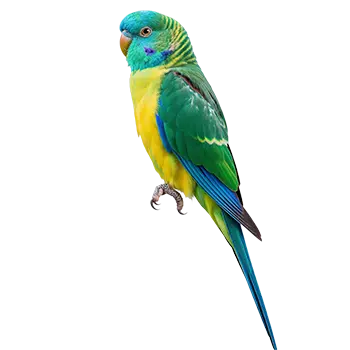
The first molt is a pivotal event in the life of a juvenile Turquoisine Parakeet, typically occurring between three and four months of age. During this molt, the bird sheds its juvenile plumage and replaces it with its first set of adult feathers. For Turquoisine Parakeets, this transformation reveals the species' full color palette, including the brilliant turquoise facial and wing markings, the rich green upperparts, and the yellow underparts that distinguish adult birds from their duller juvenile counterparts.

Molting places significant physiological demands on a young bird's body. Each new feather is a living structure during its growth phase, supplied by blood vessels within the feather shaft. The protein, mineral, and energy requirements of feather production are substantial, and a juvenile that does not receive adequate nutrition during the molt may produce feathers that are brittle, malformed, or abnormally colored. Stress bars, which appear as thin translucent lines running horizontally across the feather vane, are a visible record of nutritional or environmental stress experienced during feather growth.

To support healthy feather development, increase the diversity and nutritional density of the juvenile's diet during the molt. Sprouted seeds are particularly valuable because they are rich in bioavailable amino acids essential for keratin production. Leafy greens high in vitamin A, such as kale and Swiss chard, support skin and follicle health. A pinch of powdered avian-specific vitamin and mineral supplement can be dusted onto moist foods two to three times per week during the molt, but supplementation should not be excessive, as over-supplementation of certain vitamins, particularly vitamin D, can cause toxicity.

Behaviorally, a molting juvenile may become quieter, less active, and occasionally irritable. New pin feathers, especially those emerging on the head and neck where the bird cannot preen them itself, can be itchy and uncomfortable. A companion bird or a trusted human caregiver can gently help by rolling mature pin feathers between the fingertips to break open the keratin sheaths, but only when the feather is fully mature and the blood supply has receded. Handling immature blood feathers roughly can cause pain, bleeding, and a lasting aversion to being touched.

Socialization & Taming

The juvenile period represents the most receptive socialization window in a Turquoisine Parakeet's life. Neophema species are naturally more reserved and less demonstratively affectionate than some of the larger, more commonly kept parrot species, but a juvenile Turquoisine that receives consistent, patient socialization during this stage can develop into a calm, trusting companion that tolerates and even enjoys human interaction. Conversely, a juvenile that is neglected or handled roughly during this period may develop entrenched fearfulness that is extremely difficult to reverse in adulthood.

For hand-reared birds, the foundation of socialization was established during the feeding relationship. Now that the bird is weaning and becoming more independent, the nature of the interaction must evolve. Replace the feeding bond with other positive experiences. Offer favored treats from the hand, speak softly while sitting near the cage, and allow the bird to come to you rather than reaching in and grabbing it. Turquoisine Parakeets respond best to a calm, unhurried approach. Rapid hand movements, loud voices, and forced handling will erode trust quickly in this sensitive species.

Parent-raised juveniles that have had limited human contact require a more gradual taming approach. Begin by spending time near the cage without attempting direct contact. Allow the bird to acclimate to your presence, your voice, and your movements. Once the bird is no longer alarmed by your proximity, begin offering millet spray or another favored treat through the cage bars. Over days or weeks, the bird will begin to associate your hand with positive outcomes and may voluntarily approach.

Socialization should also include exposure to a variety of environmental stimuli beyond the caregiver. Different rooms in the house, safe outdoor experiences in a secure carrier or harness, varied household sounds, and calm interactions with additional trusted people all help build the juvenile's confidence and adaptability. A Turquoisine Parakeet that has only ever known one room, one person, and one set of sounds is likely to become intensely stressed when anything in its environment changes. Broad early exposure creates a more resilient adult bird.

Avoid the temptation to clip the juvenile's wings as a shortcut to taming. While wing clipping does make a bird more physically dependent on its handler, it also removes the bird's primary means of feeling safe. A clipped Turquoisine Parakeet that cannot fly away from a perceived threat may resort to biting or develop chronic stress behaviors such as feather plucking. Building trust through patience and positive reinforcement produces a far better long-term relationship than restricting the bird's ability to escape.

Housing & Environment

As a Turquoisine Parakeet transitions from nestling to fledgling to active juvenile, its housing requirements change substantially. The brooder or nest box that served the bird during its first weeks is no longer appropriate once the bird can fly and feed independently. A juvenile Turquoisine Parakeet needs a flight cage or aviary that allows it to exercise, explore, and develop the physical fitness and coordination it will rely on for the rest of its life.

The minimum cage size for a single juvenile Turquoisine Parakeet should be at least 30 inches long, 18 inches deep, and 18 inches tall, though larger is always better. Length matters more than height for this species, because Turquoisine Parakeets are active horizontal flyers rather than climbers. Bar spacing should be no wider than half an inch to prevent the bird from squeezing through or catching its head between bars. If an outdoor aviary is available, Turquoisine Parakeets thrive in planted flight aviaries where they can forage on the ground, fly between perches, and bathe in shallow dishes or natural rain.

Perch variety is important for developing juvenile feet and leg muscles. Provide perches of different diameters, materials, and textures. Natural branches from bird-safe trees such as eucalyptus, apple, or willow are ideal because their irregular surfaces exercise the foot muscles and prevent the pressure sores that can develop on uniform dowel perches. Place perches at different heights and angles to encourage movement and exploration, but avoid cluttering the cage to the point that flight paths are obstructed.

Environmental enrichment is essential for the intellectual development of a juvenile Turquoisine Parakeet. While Neophema species are less destructively playful than larger parrots, they are curious birds that benefit from foraging opportunities, novel objects to investigate, and materials to shred. Scatter seeds among clean straw or dried grasses on the cage floor to encourage natural ground-foraging behavior. Rotate small bird-safe toys and hanging greens through the cage to maintain the bird's interest. Mental stimulation during the juvenile period helps prevent the boredom-driven behaviors that can develop in understimulated adult birds.

Health Monitoring

The juvenile period is a time of rapid growth and physiological change, and health monitoring during this stage helps catch problems before they become entrenched. A veterinary checkup at the time of fledging or shortly after weaning provides a baseline for the juvenile's overall condition and allows the avian veterinarian to assess whether the bird's development is proceeding normally. This visit also presents an opportunity to discuss diet, housing, and any concerns the caregiver has observed.

Daily weight tracking remains important through the juvenile stage, though the pattern of weight change differs from the newborn period. During weaning, some weight fluctuation is expected, but once the bird is fully weaned, its weight should stabilize and then gradually increase as it reaches its adult body mass. A juvenile Turquoisine Parakeet that loses weight steadily after weaning, or that fails to approach the typical adult weight range of 37 to 44 grams by three to four months of age, should be evaluated for underlying illness, parasite burden, or dietary deficiency.

Droppings remain a reliable window into the juvenile's internal health. By this stage, the bird is eating a varied solid diet, so droppings may be more variable in color and consistency than during the hand-feeding phase. However, persistently abnormal droppings, including undigested seed in the feces, excessively watery stool, discolored urates, or foul-smelling droppings, all warrant veterinary investigation. Proventricular Dilatation Disease, while more commonly discussed in larger parrots, can affect Neophema species and may present as weight loss, undigested food in droppings, and regurgitation.

Respiratory health is another area that deserves ongoing attention. Turquoisine Parakeets are susceptible to Aspergillosis, a fungal infection of the respiratory tract caused by inhaling Aspergillus spores from contaminated food, bedding, or environments with poor air circulation. Symptoms include labored breathing, tail bobbing, reduced activity, and voice changes. Maintaining clean, dry housing with good ventilation is the best preventive measure. Avoid storing seed in damp conditions and discard any seed or food that shows signs of mold.

The juvenile molt period places additional stress on the bird's immune system, and health problems that were previously subclinical may become apparent during this time. Watch for excessive feather loss that goes beyond the normal progression of the molt, bare patches that do not fill in with new feather growth, or feathers that grow in with abnormal shape or coloring. These signs can indicate nutritional deficiency, Psittacine Beak and Feather Disease, or hormonal imbalance, and they benefit from prompt veterinary evaluation.

Behavioral Development & Independence

The juvenile and adolescent months are a formative period during which a Turquoisine Parakeet establishes the behavioral patterns, preferences, and coping mechanisms it will carry into adulthood. Understanding the normal behavioral trajectory of a young Neophema pulchella helps caregivers distinguish between healthy developmental phases and behaviors that may indicate stress, illness, or inadequate socialization.

One of the most noticeable behavioral developments during the juvenile stage is the emergence of independent play and exploration. A juvenile Turquoisine Parakeet that has been given a stimulating environment will spend significant portions of its day foraging, investigating objects, preening, and practicing flight. Ground foraging is a particularly strong instinct in this species, and juveniles may spend extended periods walking along the cage floor or aviary ground, picking through scattered seeds and greens. This behavior should be encouraged rather than discouraged, as it is a natural expression of the species' ecology.

Vocalizations become more complex and individualized during the juvenile months. While Turquoisine Parakeets are not loud birds, their repertoire of soft chirps, whistles, and contact calls expands considerably between fledging and sexual maturity. A juvenile may experiment with different sounds, repeating certain calls and discarding others as it develops its personal vocal signature. Males typically begin to vocalize more than females as they approach maturity, and a juvenile male may practice elements of the courtship song well before he is physiologically ready to breed.

Social hierarchy awareness also develops during this period. In an aviary setting with multiple birds, the juvenile begins to learn its place in the social structure through observation and interaction with adult birds. Mild chasing, displacement from perches, and subtle body-language exchanges are normal parts of this process. However, persistent aggression from adult birds, especially targeted feather pulling or preventing the juvenile from accessing food, is not normal and may require separation until the juvenile is larger and more confident.

A juvenile Turquoisine Parakeet may go through a brief phase of testing boundaries with its human caregiver as well. The bird may become slightly nippy, refuse to step up on command, or react to handling with startled flight when it had previously been calm. This adolescent testing phase is temporary and should be met with patient consistency rather than punishment or forceful correction. Reacting to nipping by jerking the hand away teaches the bird that biting is an effective way to control its environment. Instead, maintain a steady hand, speak calmly, and redirect the bird's attention to a treat or a preferred activity. Within a few weeks, the phase typically passes, and the bond between bird and caregiver emerges stronger for the patience invested.

Always consult a qualified professional before making any health-related decisions. This content is provided for informational reference only and should not replace professional guidance specific to your animal.