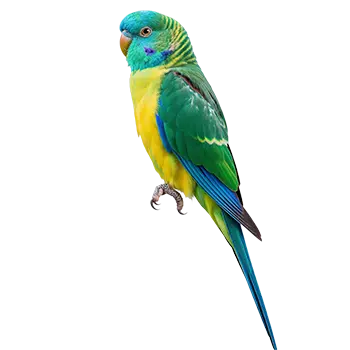

Recognizing Terminal Decline

Recognizing when a Turquoisine Parakeet has entered a terminal decline is one of the most difficult tasks a caregiver faces, yet it is essential for making compassionate, informed decisions about the bird's remaining care. Terminal decline may result from advanced age, progressive organ disease, cancer, or the cumulative effect of chronic conditions that have gradually exhausted the bird's reserves. In every case, the pattern is a sustained, irreversible deterioration that distinguishes it from a recoverable illness or a temporary setback.

The most telling sign of terminal decline is persistent, progressive weight loss that does not respond to dietary intervention or medical treatment. A Turquoisine Parakeet that has been gradually losing weight over weeks despite adequate food availability and veterinary management may have reached a point where the body can no longer absorb or metabolize nutrients effectively. This wasting process, sometimes called cachexia, reflects systemic failure rather than a simple lack of appetite.

Behavioral indicators compound the physical signs. A terminally declining bird often becomes profoundly withdrawn, spending long hours sitting motionless on the cage floor or a low perch with its feathers persistently fluffed. The bird may stop preening, an activity that healthy parakeets engage in for hours each day, resulting in a disheveled, unkempt appearance. Interest in food diminishes to the point where the bird may sit beside a full dish without attempting to eat. Contact calls and vocalizations may cease entirely, replaced by silence or only occasional quiet sounds.

Respiratory changes are common in the final stages of many terminal conditions. Breathing may become labored, with visible tail bobbing, open-mouth breathing at rest, or audible wheezing. The bird may seek out the lowest point in the cage, sitting on the floor rather than perching, because the effort of gripping a perch has become too great. These signs collectively indicate that the bird's body systems are failing and that the focus of care should shift from curative treatment to comfort and quality-of-life management.

Palliative & Comfort Care

When a Turquoisine Parakeet's condition has progressed beyond the possibility of cure or meaningful recovery, the goal of care shifts from treatment to comfort. Palliative care focuses on minimizing pain, reducing distress, maintaining dignity, and ensuring that the bird's remaining time is spent in conditions that prioritize its physical and emotional wellbeing above all else.

Pain management is the first and most important element of palliative care. Avian veterinarians can prescribe analgesic and anti-inflammatory medications appropriate for small parakeets. Meloxicam is one of the more commonly used non-steroidal anti-inflammatory drugs in avian medicine and can significantly reduce pain from arthritis, organ inflammation, and some neoplastic conditions. Gabapentin may be prescribed for neuropathic pain. Dosing must be precise due to the bird's small body weight, and the veterinarian should provide specific instructions for administration, which is typically done via the drinking water or a flavored oral suspension.

Environmental comfort measures center on warmth, quiet, and accessibility. A bird in terminal decline has a diminished ability to regulate its body temperature and may benefit from supplemental warmth provided by a ceramic heat emitter or an infrared heat lamp positioned safely above one end of the cage, allowing the bird to move toward or away from the heat source as it chooses. Keep the ambient temperature stable and slightly warmer than usual, around 75 to 80 degrees Fahrenheit. Reduce environmental noise and activity to create a calm, peaceful atmosphere.

Food and water should be placed within immediate reach of the bird's resting spot. If the bird can no longer perch, line the cage floor with soft, clean towels and position shallow dishes of water and favored soft foods directly beside it. Sprouted seeds, finely mashed fruit, and soaked pellets are easier for a weakened bird to consume than dry seed. Some birds in decline accept small amounts of warm hand-feeding formula offered gently by syringe, which can provide hydration and calories when voluntary food intake drops. Do not force-feed a bird that clearly does not want to eat, as this causes stress without meaningful benefit.

The caregiver's presence itself is a form of comfort care. A Turquoisine Parakeet that has bonded with its keeper over years may find reassurance in the familiar sound of the caregiver's voice and the calm proximity of a trusted person. Sitting quietly near the cage, speaking softly, and simply being present conveys a security that no medical intervention can replicate. Avoid handling the bird unless necessary for medication administration, as a terminally ill bird may find even gentle physical contact exhausting.

The Euthanasia Decision

The decision to euthanize a beloved Turquoisine Parakeet is among the most painful choices a pet owner can face, yet it is also one of the most compassionate acts available when a bird's suffering has moved beyond the reach of palliative care. Euthanasia is not a failure of care. It is a deliberate, merciful choice to end suffering when quality of life has deteriorated irreversibly and when continuing to live brings the bird more distress than comfort.

There is no universally correct moment for euthanasia, and the decision is deeply personal. Some caregivers use a structured quality-of-life scale that evaluates factors such as pain, appetite, hydration, mobility, mental alertness, and the ratio of good days to bad days. When a Turquoisine Parakeet consistently scores low across most of these categories, the bird's quality of life has likely fallen below the threshold where continued existence serves the bird's interests. Others rely on a single decisive criterion, such as the bird's inability to eat, the onset of unmanageable pain, or a respiratory crisis that cannot be resolved.

Consulting with an avian veterinarian is invaluable during this process. The veterinarian can provide an objective assessment of the bird's condition, discuss the likely trajectory of the disease, and help the caregiver understand whether further treatment is likely to improve or merely prolong the bird's state. A veterinarian experienced in end-of-life care will not pressure the caregiver in either direction but will provide honest, compassionate guidance that supports an informed decision.

The euthanasia procedure itself is performed by the veterinarian and is designed to be as painless and stress-free as possible. In small birds like the Turquoisine Parakeet, the most common method involves first administering a sedative, often through inhalation anesthesia, which renders the bird unconscious within seconds. Once the bird is fully sedated and unaware, an intravenous injection of a barbiturate stops the heart. The bird does not experience pain during this process. Some veterinarians offer in-home euthanasia, which spares the bird the stress of transport and allows the procedure to take place in familiar surroundings.

Caregivers should feel empowered to ask questions about the procedure, request time alone with the bird before and after, and make arrangements for the bird's remains in advance if they wish. Knowing what to expect reduces anxiety during an already emotional experience and allows the caregiver to focus on being present with the bird in its final moments.

Caring for Companion Birds After a Loss

When a Turquoisine Parakeet dies, whether naturally or through euthanasia, the impact extends beyond the human caregiver to any companion birds that shared the deceased bird's environment. Birds are social animals with the capacity for attachment, and a surviving cage mate or flock member may exhibit behavioral changes that reflect the disruption of a social bond. Understanding and responding to these changes with sensitivity is an important part of responsible avian caregiving.

The surviving bird may display signs of distress that parallel what many people would recognize as grief. These can include increased vocalization, particularly persistent contact calling directed toward the area where the deceased bird was last seen, reduced appetite, listlessness, excessive preening or feather-destructive behavior, and a reluctance to engage with activities or people that previously held the bird's interest. In some cases, a surviving bird may repeatedly visit the spot where its companion's cage was located or search the environment as though looking for the missing bird.

Allow the surviving bird time to process the change. Avoid making dramatic environmental changes immediately after the loss, such as moving the cage to a new room, rearranging the interior layout, or introducing a new bird. Stability and routine provide comfort during a period of social disruption. Increase your interaction with the surviving bird gradually, offering extra attention, favored treats, and calm companionship. Some caregivers find that leaving a radio or television on at a low volume provides ambient sound that helps reduce the silence left by the absent bird.

The question of whether and when to introduce a new companion is highly individual. Some surviving Turquoisine Parakeets recover fully with enhanced human interaction and enrichment, while others remain persistently withdrawn and clearly benefit from the presence of another bird. If you decide to introduce a new companion, follow standard quarantine and gradual introduction protocols. A new bird should be health-screened, quarantined for at least 30 days, and then introduced through adjacent housing before the birds share a space. There is no guarantee that a new bird will be accepted by the survivor, and some older birds may never bond as closely with a replacement companion as they did with their original mate.

Understanding & Processing Grief

The death of a Turquoisine Parakeet can produce genuine grief in its caregiver, and that grief deserves to be acknowledged and respected regardless of the bird's small size or the fact that some people in the caregiver's life may not understand the depth of the bond. The relationship between a devoted keeper and a companion bird, built over years of daily care, shared routines, and quiet companionship, is real and meaningful. Its loss merits mourning.

Grief following the death of a pet bird may manifest in many of the same ways as grief after the loss of any loved one. Sadness, tearfulness, difficulty concentrating, disrupted sleep, guilt over decisions made during the bird's care, and a pervasive sense of emptiness in the home are all common and normal responses. Some caregivers feel a particular weight of guilt around the euthanasia decision, wondering whether they acted too soon or too late. It is important to recognize that there is rarely a perfect moment, and that the decision was made from a place of love and a desire to end suffering.

Talking about the loss with someone who understands can be profoundly helpful. Friends and family members who are also pet owners may provide empathetic support, while those who have never bonded with an animal may struggle to comprehend why the death of a small bird produces such intense emotion. Online communities dedicated to pet loss support, aviculture forums, and social media groups for parakeet owners can offer understanding from people who have experienced similar losses. Some veterinary practices offer grief support resources or can refer caregivers to pet loss counselors.

Children in the household may experience the bird's death as one of their first encounters with mortality. Their responses will vary by age and temperament, but honesty, gentleness, and age-appropriate explanations help children process the loss in a healthy way. Involving children in a simple memorial activity, such as planting a flower, creating a drawing, or writing a letter to the bird, gives them a constructive outlet for their feelings and affirms that their sadness is a valid and normal response to losing a loved companion.

Allow yourself whatever timeline you need. There is no correct duration for grief, and pressure to move on before you are ready, whether from others or from yourself, can delay the healing process. Some caregivers find comfort in setting up a small memorial, printing a favorite photograph, or donating to an avian rescue or conservation organization in the bird's name. Others need time and space before they are ready to commemorate the loss. Both approaches, and everything in between, are entirely appropriate.

Handling Remains & Memorial Options

After a Turquoisine Parakeet has passed away, decisions about the bird's remains must be made, ideally within a short timeframe. Having considered these options in advance, while the decision can be made calmly and without the pressure of immediate grief, reduces stress during an already emotional period. Several options are available, each with its own practical and emotional considerations.

Home burial is a common choice for many bird owners and can provide a sense of closure and continuity, particularly if the bird lived in a household with a garden or yard. The remains should be placed in a small biodegradable container and buried at a depth of at least 18 inches to discourage disturbance by other animals. Check local regulations, as some municipalities have ordinances regarding the burial of animal remains on residential property. A planted marker, a small garden stone, or a flowering plant placed at the site can serve as a lasting tribute.

Pet cremation services are widely available and offer an alternative for caregivers who do not have access to outdoor space or who prefer to retain the bird's ashes. Cremation can be arranged through the veterinary practice or directly through a pet cremation provider. Individual cremation, in which the bird is cremated alone and the ashes are returned to the owner, ensures that the remains received are those of the specific bird. Communal cremation, in which multiple animals are cremated together and the ashes are not returned, is a less expensive option for those who do not wish to keep the remains.

Some caregivers choose to memorialize their Turquoisine Parakeet through keepsakes that provide a tangible connection to the bird. Options include memorial jewelry that incorporates a small portion of the bird's ashes, framed feathers collected during the bird's lifetime, custom artwork or photography, or a dedicated spot in the home where a photo and a small memorial item are displayed. These keepsakes serve as a reminder of the bond shared and the life lived together.

For breeders or aviculturists who lose a bird to an unknown cause of death, requesting a necropsy from an avian veterinarian or veterinary pathology laboratory can provide valuable diagnostic information. A necropsy may reveal the cause of death, identify infectious diseases that could pose a risk to other birds in the collection, or uncover congenital conditions with implications for future breeding decisions. While the idea of a necropsy may feel difficult in the immediate aftermath of a loss, the information gained can protect the health of remaining birds and contribute to the broader understanding of disease in Neophema species.

When You Are Ready Again

The question of whether and when to welcome a new bird into the home after the loss of a Turquoisine Parakeet is deeply personal, and there is no right answer that applies to everyone. Some caregivers know almost immediately that they want another bird, finding that the daily rhythms of avian companionship are an essential part of their lives. Others need months or even years before they feel ready, and some decide that the loss was too painful to risk again. All of these responses are valid.

If you do decide to bring a new bird into your home, take time to consider whether you want the same species or something different. A new Turquoisine Parakeet will have its own distinct personality and will not replace the bird you lost. Expecting a new bird to fill the exact role of its predecessor sets up an unfair comparison that can prevent you from appreciating the new individual on its own terms. Some caregivers find that choosing a different species or color variety helps them approach the new bird as a fresh relationship rather than a substitute.

Practical preparation is important regardless of when you choose to bring home a new bird. Thoroughly clean and disinfect all cages, perches, dishes, and accessories that were used by the deceased bird. If the bird died of an infectious disease, consult with your avian veterinarian about the appropriate disinfection protocol and any waiting period before introducing a new bird into the same space. Some pathogens can persist on surfaces and in the environment for extended periods, and introducing a new bird without proper decontamination puts its health at risk.

Reflect on any aspects of the previous bird's care that you would approach differently with the benefit of hindsight. Every bird we care for teaches us something, and the lessons learned through years of daily caregiving, veterinary decisions, and the intimate observation of a single animal's life are irreplaceable. A new bird benefits from everything its predecessor taught you, from the refinement of diet and housing to the deeper understanding of avian body language, health monitoring, and the patience required to build trust with a gentle, sensitive species.

The legacy of a well-loved Turquoisine Parakeet lives on not only in the memories of the years shared but in the quality of care you bring to every bird that follows. The grief you feel is a measure of the bond you built, and the knowledge you gained makes you a better, more compassionate caregiver. Whether the next chapter includes another bird or not, the one that just ended mattered.

Always consult a qualified professional before making any health-related decisions. This content is provided for informational reference only and should not replace professional guidance specific to your animal.