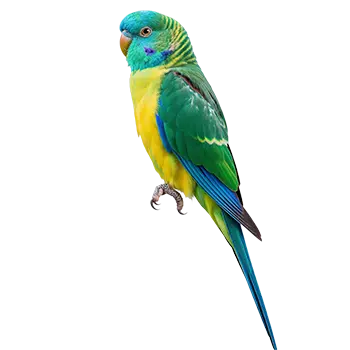

Recognizing the Senior Stage

Turquoisine Parakeets have a typical captive lifespan of ten to fifteen years, with exceptional individuals occasionally reaching the upper end of this range or slightly beyond. The transition into senior status is gradual rather than abrupt, and there is no single birthday that marks the boundary between a bird's prime years and its geriatric phase. Most avian veterinarians consider a Turquoisine Parakeet to have entered the senior stage around seven to eight years of age, though individual variation in genetics, diet, and lifetime care can shift this threshold in either direction.

The earliest signs of aging are often subtle. A senior Turquoisine Parakeet may become slightly less active than it was in its younger years, spending more time resting on a favored perch and less time engaged in energetic flight and ground foraging. Sleep patterns may shift, with the bird settling down for the night earlier and waking later. These changes do not necessarily indicate illness and can be part of the natural deceleration of metabolism and energy that accompanies aging in most vertebrate species.

Physical changes become more apparent as the bird progresses through its senior years. Plumage may lose some of its vibrancy, with feather colors appearing slightly less saturated after successive molts. The beak and nails may grow faster or more irregularly as the bird's activity level decreases and natural wear diminishes. Some senior birds develop mild thickening or scaling on the feet and legs, which should be monitored to distinguish normal age-related changes from conditions like scaly leg mite infestation or nutritional deficiency.

Recognizing the senior stage is important because it signals the need to adjust the bird's care regimen. Dietary needs change, veterinary check-up frequency should increase, the housing environment may require modification, and the caregiver's expectations for the bird's activity level and social engagement should adapt to the reality of an aging body. Treating a senior Turquoisine Parakeet as though it were still in its prime, or conversely assuming that every change is cause for alarm, misses the nuanced middle ground that good geriatric care occupies.

Dietary Adjustments for Aging Birds

The nutritional requirements of a senior Turquoisine Parakeet shift as the bird's metabolism slows, its muscle mass gradually declines, and its organ systems become less efficient. A diet that was perfectly appropriate during the bird's prime years may need modification to prevent weight gain, support aging organ function, and compensate for the reduced digestive efficiency that often accompanies advancing age.

Caloric intake frequently needs to be reduced in sedentary senior birds to prevent obesity, which places additional strain on the heart, liver, and joints. Gradually decrease the proportion of high-fat seeds such as sunflower and safflower in the mix, replacing them with lower-fat alternatives like canary seed, millet, and plain grass seeds. If the bird accepts pellets, a formulation designed for maintenance or senior birds may provide a more controlled nutritional profile than seed alone.

Conversely, some senior Turquoisine Parakeets experience gradual weight loss as their appetite diminishes or their ability to crack hard seeds weakens. For these birds, switching to softer food preparations can help maintain adequate caloric intake. Sprouted seeds, which are softer and more digestible than dry seed, become even more valuable for senior birds. Finely chopped vegetables, cooked grains, and soaked pellets offer nutrients in forms that require less mechanical effort to consume.

Calcium and vitamin D supplementation deserves particular attention in older birds. Bone density naturally declines with age, and a senior hen that has laid eggs during her lifetime may have depleted calcium reserves more rapidly than a bird that has not bred. Ensure continuous access to cuttlebone and consider an avian-specific calcium supplement if blood work reveals low calcium levels. Adequate exposure to full-spectrum ultraviolet light or natural sunlight remains important for vitamin D synthesis, which is essential for calcium absorption.

Hydration becomes a greater concern as senior birds may drink less consistently. Monitor water intake and consider placing multiple water sources within easy reach of the bird's preferred resting spots. If the bird is reluctant to drink, offering water-rich foods such as cucumber, leafy greens, and sprouts can supplement fluid intake. Dehydration in an older bird accelerates kidney stress and can worsen the effects of any underlying health condition.

Environmental Modifications

A senior Turquoisine Parakeet's housing may need thoughtful modifications to accommodate declining mobility, reduced flight stamina, and increased vulnerability to temperature extremes. The goal is not to restrict the bird's environment but to make it more accessible and safer, so the aging bird can continue to enjoy its space without the risk of falls, injuries, or exhaustion.

Perch placement is one of the most important adjustments. As a Turquoisine Parakeet ages, its grip strength may diminish and its ability to fly upward to high perches may decline. Lowering the primary perches reduces the distance the bird must fly or climb and minimizes the impact of any falls. Position food and water dishes near the bird's favored resting perch so it does not have to travel far to eat and drink. For birds with significant mobility limitations, placing a shallow food dish and water source on the cage floor can ensure access even if the bird can no longer perch reliably.

Perch material becomes more important for aging feet. Replace smooth dowel perches with softer, textured alternatives. Natural branches with gentle curves and varied diameters distribute pressure across the foot surface and reduce the risk of bumblefoot, a painful infection of the foot pad that is more common in older, less active birds. Some caregivers wrap perches in self-adhesive vet wrap or use platform perches to provide a flat resting surface that gives the bird's feet a break from constant gripping.

Temperature regulation is critical for senior birds, whose thermoregulatory capacity declines with age. An aging Turquoisine Parakeet is more susceptible to chilling than a younger bird, especially during cold months or in air-conditioned environments. Maintain the ambient temperature in the bird's room at a steady range between 68 and 78 degrees Fahrenheit, and avoid placing the cage near drafts, vents, or windows where temperature can fluctuate. A ceramic heat emitter mounted safely above the cage can provide supplemental warmth for birds that show signs of being cold, such as prolonged fluffing or tucking one foot.

Lighting adjustments can also benefit senior birds. Ensure the bird receives ten to twelve hours of quality light, preferably from a full-spectrum avian bulb, followed by twelve to fourteen hours of uninterrupted darkness for sleep. Senior birds may need the sleep period at the longer end of this range, as aging bodies recover and regenerate more slowly. A consistent light-dark cycle helps regulate the senior bird's hormonal and metabolic systems and supports better overall health during the geriatric years.

Geriatric Veterinary Care

The frequency and scope of veterinary care should increase as a Turquoisine Parakeet enters its senior years. While an annual wellness examination is adequate for most healthy adult birds, senior birds benefit from semi-annual checkups that allow the veterinarian to detect emerging conditions earlier. Age-related diseases in small parakeets can progress rapidly, and the window between an early, treatable stage and an advanced, irreversible condition may be narrow.

Geriatric blood panels provide a more comprehensive picture of the senior bird's internal health than a physical examination alone can reveal. Key values to monitor include liver enzymes such as AST and bile acids, uric acid levels reflecting kidney function, blood glucose, total protein, and calcium. Trending these values over time is more informative than interpreting a single set of numbers in isolation. A gradual upward trend in uric acid, for example, may indicate early renal compromise that can be managed with dietary modification before it progresses to clinical kidney disease.

Renal disease is one of the more common age-related conditions in parakeets. The kidneys lose function gradually, and early stages may produce no visible symptoms. As renal insufficiency advances, the bird may drink more water, produce more watery droppings, lose weight, or develop gout, a painful condition where uric acid crystals deposit in the joints or organs. Blood work and urinalysis are the primary diagnostic tools, and early intervention with dietary changes, hydration support, and in some cases medication can slow progression and maintain quality of life.

Hepatic disease is another concern in aging Turquoisine Parakeets, particularly those that have consumed a seed-heavy diet throughout their lives. The liver processes fats, toxins, and metabolic byproducts, and years of dietary imbalance can lead to fatty infiltration, fibrosis, or frank liver failure. Signs may include changes in droppings color, particularly lime-green or yellow discoloration, weight loss, feather quality decline, and in advanced cases, abdominal swelling from fluid accumulation. Blood chemistry and imaging help guide diagnosis and management.

Arthritis and degenerative joint disease can affect the feet, legs, and wing joints of senior Turquoisine Parakeets. A bird that is reluctant to perch, shifts its weight frequently, favors one foot, or has difficulty gripping may be experiencing joint pain. While arthritis cannot be reversed, it can often be managed with anti-inflammatory medication prescribed by an avian veterinarian, environmental modifications to reduce strain on affected joints, and dietary support that includes omega-3 fatty acids from sources such as flaxseed.

Managing Age-Related Behavioral Changes

Behavioral changes in senior Turquoisine Parakeets reflect the interplay of declining physical capability, shifting sensory perception, and the accumulated temperament of a lifetime of experiences. Understanding these changes helps caregivers respond with empathy and appropriate accommodation rather than frustration or misguided attempts to return the bird to its youthful behavior patterns.

Reduced activity is the most universal behavioral change in aging Turquoisine Parakeets. A bird that once spent hours flying, foraging, and exploring may now prefer to sit quietly on its favored perch for much of the day. This is not necessarily a sign of depression or illness, though both should be considered if the decline is sudden rather than gradual. An older bird that is comfortable, well-fed, and free of pain may simply have less energy and less drive for physical activity. Providing enrichment that does not require vigorous movement, such as small foraging puzzles placed within reach of the resting perch, allows the bird to remain mentally engaged without demanding physical exertion it can no longer sustain.

Changes in social behavior are also common. Some senior Turquoisine Parakeets become more affectionate and seek closer contact with their caregivers as they age, while others become more withdrawn and less tolerant of handling. Both patterns fall within the range of normal geriatric behavior. A bird that has always been somewhat independent may become clingy if it is losing confidence in its physical abilities, seeking security in the proximity of a trusted human. Conversely, a bird that is experiencing pain or sensory decline may startle more easily and prefer to be left alone. Follow the bird's lead and adjust your interaction style accordingly.

Sensory decline can occur in very old Turquoisine Parakeets, though it is difficult to assess precisely in small birds. A bird that fails to notice visual stimuli it would previously have reacted to, that does not respond to sounds from one side, or that seems uncertain of its footing on familiar perches may be experiencing diminished vision or hearing. If you suspect sensory loss, avoid rearranging the cage layout, as the bird may rely on spatial memory to navigate. Approach the bird from its sighted side and speak before touching to avoid startling it.

Nighttime restlessness or night frights can increase in senior birds. An aging Turquoisine Parakeet may thrash in its cage if disturbed by a sudden noise or shadow during the night, and an older bird that falls during a night fright is more likely to be injured than a younger, more resilient bird. Using a dim night light in the bird's room can help the bird orient itself if it wakes during the night and reduce the panic response. Covering the cage with a breathable cloth also dampens visual disturbances.

Companion Considerations

The social dynamics of a senior Turquoisine Parakeet's life may change as the bird ages, particularly if it lives with a companion bird. The loss of a long-term cage mate is one of the most stressful events a senior bird can experience, and the surviving bird may display signs of grief, including reduced appetite, excessive vocalization or unusual silence, lethargy, and feather over-preening. Understanding how to support a grieving senior bird, and when or whether to introduce a new companion, requires careful consideration of the individual bird's needs and resilience.

If a bonded companion dies, allow the surviving Turquoisine Parakeet time to adjust before making significant changes to its environment. Some birds recover relatively quickly with increased human interaction and environmental enrichment, while others may take weeks or even months to return to their baseline behavior. Providing extra attention, maintaining the familiar routine, and offering comfort through quiet presence are the most helpful responses during this period.

The question of whether to introduce a new companion to an aging Turquoisine Parakeet is not straightforward. A young, energetic bird may overwhelm or intimidate a senior bird that lacks the physical vitality to hold its own in social competition. On the other hand, a calm adult companion of similar temperament can provide meaningful social engagement and reduce the isolation that follows the loss of a mate. If you choose to introduce a new bird, do so gradually with a quarantine period followed by side-by-side housing that allows visual and vocal contact without physical interaction. Monitor the senior bird closely for signs of stress, and be prepared to maintain separate housing if the introduction does not go well.

For senior Turquoisine Parakeets that live without an avian companion, the caregiver's role as a social partner becomes even more important. Regular, gentle interaction, consistent daily routines, and a calm environment help compensate for the absence of a flock mate. While a human can never fully replicate the companionship of another bird, a devoted caregiver who understands and respects the bird's needs can provide a meaningful quality of life during the senior years.

In multi-bird aviaries or collections, an aging Turquoisine Parakeet may gradually lose its social standing as younger, more vigorous birds assert dominance. A senior bird that is being displaced from food dishes, chased from perches, or denied access to preferred resting spots may need to be moved to a quieter section of the aviary or housed separately with a compatible companion. The stress of social competition is particularly harmful to an older bird, as chronic stress suppresses the immune system and accelerates the progression of age-related diseases.

Quality of Life Assessment

Evaluating and maintaining quality of life is the central responsibility of caring for a senior Turquoisine Parakeet. As the bird ages and its physical capabilities decline, the caregiver must continually assess whether the bird is living a life that holds more comfort and contentment than pain and distress. This assessment is not a single conversation but an ongoing process that evolves as the bird's condition changes over months and years.

A practical framework for quality-of-life assessment considers several key areas. Is the bird eating and drinking with reasonable independence? Is it able to perch and move around its environment without frequent falls or evident pain? Does it still engage in behaviors that indicate contentment, such as preening, soft vocalizing, beak grinding, or showing interest in its surroundings? Does it have more good days than bad days? A bird that consistently fails to meet these basic criteria may be experiencing a quality of life that warrants a conversation with an avian veterinarian about management options.

Pain management is a critical and often underappreciated component of senior avian care. Birds instinctively hide pain, so the absence of obvious distress signals does not guarantee comfort. Subtle indicators of pain in a Turquoisine Parakeet include a persistently fluffed posture, half-closed eyes outside of normal rest periods, reluctance to use one foot or wing, reduced appetite, and an unusual lack of reaction to stimuli that would normally provoke a response. Avian veterinarians can prescribe anti-inflammatory and analgesic medications that can significantly improve the comfort of a senior bird dealing with arthritis, organ disease, or other painful conditions.

Caregivers of senior birds sometimes struggle with the emotional weight of watching a beloved companion decline. It is important to separate the bird's experience from one's own feelings about aging and loss. A senior Turquoisine Parakeet that is comfortable, eating, resting peacefully, and showing interest in its daily routine is living a good life, even if it is less active and vibrant than it once was. The goal of geriatric care is not to restore youth but to ensure that the time the bird has remaining is lived in comfort, security, and the company of those who care for it.

Keeping a daily or weekly journal of the bird's behavior, appetite, activity level, and any concerning observations can provide valuable perspective over time. Day-to-day changes may be imperceptible, but a journal reviewed over weeks or months reveals trends that inform both caregiving decisions and conversations with the veterinarian. This record becomes especially valuable when difficult decisions about medical intervention or end-of-life care become necessary.

Always consult a qualified professional before making any health-related decisions. This content is provided for informational reference only and should not replace professional guidance specific to your animal.