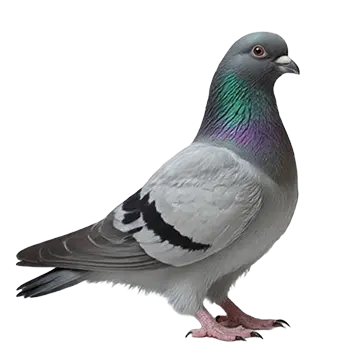

Recognizing the Signs of Aging

Tumbler Pigeons are relatively long-lived among domestic pigeon breeds, with well-maintained birds commonly reaching ten to fifteen years and occasional individuals surpassing that range. The transition into the senior phase is gradual and does not arrive at a fixed age, but most Tumblers begin showing recognizable signs of aging between seven and nine years. Identifying these changes early allows keepers to modify management practices before age-related decline compromises the bird's comfort or health.

The most visible early sign of aging in a Tumbler Pigeon is a decline in flight performance. A bird that once flew vigorously and tumbled with precision may begin showing shorter flight durations, reduced altitude, and less controlled or less frequent tumbling. The pectoral muscles that power flight lose mass and tone with age, and the cardiovascular system becomes less efficient at delivering oxygen during sustained exertion. These changes are normal and expected, but they signal the need to reassess the bird's flying schedule and consider retirement from active kit flying.

Feather quality often deteriorates gradually in senior pigeons. The annual molt may become prolonged, producing feathers that are thinner, less tightly structured, and more prone to fraying than those of the bird's prime years. Color intensity may fade slightly, and the overall plumage may appear duller. These changes reflect the reduced metabolic efficiency of an aging body, which allocates fewer resources to feather production. While nutritional support can slow feather quality decline, some degree of change is inevitable.

Behavioral shifts accompany the physical changes. A senior Tumbler may become less active, spending more time resting on the perch and less time participating in social activities within the flock. The bird may lose its position in the loft hierarchy as younger, more assertive birds challenge it for preferred perching sites or nest locations. Some senior pigeons become noticeably quieter, reducing their cooing and display behaviors. These behavioral changes are normal age-related adaptations, but sudden or dramatic changes in behavior should always be investigated to rule out illness as a contributing factor.

Dietary Adjustments for Aging Birds

The nutritional needs of a senior Tumbler Pigeon shift as the bird's activity level decreases and its metabolic processes slow. An older bird that is no longer flying competitively requires fewer calories than it did during its active years, but its needs for certain nutrients, particularly calcium, antioxidants, and easily digestible protein, may actually increase. Adjusting the diet thoughtfully prevents both obesity, which stresses the cardiovascular system and joints, and malnutrition, which accelerates muscle wasting and immune decline.

Reduce the overall energy density of the diet by decreasing the proportion of high-fat oilseeds such as hemp, safflower, and sunflower. These seeds were valuable during the bird's flying career for their caloric density, but a sedentary senior pigeon stores excess fat readily, particularly around the abdomen and within internal organs. Replace a portion of the oilseeds with lower-fat grains such as wheat, barley, and milo, which provide carbohydrate energy without the lipid load. Maintain peas and lentils as protein sources, as continued muscle maintenance depends on adequate amino acid intake even in a bird that is no longer building flight muscle.

Calcium metabolism changes with age in pigeons just as it does in other vertebrates. Aging hens are particularly vulnerable to calcium depletion if they continue to produce eggs, which draws heavily on skeletal calcium reserves. Even non-breeding senior hens benefit from enhanced calcium availability through crushed oyster shell, cuttlebone, or calcium-enriched mineral blocks. Vitamin D3 supplementation supports calcium absorption, and allowing the bird access to natural sunlight when weather permits promotes endogenous vitamin D synthesis.

Digestive efficiency declines with age, and some senior Tumblers show reduced ability to grind and process hard seeds. Offering smaller seed varieties and ensuring that quality grit is always available supports gizzard function. Some keepers soak or sprout seeds for their senior birds, which softens the seed coat, increases digestibility, and provides a modest boost in vitamin content. Monitor the senior bird's droppings for undigested seed particles, which indicate impaired crop or gizzard function that may require veterinary assessment.

Fresh water consumption should be monitored closely in senior birds. Older pigeons may drink less due to reduced thirst drive or difficulty accessing water containers, and chronic mild dehydration can contribute to kidney stress and poor feather condition. Position water containers at a height that the bird can access comfortably without excessive stretching or bending, and consider adding a second water source near the bird's preferred perching area if mobility is becoming limited.

Retirement from Active Flying

Deciding when to retire a Tumbler Pigeon from active kit flying is one of the most significant management decisions a keeper makes regarding an aging bird. There is no universal age at which retirement should occur because individual birds age at different rates depending on genetics, lifetime health history, conditioning, and the intensity of their flying career. The decision should be based on observable indicators of declining capability and increasing risk rather than on an arbitrary age threshold.

The primary indicators for retirement include a noticeable decline in flight endurance, loss of tumbling control, difficulty keeping up with the kit, delayed or labored return to the loft, and any signs of respiratory distress during or after flying. A bird that once flew for 45 minutes with ease but now tires after 15 minutes is telling you that its cardiovascular and muscular systems can no longer sustain the demands of competitive flight. Similarly, a bird whose tumbling has become erratic, overly deep, or uncontrolled poses a safety risk to itself during every flight session.

The retirement transition should be gradual when possible. Rather than abruptly grounding a bird that has flown daily for years, begin by reducing the frequency and duration of its flying sessions. Some keepers transition aging birds from competitive kit flying to leisurely loft flying, where the bird is allowed to fly freely from the loft at its own pace without the demands of keeping formation with a high-performance kit. This allows the bird to continue exercising at a sustainable level while reducing the physical stress of extended aerial work.

A retired Tumbler still needs physical activity and mental stimulation. Provide opportunities for the bird to walk, explore the loft, and engage in social interactions with flockmates. A spacious aviary with varied terrain, perching options, and bathing facilities gives a retired bird a comfortable environment where it can exercise on its own terms. Social retirement, where the bird is isolated from the flock and confined to a small cage, is detrimental to the well-being of a social species and should be avoided unless medical isolation is temporarily necessary.

Some retired Tumblers continue to contribute to the loft as breeders, passing their performance genetics to the next generation. However, breeding also places physiological demands on the body, and the decision to breed a senior bird should weigh the bird's overall health status, body condition, and history of reproductive complications. Many experienced breeders retire their best performers from both flying and breeding by eight to ten years of age, allowing the bird to spend its remaining years in comfort without the demands of either role.

Age-Related Health Conditions

Senior Tumbler Pigeons are susceptible to several health conditions that are uncommon or rare in younger birds. As the immune system becomes less robust with age, latent infections may reactivate, chronic conditions may worsen, and the body's capacity to repair and regenerate declines. Awareness of these age-related conditions allows keepers to monitor for early signs and seek veterinary intervention before diseases reach advanced stages.

Arthritis and degenerative joint disease affect many senior pigeons, particularly those that have been active flyers for much of their lives. The constant impact of landing, the stress of aerial tumbling, and the normal wear on joint cartilage accumulate over years, producing stiffness, reduced mobility, and visible discomfort when perching or walking. A senior Tumbler with arthritis may favor one leg, grip the perch less firmly, or appear reluctant to fly down from its perch to the floor. Provide flat, wide perching surfaces that allow the bird to rest comfortably without gripping tightly, and position food and water where the bird can access them without significant climbing or jumping.

Renal disease is an underrecognized condition in aging pigeons. The kidneys gradually lose function over time, and by the time clinical signs appear, significant damage has typically already occurred. Signs of renal decline include increased water consumption, watery droppings with a disproportionately large urine component, weight loss, and lethargy. Blood chemistry panels including uric acid levels can detect early renal insufficiency, and dietary modifications, particularly reducing protein levels to decrease the metabolic burden on failing kidneys, can slow disease progression when implemented early.

Neoplasia, or cancer, occurs in senior pigeons at a higher rate than in younger birds. Tumors can develop in virtually any organ system, but those involving the liver, kidneys, and reproductive organs are among the most common in aging domestic pigeons. External tumors may present as visible masses under the skin or on the feet, while internal tumors may cause vague symptoms including weight loss, lethargy, and changes in droppings before a mass becomes palpable. Diagnosis typically requires veterinary imaging or biopsy, and treatment options vary depending on the tumor type, location, and the bird's overall condition.

Vision and hearing decline gradually in many senior pigeons, though these changes are often subtle and easily missed. A bird with reduced vision may startle more easily, show hesitation when flying between perches, or have difficulty locating food in unfamiliar positions. Hearing loss may manifest as reduced response to familiar sounds such as the keeper's voice or the call of flockmates. Accommodate sensory decline by maintaining consistency in the loft arrangement, approaching the bird from the front where it can see you, and ensuring that feeding and watering stations remain in their accustomed locations.

Loft Modifications for Senior Birds

Adapting the loft environment to accommodate the changing needs of senior Tumbler Pigeons reflects a commitment to their long-term welfare and comfort. Modifications that seem minor to the keeper can make a substantial difference in the daily quality of life for a bird whose mobility, strength, and sensory capabilities are declining. The goal is to maintain the bird's independence and social integration for as long as possible while reducing the physical demands and hazards of the loft environment.

Perching modifications are among the most impactful changes for senior birds. Replace narrow round perches with wider flat shelves or padded platforms that allow the bird to rest without maintaining a constant grip. Position these accessible perches at a moderate height that the bird can reach with a short flight or hop rather than requiring a strenuous upward climb. Place at least one low-level perch or shelf near the floor so the bird has a resting option that does not require any flight at all. This is particularly important for birds with arthritis or declining flight capability.

Access to food and water must be effortless for senior birds. If the loft's feeding station requires birds to fly or climb to reach it, provide a secondary feeding area at floor level or near the senior bird's preferred resting spot. Use shallow, stable dishes that the bird can eat from without stretching or tipping the container. Water containers should be wide enough for the bird to immerse its beak fully without struggling and positioned at a height that requires minimal neck extension. Some keepers provide a dedicated feeding and watering station for their senior birds in a quiet corner of the loft, away from the bustle of younger, more active flockmates.

Draft protection becomes more important as aging birds lose thermoregulatory efficiency. Senior Tumblers may have thinner feather coverage due to declining molt quality and reduced ability to generate body heat through metabolic activity. Position the senior bird's preferred perching area away from ventilation openings and exterior walls that transmit cold. During winter months in cold climates, supplemental heating near the senior birds' area or a partially enclosed roosting box that traps body heat can prevent cold stress without overheating the entire loft.

Social management within the loft protects senior birds from harassment by younger, more dominant individuals. As a senior Tumbler loses its competitive edge in the pecking order, it may be displaced from preferred perches, denied timely access to food, or physically bullied by assertive younger birds. Monitor interactions closely and intervene if a senior bird is being consistently harassed. Physical barriers such as partial partitions or a designated senior section within the loft can provide refuge without fully isolating the aging bird from its flockmates.

Monitoring & Veterinary Oversight

Increased veterinary oversight is one of the most valuable investments a keeper can make in the welfare of a senior Tumbler Pigeon. While annual veterinary examinations are sufficient for most healthy adults, senior birds benefit from semi-annual checkups that allow earlier detection of age-related conditions and timely adjustment of management strategies. The relationship between keeper and veterinarian becomes a true partnership during the senior years, combining the keeper's daily observations with the veterinarian's diagnostic capabilities.

Semi-annual examinations for senior Tumblers should include a thorough physical assessment with attention to body condition scoring, joint flexibility, keel prominence, skin turgor, and any palpable masses. Diagnostic testing expands to include comprehensive blood work encompassing a complete blood count, plasma chemistry panel with uric acid and liver enzymes, and protein electrophoresis when indicated. These tests establish trends over time that are far more informative than any single data point. A gradually rising uric acid level, for example, may signal early renal decline months before clinical signs become apparent.

Daily monitoring by the keeper is the essential complement to periodic veterinary visits. Weigh the senior bird weekly at the same time and under the same conditions to track weight trends. Gradual weight loss in a senior pigeon may indicate reduced appetite, malabsorption, chronic disease, or dental issues affecting the beak's ability to process food. Gradual weight gain may reflect reduced activity without corresponding dietary adjustment and carries its own health risks. Record weekly weights in a log alongside notes on behavior, appetite, droppings, and any observations of concern.

Droppings analysis remains a simple but powerful monitoring tool for senior birds. A senior Tumbler's droppings should be examined daily for changes in consistency, color, volume, and odor. Watery droppings with excessive urine may suggest renal compromise. Green-stained feces can indicate liver dysfunction or anorexia. Undigested seed in the droppings points to gizzard dysfunction. Bloody or mucoid droppings warrant immediate veterinary attention regardless of the bird's apparent overall condition.

Medication management for senior birds requires special consideration. Older birds may metabolize drugs differently than younger adults, and drug interactions become a concern when multiple conditions are being treated simultaneously. Always disclose all current medications and supplements to your veterinarian when any new treatment is being considered. Dose adjustments may be necessary for senior birds with compromised liver or kidney function, as impaired clearance can cause toxic accumulation of medications that are well tolerated in healthier birds.

Quality of Life & Emotional Well-Being

The quality of life of a senior Tumbler Pigeon encompasses far more than physical health metrics. Pigeons are social, sentient creatures with behavioral needs and emotional states that must be considered as part of holistic geriatric care. A bird that is medically stable but socially isolated, chronically stressed, or unable to engage in meaningful daily activities is not experiencing good quality of life. The keeper's responsibility is to balance medical management with attention to the bird's emotional and behavioral needs.

Social connection is fundamental to pigeon well-being at every age, and its importance does not diminish in the senior years. A Tumbler Pigeon that has lived its life as part of a flock should remain a part of that flock as long as its health and social situation permit. The companionship of a bonded mate is particularly significant for senior pigeons. Pairs that have been together for years derive visible comfort from each other's presence, preening, roosting side by side, and engaging in quiet mutual behaviors. Separating a bonded pair should be avoided unless absolutely medically necessary, and even then, visual and auditory contact should be maintained.

Environmental enrichment for senior Tumblers focuses on gentle, accessible activities. Bathing remains a favorite activity for most pigeons and provides both physical benefits through feather maintenance and behavioral satisfaction. Offer a shallow bath pan regularly and observe whether the bird participates with its usual enthusiasm. A senior bird that stops bathing may be experiencing mobility limitations, pain, or malaise that should be investigated. Sunbathing is another naturally rewarding behavior that can be facilitated by ensuring the bird has access to a warm, sunny spot within the loft or an enclosed outdoor area.

Pain recognition in pigeons is challenging because these prey animals are evolutionarily programmed to conceal vulnerability. Signs of chronic pain in a senior Tumbler may include a hunched posture, reluctance to move, reduced preening, squinting or partially closed eyes, decreased appetite, and withdrawal from social interaction. If pain is suspected, consult your veterinarian about appropriate analgesia. Nonsteroidal anti-inflammatory medications formulated for avian use can provide significant relief for arthritis and other chronic pain conditions, improving both comfort and functional capacity.

Ultimately, assessing quality of life requires honest, compassionate evaluation of the bird's daily experience. Can the bird eat, drink, and rest comfortably? Does it engage in social behaviors with its mate or flockmates? Does it show interest in its environment? Is pain being effectively managed? When the answers to these questions begin to shift toward the negative despite best efforts at supportive care, the keeper must begin considering whether the bird's needs are being met or whether more difficult decisions lie ahead.

Always consult a qualified professional before making any health-related decisions. This content is provided for informational reference only and should not replace professional guidance specific to your animal.