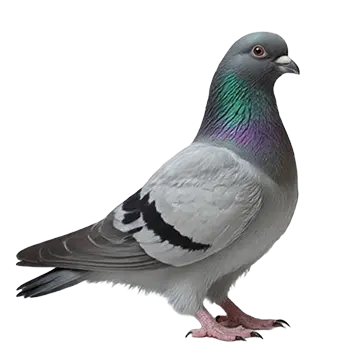

The adult years of a Tumbler Pigeon represent the period of peak physical capability and aerial performance. Most Tumblers reach their full athletic potential between one and three years of age, when their musculature is fully developed, their flight feathers are at maximum structural integrity, and their neurological coordination has matured to the point where tumbling is both consistent and controlled. Managing an adult Tumbler during these prime years centers on maintaining the physical condition, mental sharpness, and environmental stability that allow the bird to perform at its best.
Flight conditioning for an adult Tumbler is an ongoing discipline rather than a one-time training achievement. Regular daily or near-daily flying sessions maintain cardiovascular fitness, muscle tone, and the neuromuscular reflexes that produce clean tumbling. The duration and intensity of flying sessions should be calibrated to the individual bird's capability and the ambient conditions. Sessions of 30 to 60 minutes are typical for a well-conditioned adult kit, though some high-performance strains can sustain quality flight for longer periods. Avoid flying in extreme heat, heavy rain, strong winds, or low-visibility conditions that increase the risk of injury or loss.
The quality of tumbling in an adult Tumbler is the product of genetics, conditioning, and management. A well-bred bird with strong tumbling genetics will perform best when it is in peak physical condition, neither overweight nor underweight, and when it is flying regularly with a compatible kit. Tumbling quality is typically assessed on several criteria including depth of tumble, speed of recovery, frequency, and the aesthetic form of each backward rotation. Birds that tumble too deeply and struggle to recover, a condition sometimes called rolling down, may need reduced flying time, dietary adjustments, or in severe cases, permanent grounding to prevent injury.
Rest and recovery are as important as active flying. Adult Tumblers should have access to comfortable, clean perching within the loft where they can rest undisturbed between flying sessions. Overtraining, flying the kit too frequently or for too long without adequate recovery time, leads to fatigue, weight loss, increased susceptibility to illness, and declining performance. Most experienced Tumbler flyers schedule at least one to two rest days per week, particularly during demanding periods such as competition seasons or extreme weather.