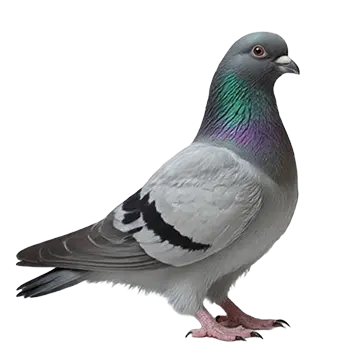

The First 24 Hours

Tumbler Pigeon squabs hatch after an incubation period of approximately 17 to 19 days, emerging as small, virtually helpless creatures with closed eyes and a sparse covering of pale yellow down. A newly hatched Tumbler squab typically weighs between 12 and 18 grams depending on the specific Tumbler variety, with smaller ornamental strains producing lighter hatchlings. The squab's first hours are defined by warmth, rest, and the critical first feeding of crop milk from its parents. Unlike many bird species, pigeons produce this specialized secretion in the lining of the crop, and it serves as the sole nutrition source for the newborn.

In a parent-raised setting, both the cock and hen participate in feeding duties almost immediately. The parents will begin offering crop milk within a few hours of hatching, and the squab instinctively pushes its beak into the parent's mouth to stimulate regurgitation. This first feeding is essential not only for nutrition but also for establishing the gut microbiome that will support the squab's digestive health throughout its life. Crop milk is extraordinarily rich in protein and fat, rivaling mammalian milk in caloric density, and it contains immunoglobulins that provide passive immunity during the vulnerable first days.

If circumstances require hand-raising, the squab should not be fed until the residual yolk sac has been absorbed, which generally occurs within eight to twelve hours after hatching. Attempting to feed before yolk absorption is complete can lead to digestive distress and crop complications. For hand-fed squabs, a commercially available pigeon hand-rearing formula or a carefully prepared substitute should be warmed to approximately 104 to 106 degrees Fahrenheit and delivered via a small syringe or feeding tube with extreme care to avoid aspiration.

The nest environment during this period must provide consistent warmth. Parent-raised squabs benefit from the body heat of the brooding adult, which maintains temperatures around 98 to 100 degrees Fahrenheit directly under the parent. For hand-raised squabs, a brooder set to 95 to 98 degrees Fahrenheit with a humidity level of approximately 55 to 60 percent replicates the conditions the squab would experience under its parents. Monitor the squab closely for signs of chilling, which include pale or bluish skin, lethargy, and failure to respond to feeding stimulation.

Feeding & Nutrition

Nutrition during the first weeks of a Tumbler Pigeon squab's life follows a predictable and fascinating progression that is unique among birds. For the first three to four days, the squab subsists entirely on crop milk, a thick, cheese-curd-like substance produced by the epithelial lining of both parents' crops under the influence of the hormone prolactin. Crop milk is composed of roughly 60 percent protein and 35 percent fat with small amounts of minerals and vitamins, making it one of the most nutrient-dense foods found anywhere in the animal kingdom. This exclusive crop milk phase is critical for Tumbler squabs because it supports the rapid early growth that lays the foundation for their muscular and skeletal development.

Beginning around day four or five, the parents gradually introduce small amounts of softened seed and grain into the crop milk mixture. This transition happens naturally as the parents' crop milk production begins to taper and they start incorporating pre-digested food into each feeding. By the end of the first week, the ratio has shifted significantly toward regurgitated seed, though traces of crop milk may persist for another several days. The squab's crop capacity increases rapidly during this period, and feedings become less frequent but larger in volume as the digestive system matures.

Hand-fed Tumbler squabs require a carefully formulated diet that mimics the nutritional profile of crop milk during the first few days, then transitions to a standard pigeon hand-rearing formula. Feedings should occur every two to three hours during the first three days, extending to every three to four hours by the end of the first week. Maintain formula temperature between 104 and 108 degrees Fahrenheit and always test with a thermometer before each feeding. Overheating can cause severe crop burns that may not become apparent until tissue damage is advanced, while cold formula leads to crop stasis and potential sour crop.

Weight tracking is the single most reliable tool for assessing whether a squab is receiving adequate nutrition. A healthy Tumbler squab should roughly double its hatch weight within the first five days and continue gaining steadily thereafter. Weigh the squab at the same time each day, ideally before the first morning feeding, and record the data consistently. Any plateau lasting more than 24 hours or any weight loss warrants immediate investigation into feeding technique, formula quality, or underlying health issues. By the end of the second week, a well-fed Tumbler squab will typically weigh eight to ten times its hatch weight.

For breeders maintaining parent-raised squabs, nutritional support comes indirectly through the parents' diet. Breeding pairs feeding young squabs should receive a high-protein pigeon mix supplemented with safflower, hemp seed, and a quality mineral grit. Fresh greens and a reliable calcium source such as crushed oyster shell or a calcium block should be available at all times. The quality of the parents' intake directly determines the quality of the crop milk and regurgitated food the squabs receive.

Developmental Milestones

Tumbler Pigeon squabs develop rapidly compared to many psittacine species, progressing from blind, nearly immobile hatchlings to feathered and increasingly active youngsters within just a few weeks. Understanding the normal developmental timeline for this breed helps caregivers identify when growth is proceeding as expected and when a squab may need veterinary attention. Because Tumblers are a performance breed whose defining characteristic involves complex aerial maneuvers, their physical development carries particular significance for future flight ability.

During the first three days, the squab's eyes remain sealed shut and its movements are limited to raising its head for feeding and shifting position in the nest. By day four to five, the eyes begin to slit open, and the squab starts showing awareness of light and movement in its environment. The sparse natal down that covered the squab at hatching begins to thicken, and the first tiny pin feathers may become visible along the wing edges by the end of the first week. The squab's legs strengthen noticeably during this period, though it remains unable to stand.

The second week brings dramatic visible changes. Pin feathers erupt rapidly across the wings, back, and tail, and the squab's body begins to take on a recognizably pigeon-like shape. The beak hardens and develops its characteristic form, and the squab's feeding response becomes more vigorous and coordinated. By day ten to twelve, most Tumbler squabs can sit upright and brace themselves on their legs, though walking is still uncoordinated. The eyes are fully open and the squab tracks movement actively, responding to the approach of parents or caregivers.

Weeks three and four represent the transition from a helpless nestling to a mobile and curious young pigeon. Feather growth accelerates dramatically, with the contour feathers unfurling from their sheaths to reveal the breed-specific coloration and patterning of the particular Tumbler variety. The squab begins preening, an essential self-maintenance behavior that indicates normal neurological development. Wing stretching and flapping exercises become frequent as the pectoral muscles that will eventually power the Tumbler's characteristic aerial rolls develop strength and coordination. By the end of week four, the squab is substantially feathered and beginning to thermoregulate independently.

Temperature & Environment

Environmental management for newborn Tumbler Pigeon squabs is straightforward when the parents are handling brooding duties but becomes critically important when hand-raising is necessary. Pigeon squabs are altricial and cannot thermoregulate until their feather coverage is sufficient to insulate their bodies, a milestone that typically occurs around three to four weeks of age in Tumbler Pigeons. Until that point, the squab depends entirely on external heat sources, whether that is a brooding parent or a carefully calibrated mechanical brooder.

For the first week of life, hand-raised squabs require brooder temperatures between 95 and 98 degrees Fahrenheit. This range replicates the thermal environment found directly beneath a brooding adult pigeon. As the squab develops down and pin feathers through the second week, the temperature can be reduced by two to three degrees. By the third week, when substantial feather coverage is present, the brooder temperature can be lowered to approximately 85 degrees Fahrenheit. Continue gradual reductions through week four, aiming for ambient room temperature by the time the squab is fully feathered. Always observe the squab's behavior as the primary temperature indicator. A comfortable squab rests quietly with normal breathing, while a chilled squab huddles tightly with fluffed down and a squab that is too warm pants with an open beak and holds its wings away from its body.

Humidity in the brooder should be maintained between 50 and 60 percent. Inadequate humidity can dehydrate the squab and impair feather development, causing pin feathers to become brittle and prone to breakage as they emerge from their sheaths. Excessive humidity promotes bacterial and fungal growth in the warm brooder environment, creating conditions favorable for respiratory infections and skin issues. A digital hygrometer placed at squab level inside the brooder provides reliable monitoring.

The nest or brooder substrate matters more than many keepers realize. Newborn Tumbler squabs have delicate skin and developing leg joints that can be affected by inappropriate surfaces. Avoid slick materials that prevent the squab from gripping, as splayed legs can result from poor footing during the critical first two weeks. A shallow nest bowl lined with paper towels or soft cloth provides appropriate traction and support. Change the lining at least twice daily to maintain hygiene and reduce the bacterial load in the squab's immediate environment. For parent-raised squabs in a loft setting, ensure the nest bowl is clean, dry, and situated in a draft-free location away from direct sunlight and away from other pairs that might disturb the breeding pair.

Early Socialization

Socialization of Tumbler Pigeon squabs differs from that of companion parrot species because pigeons occupy a different ecological and behavioral niche. Tumblers are domesticated birds with centuries of selective breeding behind them, and most are kept for their aerial performance rather than as hands-on companion pets. Nevertheless, early handling and positive human contact produce calmer, more manageable adults that are easier to train, transport, and examine for health issues. The degree of socialization appropriate for a Tumbler squab depends on its intended role, whether as a performance flyer, a show bird, or an aviary companion.

For squabs that will be handled regularly, gentle daily contact should begin as soon as the eyes open, typically around day four to five. Hold the squab in cupped hands for short sessions of two to three minutes, allowing it to feel your body warmth while speaking softly. Pigeon squabs are generally less prone to fear-based stress than parrot chicks, but sudden movements, loud noises, and rough handling can still create negative associations. Increase handling duration gradually as the squab grows and becomes more tolerant. By the second week, a well-socialized squab will rest calmly in your hands without attempting to scramble away.

Parent-raised squabs destined for loft flying still benefit from regular brief handling sessions. This acclimates them to being caught and held for health checks, banding, and training activities that they will encounter throughout their lives. Many experienced Tumbler breeders begin picking up squabs daily from around ten days of age, checking their development and weight while simultaneously building tolerance for human contact. The parents may show mild alarm initially but typically accept this routine quickly if the handler is calm and consistent.

Environmental enrichment during the nest phase is minimal for pigeon squabs compared to parrot chicks, but exposing the squab to normal household or loft sounds, varied lighting conditions, and the visual activity of other pigeons in the loft contributes to a well-adjusted temperament. Squabs that grow up in quiet, isolated environments may be more prone to startle responses when they encounter the broader world during fledging and flight training. If the squabs are being raised indoors, ensure they can see and hear activity around them without being exposed to hazards or extreme disturbances.

Health Screening & Vet Visits

Veterinary care for newborn Tumbler Pigeon squabs centers on prevention, early detection, and ensuring that the squabs are developing on a healthy trajectory. While pigeons are generally hardy birds, squabs are vulnerable to a range of infectious and developmental conditions during their first weeks. Establishing a relationship with a veterinarian experienced in avian or specifically columbid medicine gives you a critical resource when problems arise.

The first health assessment should occur within the first few days of life if possible, particularly for hand-raised squabs or squabs from pairs with unknown health histories. A thorough initial examination includes checking the umbilical area for proper closure and any signs of infection, palpating the crop to assess feeding and emptying, examining the skin for hydration status, and evaluating the overall body condition relative to age. The veterinarian may perform a crop swab to culture for Candida or bacterial overgrowth and a fecal examination to screen for coccidia, roundworms, or other parasites common in pigeon lofts.

Canker, caused by the protozoan Trichomonas gallinae, is one of the most significant health threats to young pigeon squabs. The organism is transmitted from parents to offspring during crop milk feeding, and it can produce yellowish-white plaques in the mouth, throat, and crop that interfere with feeding and breathing. Inspect the squab's oral cavity daily during the first two weeks. Early canker lesions may appear as small white spots on the mucous membranes and can progress rapidly if untreated. Treatment with an appropriate anti-protozoal medication prescribed by your veterinarian is highly effective when caught early but becomes increasingly difficult as lesions advance.

Circovirus and paramyxovirus are additional concerns in pigeon populations. Circovirus can cause immunosuppression in young squabs, making them susceptible to secondary infections, while Pigeon Paramyxovirus Type 1 can cause neurological symptoms, diarrhea, and high mortality. Vaccination protocols vary by region and loft management practices, so consult your veterinarian about appropriate preventive measures for your specific situation. Maintain strict biosecurity in the loft, especially when introducing new birds, and quarantine any birds showing signs of illness immediately to protect the youngest and most vulnerable members of the flock.

Between veterinary visits, daily monitoring is your first line of defense. Record each squab's weight at the same time daily and note any changes in droppings, appetite, or behavior. Healthy pigeon squab droppings are small, semi-solid, and dark in color with a white urate cap. Watery, green, or foul-smelling droppings indicate digestive disturbance or infection. Respiratory signs including nasal discharge, open-mouth breathing, or audible wheezing require prompt veterinary attention, as respiratory infections can escalate rapidly in young squabs.

When to Worry

Learning to distinguish normal developmental variation from genuine health emergencies is essential for anyone raising Tumbler Pigeon squabs. Pigeon squabs are remarkably fast-growing birds, and their rapid development means that problems can escalate quickly if not recognized early. Maintaining a baseline understanding of what healthy looks like at each age allows you to detect deviations before they become critical.

Weight stagnation or loss is the most reliable early warning sign in a squab of any age. A healthy Tumbler squab gains weight every day during its first three weeks of life, with the most rapid gains occurring during the first ten days. If a squab fails to gain weight for a full 24-hour period, investigate immediately. Check the parents' feeding behavior if the squab is parent-raised, or review your hand-feeding technique, formula preparation, and formula temperature if hand-raising. A squab that loses weight on two consecutive weigh-ins is in active decline and should be seen by a veterinarian the same day if possible.

Crop emptying abnormalities are another critical indicator. A healthy squab's crop should fill visibly after each feeding and empty progressively between feedings. A crop that remains full and distended for an unusually long period, often called slow crop, may indicate a bacterial or fungal infection, a foreign body obstruction, or a motility disorder. Sour crop, recognized by a foul smell emanating from the beak and a doughy or gas-filled crop, is a veterinary emergency. Do not attempt to empty the crop manually without professional guidance, as the risk of aspiration is severe.

Respiratory distress in a squab demands immediate attention. Signs include open-mouth breathing at rest, tail bobbing with each breath, audible clicking or wheezing sounds, nasal discharge, and swollen or inflamed tissue around the nares. Pigeon squabs are susceptible to respiratory infections from bacteria, fungi, and viruses, and the warm, humid environment of a brooder or a crowded nest can exacerbate these conditions. Isolate any squab showing respiratory signs from nestmates and seek veterinary care promptly.

Musculoskeletal problems can develop during the rapid growth phase if nutrition is inadequate or if the nest environment does not provide proper footing. Splayed legs, where one or both legs splay outward from the body rather than tucking beneath it, is most commonly caused by slippery nest substrates that prevent the squab from gripping. This condition is correctable if caught within the first few days using gentle hobble braces, but becomes increasingly difficult to resolve as the squab grows and the leg joints set. Crooked toes, twisted necks, and soft or rubbery beaks can indicate calcium deficiency, vitamin D insufficiency, or metabolic bone disease, all of which require nutritional correction and veterinary oversight.

Always consult a qualified professional before making any health-related decisions. This content is provided for informational reference only and should not replace professional guidance specific to your animal.