
The Weaning Transition

Weaning is one of the most consequential phases in a Timneh African Grey's early life, marking the shift from total dependence on hand-feeding formula or parental regurgitation to independent consumption of solid food. For Timnehs, this process typically begins around eight to ten weeks of age and may extend over several weeks or even months. Rushing the weaning process is one of the most common and damaging mistakes made by inexperienced caregivers. A Timneh that is force-weaned before it is developmentally ready can suffer lasting psychological harm, manifesting as chronic anxiety, food insecurity behaviors, or a deep-seated mistrust of its caregiver.

The process should be abundance-weaned, meaning that a wide variety of appropriate solid foods are made available to the chick while hand-feeding continues on a gradually reducing schedule. Offer softened pellets, warm cooked grains, diced fresh vegetables, and small pieces of soft fruit in a shallow dish placed at the chick's level. The chick will initially play with these items more than eat them, picking them up, mouthing them, dropping them, and occasionally flinging them. This exploratory behavior is a critical part of learning to identify food and develop the beak dexterity needed for independent eating.

As the chick begins consuming measurable amounts of solid food, reduce hand-feedings incrementally. Most breeders and experienced caregivers eliminate the midday feeding first, then the morning feeding, with the evening feeding being the last to go. The evening feeding often serves as much an emotional comfort as a nutritional necessity, and many Timneh chicks will solicit it long after they are physically capable of sustaining themselves on solids. Allow the chick to dictate the final stages of this transition. If the chick refuses solid food and loses weight when a feeding is dropped, reintroduce that feeding and try again in a few days.

Daily weight monitoring remains essential throughout weaning. Some weight loss is normal during this transition, typically no more than ten to fifteen percent of the chick's peak pre-weaning weight. Losses exceeding this threshold, or weight that continues to decline rather than stabilizing and beginning to climb again, indicate that the chick is not yet consuming enough solid food and needs continued formula support. The goal is a confident, self-feeding bird that transitions at its own pace, not a chick that is hungry and stressed because its formula was withdrawn on an arbitrary schedule.

Juvenile Diet and Nutritional Needs

Once a Timneh African Grey is fully weaned, establishing a balanced and varied diet sets the nutritional foundation for decades of healthy life. The juvenile period is a time of rapid growth, feather development, and neurological maturation, all of which place elevated demands on the bird's nutrient intake. A diet that is adequate for maintenance in an adult bird may be insufficient for a juvenile that is still building bone density, muscle mass, and its first full set of adult feathers.

A high-quality formulated pellet should constitute approximately fifty to sixty percent of the juvenile Timneh's diet. Pellets provide a consistent, balanced nutritional profile that ensures the bird receives appropriate levels of vitamins, minerals, amino acids, and trace elements without the selective feeding that occurs when a bird is offered a seed-heavy diet. Choose a pellet formulated for African Grey parrots or medium-sized psittacines, as these typically include the elevated calcium levels that Greys require to prevent hypocalcemia, a condition to which the species is particularly susceptible.

Fresh vegetables should make up roughly twenty-five to thirty percent of the daily diet. Dark leafy greens such as kale, Swiss chard, dandelion greens, and collard greens are excellent sources of calcium, vitamin A precursors, and fiber. Cooked sweet potato, carrots, broccoli, snap peas, and bell peppers add variety and additional micronutrients. Fresh fruits can be offered in smaller quantities, roughly five to ten percent of the diet, as their high sugar content makes them better suited as treats or enrichment items rather than dietary staples. Berries, papaya, mango, and pomegranate are well-accepted choices.

Seeds and nuts should be used sparingly and primarily as training rewards or foraging enrichment rather than dietary staples. Sunflower seeds and peanuts are high in fat and low in calcium, and a bird that fills up on them will often refuse more nutritious options. A small number of almonds, walnuts, or pine nuts offered as part of a foraging challenge provides healthy fats and engages the bird's problem-solving instincts. Avoid avocado, chocolate, caffeine, alcohol, and any foods containing high levels of salt or refined sugar, all of which are toxic or harmful to parrots.

Fresh, clean water must be available at all times. Change the water at least twice daily, as parrots frequently dunk food in their water dish, creating a bacterial breeding ground within hours. Some caregivers offer a separate water source specifically for bathing or dunking, which helps keep the drinking water cleaner for longer periods.

Feather Development and the First Molt

The juvenile Timneh African Grey undergoes a dramatic transformation in plumage during its first year of life, culminating in the first major molt that replaces the somewhat dull, loosely structured juvenile feathers with the denser, more richly pigmented adult plumage. Understanding this process helps caregivers provide appropriate nutritional and environmental support and avoid mistaking normal molt-related feather changes for signs of illness or feather-destructive behavior.

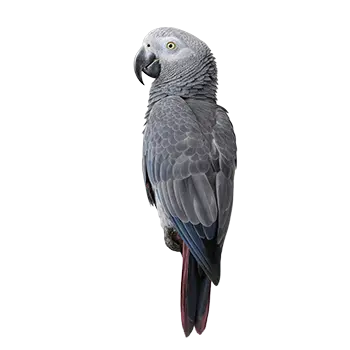
Timneh chicks fledge with a full complement of contour feathers that are slightly softer and less tightly interlocking than adult feathers. The characteristic dark charcoal-grey body plumage is present but may appear somewhat brownish or muted compared to a mature bird. The tail feathers display the Timneh's signature darker maroon coloring, which distinguishes the species from the bright red tail of the Congo Grey. The upper mandible shows a pale, horn-colored area at the base that gradually darkens to solid black as the bird matures, a visual marker that experienced breeders use to estimate age.

The first significant molt typically begins between six and twelve months of age, though the timing varies among individual birds. During this period, feathers are shed and replaced in a roughly symmetrical pattern, with flight feathers on both wings molting in matched pairs to preserve the bird's ability to fly. The bird may appear ragged or patchy during an active molt, and caregivers sometimes mistake this normal appearance for feather plucking. Close examination reveals the difference. Molted feathers are shed intact with a clean calamus, while plucked feathers are often chewed, broken, or have damaged shafts.

Nutritional demands increase during molt because growing new feathers is metabolically expensive. Feathers are composed primarily of keratin, a protein, so the diet should be rich in high-quality protein sources during this period. Ensure the pellet component of the diet is consistently available, and consider supplementing with cooked egg, cooked legumes, or sprouted seeds to boost protein intake. Adequate vitamin A and calcium are also critical for producing structurally sound feathers. Bathing or misting the bird regularly during molt helps soften the keratin sheaths on incoming pin feathers and provides relief from the itchiness that often accompanies feather growth.

Flight Training and Physical Development

The fledging period is a defining chapter in a juvenile Timneh African Grey's physical and psychological development. Learning to fly is not merely a motor skill but a complex cognitive achievement that builds spatial awareness, coordination, confidence, and the ability to navigate and respond to the physical environment. Birds that are allowed to fledge and practice flight during the juvenile period develop measurably better coordination, balance, and problem-solving abilities than those that are wing-clipped before they learn to fly.

Timneh chicks typically make their first flight attempts between ten and fourteen weeks of age, though some individuals are earlier or later. The initial attempts are often clumsy, consisting of short, downward glides from a perch to the floor rather than sustained level flight. The bird is learning to coordinate wing beats, judge distances, control speed, and execute landings, skills that require practice and repetition. Create a safe fledging environment by removing hazards such as open water containers, ceiling fans, mirrors and large windows where the bird might fly into the glass, and any toxic houseplants.

Allow the bird to practice flight in a controlled indoor space before considering any outdoor exposure. Even indoors, supervised flight sessions should occur in a bird-proofed room where the bird can fly short distances, land safely, and build endurance gradually. Provide multiple landing options at varying heights, such as perch stands, the backs of chairs covered with towels, and designated landing platforms. Reward successful flights and landings with verbal praise and small treats to reinforce the behavior positively.

The question of wing clipping is a deeply personal decision for each caregiver, and the arguments on both sides have merit. From a developmental perspective, allowing a juvenile Timneh to learn to fly before any clip is applied gives the bird the neurological and muscular benefits of flight experience. If clipping is chosen for safety reasons, a conservative clip that allows controlled descent rather than a full ground clip preserves some of the bird's aerial confidence. Regardless of the decision, the juvenile period is when the muscular and skeletal systems are developing most rapidly, so providing ample opportunity for physical activity, whether through flight, climbing, or vigorous play, is essential for building a strong, healthy body.

Physical development during the juvenile stage extends beyond flight. The feet, beak, and leg muscles are maturing and strengthening through use. Provide a variety of perch diameters and textures to exercise the feet and prevent pressure sores. Natural wood branches with irregular surfaces are superior to smooth, uniform dowel perches because they encourage the bird to constantly adjust its grip, building foot strength and dexterity.

Socialization and Behavioral Development

The juvenile period is the most formative window for shaping a Timneh African Grey's social behavior and emotional resilience. Timnehs are naturally more adaptable and less prone to extreme one-person bonding than Congo Greys, but this predisposition must be actively cultivated through broad, positive socialization during the adolescent months. A juvenile Timneh that is exposed to multiple people, environments, sounds, and experiences develops into a confident, well-rounded adult. One that is isolated or exposed to only a single caregiver may become overdependent and anxious in new situations.

Introduce the juvenile Timneh to a variety of trusted people during this stage. Allow visitors to offer treats and speak to the bird, but do not force the bird to step up to or be handled by someone it is visibly uncomfortable with. Positive associations are the goal. If the bird shows fear, reduce the intensity of the interaction and try again at a pace the bird can tolerate. Every positive encounter with a new person broadens the bird's social comfort zone and reduces the risk of developing aggressive or phobic behaviors toward unfamiliar humans later in life.

Environmental socialization is equally important. Take the bird into different rooms of the house, and if weather and safety permit, introduce brief outdoor experiences in a secure carrier or travel cage. Exposure to natural sunlight, outdoor sounds, and the visual complexity of the natural world provides valuable sensory stimulation. Introduce the bird to common household objects, such as vacuum cleaners, blenders, and televisions, at a distance and gradually closer, rewarding calm responses with praise and treats.

Adolescent Timnehs will test boundaries, much like human teenagers. They may begin nipping harder during play, refusing to step up on command, or displaying bluffing behaviors such as lunging or beak fencing. These behaviors are developmentally normal and should be met with calm, consistent responses rather than punishment or emotional reactions. Avoid pulling your hand away abruptly when the bird nips, as this teaches the bird that biting produces an interesting reaction. Instead, offer a neutral response, redirect to an acceptable behavior, and reward compliance. This patience pays dividends in producing an adult bird that understands social boundaries and communicates without aggression.

Establish daily routines that include structured interaction time, independent play, foraging opportunities, and rest. Timnehs thrive on predictability and become stressed when their routines are disrupted without warning. A consistent schedule gives the bird a sense of security and helps prevent the anxiety-driven behaviors, such as feather plucking or excessive screaming, that can emerge when a parrot feels its environment is unpredictable or chaotic.

Cognitive Stimulation and Early Speech

Timneh African Greys are among the most cognitively advanced parrot species, and the juvenile period is when their remarkable intellectual abilities begin to emerge in observable ways. Timnehs often start speaking earlier than Congo Greys, with some individuals producing their first recognizable words as young as six to eight months of age. However, speech is just one facet of a much broader cognitive landscape that includes problem-solving, associative learning, tool use, and complex social reasoning.

Encourage early vocalization by speaking clearly and consistently to the bird throughout the day. Label objects, actions, and people as you interact with the bird. Repeat key words and phrases in context rather than in isolation. For example, say the word for a particular food as you offer it, and name the action of stepping up as you present your hand. Contextual speech modeling helps the bird learn that words have meanings attached to specific objects and actions, which is what distinguishes true communicative speech from mere mimicry.

Foraging enrichment is one of the most effective tools for engaging a juvenile Timneh's intellect. In the wild, parrots spend a significant portion of their day searching for and processing food. A captive bird that receives all of its food in a dish has no outlet for this deeply ingrained drive. Provide foraging toys, puzzle feeders, and food wrapped in paper or tucked into shreddable containers to encourage the bird to work for its meals. Start with simple challenges and gradually increase the difficulty as the bird's skills improve. The mental engagement provided by foraging reduces boredom and the behavioral problems that stem from it.

Introduce basic training during the juvenile period using positive reinforcement. Target training, in which the bird learns to touch its beak to the tip of a stick in exchange for a small reward, is an excellent foundation behavior that can be taught in a single session and built upon indefinitely. Once the bird understands the target concept, it can be guided through more complex behaviors such as turning in a circle, waving, or retrieving objects. Training sessions should be short, no more than five to ten minutes, and always end on a positive note.

Provide a rotating selection of toys that engage different cognitive and physical skills. Puzzle toys that require manipulation to access a hidden treat develop problem-solving abilities. Shreddable toys made of palm leaf, balsa wood, or untreated wicker satisfy the bird's natural urge to chew and destroy, which is a healthy outlet for beak energy. Interactive toys with moving parts, bells, or beads provide auditory and tactile stimulation. Rotate toys every few days to maintain novelty, as a bored Timneh is a Timneh at risk for developing destructive or self-harming behaviors.

Health Monitoring and Veterinary Milestones

The juvenile period introduces new health considerations as the Timneh African Grey transitions from the tightly controlled neonatal environment into a more complex domestic setting. Regular veterinary oversight remains essential, and the scope of health monitoring expands to include the bird's response to dietary changes, its feather and skin condition, its behavioral health, and screening for diseases that may not manifest until the bird is several months old.

Schedule a comprehensive veterinary examination at approximately three to four months of age, coinciding with the completion of weaning and the bird's establishment on a solid food diet. This visit should include a thorough physical examination, a complete blood count and basic blood chemistry panel, and follow-up testing for Psittacine Beak and Feather Disease and Avian Polyomavirus if initial neonatal screens were negative. Some veterinarians also recommend a baseline radiographic study at this age to document normal organ size and skeletal development, providing a reference for future comparisons if illness occurs.

Calcium metabolism deserves particular attention in juvenile Timnehs. African Grey parrots as a species are predisposed to hypocalcemia, a condition in which blood calcium levels drop below the normal range. Symptoms include muscle tremors, incoordination, seizures, and in severe cases, death. The juvenile bird's rapidly growing skeleton demands significant calcium, and a diet deficient in this mineral or in vitamin D3, which is necessary for calcium absorption, can trigger a hypocalcemic crisis. Ensure the diet includes adequate calcium through pellets formulated for African Greys, calcium-rich vegetables, and appropriate exposure to full-spectrum lighting that provides UVB wavelengths to support endogenous vitamin D3 production.

Monitor the bird's droppings daily for changes in color, consistency, and volume. Juvenile Timnehs eating a pellet-based diet will produce droppings that reflect the color of the pellet, which can vary from brown to green depending on the brand. This is normal and should not be confused with pathological color changes. Bright lime-green or yellow urates, watery droppings without a formed fecal component, blood in the stool, or the presence of undigested food particles all warrant a veterinary consultation.

Behavioral health is an increasingly recognized component of avian veterinary medicine. If the juvenile Timneh begins exhibiting feather-damaging behavior, excessive screaming, aggression, or signs of anxiety such as rocking, pacing, or self-mutilation, raise these concerns with your avian veterinarian. These behaviors can have medical underpinnings, including pain, hormonal imbalances, or subclinical illness, and a thorough workup may reveal a treatable cause. Even when the origin is environmental or psychological, a veterinarian experienced in avian behavior can provide guidance on management strategies and, if necessary, referral to an avian behavior consultant.

Always consult a qualified professional before making any health-related decisions. This content is provided for informational reference only and should not replace professional guidance specific to your animal.