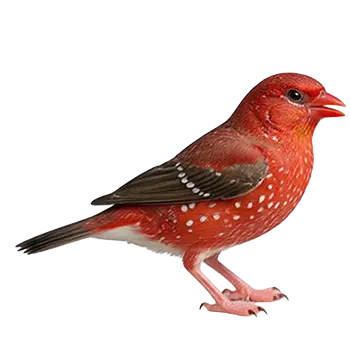

Strawberry Finch chicks, scientifically classified as Amandava amandava, hatch after an incubation period of approximately 11 to 14 days. They emerge as tiny, altricial creatures weighing roughly one to two grams, with eyes sealed shut and bodies covered only in sparse, fine natal down. The skin beneath this wispy covering appears dark and translucent, and the chick's movements are limited to slight head bobbing and gaping reflexes triggered by vibrations in the nest. These first hours are defined by an absolute dependence on the parent birds for warmth and nourishment.
In virtually all Strawberry Finch breeding scenarios, chicks are raised exclusively by the parent pair. Hand-rearing estrildid finch chicks from hatching is extraordinarily difficult due to their minuscule size and the precise feeding intervals required, making it a last resort reserved for abandoned or orphaned chicks. Under normal conditions, the hen and cock share brooding duties, with one bird almost always covering the clutch while the other forages. The warmth provided by the sitting parent is critical because the chick's thermoregulatory system is entirely nonfunctional at this stage.
The first feeding typically occurs within a few hours of hatching. Parent Strawberry Finches regurgitate partially digested seeds and, crucially, small live insects into the gaping mouths of their chicks. The insect protein component is essential during these initial days and cannot be substituted with seed alone. Breeders who fail to provide adequate live food during the hatching period often see chick mortality spike within the first 48 hours, as the parents may abandon or neglect chicks if they cannot source appropriate protein.
Monitoring during this period should be observational rather than hands-on. Opening the nest box or disturbing the nest structure causes significant stress to the parent birds and increases the risk of nest abandonment. Instead, listen for the faint begging calls of the chicks and observe the parents' behavior. Frequent trips to and from the nest, steady food consumption at the dish, and an active interest in live food offerings all indicate that feeding is occurring normally. If neither parent visits the nest for an extended period, or if begging calls cease altogether, closer inspection may be warranted, but proceed with extreme caution.