
Recognizing the Senior Stage

The Strawberry Finch, with a typical captive lifespan of five to eight years, enters its senior phase at approximately four to five years of age. This transition is rarely sudden or dramatic. Instead, it manifests as a gradual accumulation of subtle changes in appearance, behavior, and physical capability that an attentive caregiver will notice over weeks and months. Recognizing these changes early is the first step toward adapting care practices to support an aging bird's evolving needs.

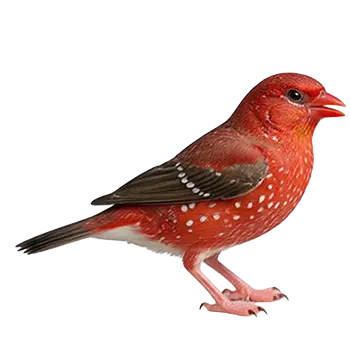
Physical indicators of advancing age in a Strawberry Finch include a progressive dulling of plumage coloration, particularly in males whose breeding season red becomes less vivid and whose white spotting may lose some of its crispness. Feather quality may decline overall, with individual feathers appearing slightly rougher or less tightly structured than in younger years. The beak and nails may grow somewhat more quickly or unevenly as keratinization patterns change with age. Some senior birds develop a slight thickening or scaliness of the skin on the legs and feet that, while not necessarily pathological, reflects age-related changes in skin cell turnover.

Behavioral changes often accompany the physical signs. Senior Strawberry Finches tend to become less active overall, spending more time perching quietly and less time engaged in the vigorous flights, foraging explorations, and social interactions that characterize their prime adult years. Males may sing less frequently or with diminished complexity. Responses to environmental stimuli become slower, and the bird may startle less readily but also take longer to settle afterward. These shifts represent normal aging rather than illness, though the caregiver must remain vigilant for changes that cross the line from age-related slowing into genuine decline.

It is worth noting that individual variation in aging trajectories is significant. Some Strawberry Finches remain active and vibrant well into their sixth or seventh year, while others show noticeable slowing by age four. Genetics, lifetime nutrition, disease history, breeding frequency, and environmental quality all influence how gracefully an individual bird ages. A bird that has been well-nourished, housed in a spacious and enriching environment, kept free of chronic disease, and not overbred will generally retain its vitality longer than one that has experienced nutritional deficits, chronic stress, or repeated bouts of illness.

Adjusting Diet & Nutrition

Dietary management of the senior Strawberry Finch requires a nuanced approach that accounts for declining metabolic efficiency, reduced physical activity, and the potential emergence of age-related digestive sensitivities. The core dietary framework remains the same as during the adult years, but adjustments to quantity, form, and supplementation can meaningfully improve the older bird's comfort and health.

As activity levels decline in senior birds, caloric intake should be monitored to prevent obesity. Excess fat deposition places strain on the cardiovascular system and liver, both of which become more vulnerable with age. If a senior bird appears to be gaining unnecessary weight, evidenced by visible fat deposits along the flanks or a notably rounded body profile, reduce the proportion of high-fat seeds such as niger and flax in the mix and increase the ratio of lower-fat millet varieties. However, the opposite problem, gradual weight loss, is equally common in geriatric finches and potentially more dangerous. A bird that is slowly losing mass despite adequate food availability may be experiencing dental pain from an overgrown beak, digestive malabsorption, or subclinical organ disease.

Softer food options become increasingly important for senior birds. Sprouted seeds, which are easier to hull and digest than dry seeds, should be offered daily rather than a few times per week. Finely grated vegetables, softened egg food, and small amounts of cooked, unseasoned grains like quinoa or millet porridge provide digestible calories for birds whose ability to crack hard seeds may be declining. Soaking spray millet in warm water for a few minutes before offering softens it sufficiently for elderly birds to consume without excessive effort.

Supplementation takes on greater importance in the senior diet. A water-soluble avian multivitamin should be provided three to four times weekly to compensate for any reduction in dietary variety the bird may self-impose as its preferences narrow with age. Probiotics designed for avian use can support gut flora balance in aging digestive systems. Calcium supplementation via cuttlebone, mineral block, and liquid calcium additives should be maintained consistently, as bone density tends to decrease with age, increasing the risk of fractures from even minor impacts.

Hydration monitoring deserves additional attention with senior birds. Older Strawberry Finches may drink less actively than younger birds, increasing their susceptibility to dehydration, especially in warm or dry environments. Ensure water sources are clean, fresh, and positioned where the senior bird can access them without competing with more vigorous younger flock mates. Multiple water stations distributed around the enclosure help ensure that an older bird is never far from a drink. Offering water-rich foods such as cucumber, romaine lettuce, and sprouted seeds also contributes to overall fluid intake.

Environmental Modifications

The enclosure environment that served an adult Strawberry Finch well during its active prime years may require thoughtful modifications to accommodate the reduced mobility, diminished thermoregulatory capacity, and changing behavioral patterns of a senior bird. These adjustments need not be dramatic, but they can significantly improve an aging bird's daily comfort and safety.

Perch placement is one of the most impactful modifications. Senior birds that struggle with long flights or have difficulty reaching high perches benefit from having comfortable perching options positioned at low to medium heights within the enclosure. Place a padded or wide-diameter natural branch perch near food and water stations so the bird can eat, drink, and rest without navigating challenging distances. If the bird shows signs of foot discomfort, such as shifting weight frequently, favoring one foot, or reluctance to perch, consider adding flat platform perches or perches wrapped in self-adhesive veterinary bandage to provide a softer gripping surface.

Thermoregulation becomes a genuine concern for aging Strawberry Finches. Senior birds are more vulnerable to temperature extremes than their younger counterparts, and they may lose body heat more quickly due to declining muscle mass and potentially thinner feather coverage. Maintain the ambient temperature in the room housing the senior bird at a consistent 72 to 80 degrees Fahrenheit, and avoid drafts, proximity to exterior walls or windows, and placement near heating or cooling vents. Some caregivers find that a ceramic heat emitter or infrared heat panel mounted safely above one end of the cage provides a warm zone that the senior bird can move toward when it feels chilled, without overheating the entire enclosure.

Lighting adjustments may also benefit the aging bird. While a consistent photoperiod remains important, senior birds generally do not need the lengthened daylight hours used to stimulate breeding condition. A moderate day length of 10 to 12 hours of light supports healthy circadian rhythms without triggering hormonal stress in a bird whose reproductive years are behind it. If the senior bird shares an enclosure with younger, breeding-age birds, consider whether the hormonal stimulation of a long photoperiod is causing the older bird unnecessary stress.

Flock dynamics in a mixed-age group can become problematic for a senior bird that can no longer compete effectively for resources. Monitor interactions carefully, and if younger, dominant birds are consistently displacing the senior from food stations, preferred perches, or roosting spots, consider providing the senior bird with its own sheltered feeding area or, in severe cases, a separate but visually connected enclosure where it can see and hear its flock mates without being subjected to competitive pressure.

Common Age-Related Health Issues

The health landscape of the senior Strawberry Finch differs from that of younger birds both in the types of conditions encountered and in the bird's diminished capacity to recover from illness or injury. Awareness of the most common age-related health issues allows caregivers to recognize them early, when intervention is most likely to be effective, and to make informed decisions about treatment in consultation with an avian veterinarian.

Arthritis and degenerative joint disease affect many senior finches, particularly in the feet, hock joints, and less commonly the wing joints. Signs include a reluctance to perch, frequent shifting of weight from foot to foot, swelling or redness of the joints, and a preference for sitting on flat surfaces rather than gripping round perches. While arthritis cannot be reversed, its progression can be managed through environmental modifications such as padded perches and reduced perch heights, anti-inflammatory medications prescribed by an avian veterinarian, and maintaining the bird at a healthy weight to minimize joint stress.

Hepatic lipidosis, or fatty liver disease, is a condition seen with troubling frequency in captive finches that have been maintained on high-fat, seed-heavy diets without adequate variety. The liver becomes infiltrated with fat deposits that impair its function, leading to lethargy, weight changes, beak and nail overgrowth, and in advanced cases jaundice-like changes visible as a greenish discoloration of the skin. This condition is largely preventable through lifelong dietary management but is more difficult to treat once established in a senior bird. Reducing dietary fat, increasing fresh greens and sprouted seeds, and supporting liver function with veterinary-prescribed supplements are the primary interventions.

Tumors, both benign and malignant, occur with increased frequency as birds age. Lipomas, which are benign fatty tumors, may appear as soft, movable masses under the skin, most commonly on the chest, abdomen, or around the vent. Internal tumors may present with nonspecific symptoms such as progressive weight loss, abdominal distension, changes in droppings, or a gradual decline in activity. Diagnosis typically requires veterinary examination and may include imaging studies. Treatment options for tumors in birds this small are limited, and management often focuses on maintaining comfort and quality of life rather than aggressive intervention.

Cataracts and other forms of visual impairment develop in some geriatric Strawberry Finches, affecting their ability to navigate the enclosure, find food, and interact with flock mates. A bird that begins colliding with cage walls or obstacles, misses perch landings, or shows hesitation in low-light conditions may be experiencing declining vision. While cataracts are not treatable in finch-sized birds, environmental modifications such as consistent enclosure layout, brighter lighting during active hours, and placing food and water in predictable, easily located positions can help a visually impaired bird maintain a reasonable quality of life.

Veterinary Care & Monitoring

The frequency and focus of veterinary care should increase as a Strawberry Finch enters its senior years. While annual wellness examinations are sufficient for healthy adult birds, senior birds benefit from biannual check-ups that allow the veterinarian to track age-related changes more closely and intervene earlier when issues arise. Communicate openly with your avian veterinarian about the bird's age, any changes you have observed at home, and your goals for the bird's care, whether that means pursuing aggressive treatment of health issues or focusing on comfort and quality of life.

Diagnostic capabilities for finch-sized birds have expanded in recent years, though they remain more limited than what is available for larger avian species. Physical examination, fecal analysis, and crop swabs are standard and well-tolerated. Blood work, while technically feasible, requires a very small sample volume and carries proportionally higher risks in a bird weighing under 10 grams, so it is typically reserved for situations where the clinical picture warrants it. Radiographs can be valuable for evaluating organ size, bone density, and the presence of masses, and modern digital radiography delivers excellent resolution even for very small patients.

Home monitoring becomes an increasingly important complement to professional veterinary care as the bird ages. Maintain a log of daily observations including activity level, food and water consumption, droppings character, vocalization frequency, and any behavioral changes. This longitudinal record provides invaluable context for veterinary consultations and often reveals gradual trends that might not be apparent during a single clinic visit. Weight monitoring, even if conducted only monthly using a small gram scale, tracks the slow changes in body mass that are among the earliest indicators of developing health problems in senior birds.

Medication administration in senior Strawberry Finches requires careful attention to dosing accuracy. The tiny body mass of these birds means that therapeutic margins are narrow and the risk of overdose is real. Liquid medications administered orally with a micropipette or mixed into a measured quantity of water or soft food are generally the safest delivery methods. Topical treatments and crop-delivered medications require precise handling. Never attempt to dose a Strawberry Finch with medication intended for larger birds without explicit veterinary guidance on the appropriate dilution and volume.

Discussions about advanced directives and quality-of-life parameters are appropriate during senior wellness visits. Establish with your veterinarian a shared understanding of what constitutes acceptable quality of life for your bird and what signs would indicate that palliative comfort care should take precedence over curative treatment. Having these conversations proactively, before a crisis arises, allows for more thoughtful and less emotionally fraught decision-making.

Comfort & Quality of Life

Quality of life for a senior Strawberry Finch is not measured by the absence of decline but by the presence of comfort, security, and opportunities for engagement appropriate to the bird's current capabilities. An aging bird that is warm, well-fed, free from pain, and surrounded by familiar companions is experiencing a good quality of life even if its activity level and physical condition have diminished from its prime.

Routine and predictability become especially valuable to senior birds. Maintain consistent daily schedules for lighting, feeding, cleaning, and any hands-on interaction. Older birds are more susceptible to stress from disruptions to their routine than younger, more adaptable individuals. Major changes to the enclosure layout, introduction of new cage mates, or relocation to a different room should be avoided unless medically necessary, and when changes are unavoidable, implement them gradually.

Social needs do not diminish with age. A senior Strawberry Finch that has lived its life in a flock should continue to have access to conspecific companionship. The loss of a long-term pair bond partner or a close flock mate can be profoundly distressing for a social bird, triggering depression, appetite loss, and accelerated decline. If a senior bird loses its companion, consider introducing a new, compatible bird of similar temperament, though monitor the introduction carefully to ensure the newcomer does not stress or bully the elderly resident.

Enrichment should be adapted to the senior bird's abilities rather than eliminated. A bird that can no longer fly vigorously across the aviary may still enjoy foraging through a shallow tray of sprouted seeds, picking at a fresh spray of millet, or observing household activity from a sunny perch near a window. Bathing opportunities should continue to be offered, as many senior birds maintain their enthusiasm for water even as other activities decline. Adjust the depth of bathing water to ensure an elderly bird can bathe safely without risk of becoming trapped in water too deep for it to exit comfortably.

Pain recognition in small birds is notoriously difficult because they instinctively mask discomfort to avoid appearing vulnerable to predators. In a senior Strawberry Finch, signs of pain may include reluctance to move, fluffed and tightly held posture, grinding of the beak, decreased vocalization, reduced food intake, and altered perching behavior such as standing on one foot more than usual. If you suspect your bird is in pain, consult with your avian veterinarian about appropriate analgesic options. Modern avian medicine offers several safe pain management protocols for small birds, and no bird should suffer unnecessarily when effective treatment is available.

Emotional Well-Being & Companionship

The emotional life of a senior Strawberry Finch, while more subtle than that of a parrot or corvid, is real and deserves the caregiver's attention. These are social, sentient animals that experience comfort, contentment, fear, stress, and attachment. An aging bird's emotional well-being is intimately connected to its physical health, and neglecting the psychological dimension of care can undermine even the most conscientious medical and nutritional management.

The bond between a Strawberry Finch and its long-term pair partner is one of the most important relationships in the bird's life. Paired Strawberry Finches engage in mutual preening, roost together at night pressed closely side by side, and maintain close proximity throughout the day. This companionship provides tangible physiological benefits including reduced stress hormone levels, more consistent feeding behavior, and better thermoregulation during sleep. Protecting and supporting this bond as both birds age is one of the most meaningful things a caregiver can do for a senior bird's well-being.

The caregiver's own relationship with the senior bird also matters more than many finch keepers realize. While Strawberry Finches are not hands-on companion birds in the way that a parrot might be, they are observant and responsive to the humans who care for them. A senior bird that has spent years in the company of a consistent, calm caregiver typically demonstrates visible comfort in that person's presence, continuing to feed, bathe, and vocalize normally while the keeper works nearby. This trust-based comfort is a form of social security for the aging bird, and maintaining the consistency and gentleness of the caregiver's approach reinforces it.

Grief and depression are genuine risks for senior Strawberry Finches that experience the loss of a companion. A bereaved bird may become withdrawn, refuse food, cease vocalizing, and spend excessive time perching motionless with fluffed feathers. While these behaviors may resemble illness, they often represent a grief response that can resolve over time, particularly if the bird has remaining flock mates to provide social context. Caregivers can support a grieving bird by maintaining routine, ensuring easy access to food and water, offering favorite foods, and providing gentle, calm presence without attempting to force interaction. If the grief response persists beyond two weeks or the bird's physical condition is deteriorating, veterinary evaluation is warranted to rule out concurrent medical issues and discuss whether pharmacological support might be appropriate.

Ultimately, the goal of emotional care for a senior Strawberry Finch is to ensure that the bird's remaining time is characterized by the same sense of security and social connection that defined its healthier years. Small acts of attentive stewardship, maintaining a familiar routine, keeping a companion close, offering a favored treat, providing a warm and quiet roosting spot, collectively compose a quality of life that honors the bird's nature and its years of companionship.

Always consult a qualified professional before making any health-related decisions. This content is provided for informational reference only and should not replace professional guidance specific to your animal.