
Breeding Readiness & Conditioning

Successful Strawberry Finch breeding begins months before the first egg is laid, with a period of deliberate conditioning that prepares both the male and female for the physical demands of reproduction. Attempting to breed birds that are not in peak condition is a common source of failure, producing infertile eggs, abandoned nests, and health complications that can be avoided with proper preparation. The conditioning phase is not simply about fattening the birds but about bringing them to a state of nutritional completeness, physical fitness, and hormonal readiness that maximizes the chances of a healthy, productive breeding cycle.

Age is the first consideration. Strawberry Finches reach sexual maturity at approximately six to nine months of age, but most experienced breeders recommend delaying the first breeding attempt until the birds are at least one year old. Younger birds may technically be capable of reproduction but often lack the physical reserves and behavioral maturity to be reliable parents. Breeding birds that are too old carries its own risks, particularly for hens, whose egg-laying capacity and calcium reserves decline with age. The most productive breeding years for this species typically span from one to four years of age.

Nutritional conditioning should begin six to eight weeks before the intended breeding season. Gradually increase the protein content of the diet through daily egg food, sprouted seeds, and generous live insect offerings. Fruit flies, ant pupae, pinhead crickets, and micro-mealworms all provide the animal protein that supports gonadal development and, in hens, the mineral reserves needed for eggshell formation. Calcium supplementation is critical and should be intensified during this period. Ensure cuttlebone and mineral blocks are fresh and accessible, and consider adding a liquid calcium supplement to the drinking water under veterinary guidance. Hens that enter the breeding season with inadequate calcium reserves are at heightened risk of egg binding, a potentially fatal condition.

Photoperiod manipulation is the primary environmental trigger for breeding condition in captive Strawberry Finches. Gradually increasing the day length from a winter rest period of 10 to 11 hours to a breeding-season photoperiod of 13 to 14 hours of light simulates the lengthening days of spring and triggers the hormonal cascade that brings the birds into reproductive readiness. This increase should be gradual, adding approximately 15 to 30 minutes of light per week over a period of four to six weeks. Abrupt changes in light cycle can cause hormonal disruption and stress rather than smooth induction of breeding condition.

Pair Selection & Compatibility

Pair selection in Strawberry Finch breeding involves both objective assessment of the individual birds and an understanding of the species' natural pairing dynamics. Unlike some domesticated finch species where virtually any male-female combination will produce offspring, Strawberry Finches can be selective about their mates, and forced pairings between incompatible individuals may result in aggression, nest failure, or prolonged refusal to breed.

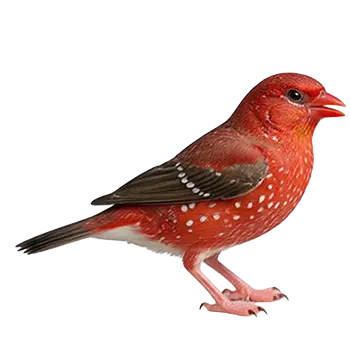
When selecting breeding stock, evaluate each bird for overall health, body condition, feather quality, structural soundness, and behavioral vigor. Both the male and female should be free of chronic health conditions, at a healthy weight with good pectoral muscle coverage, and displaying bright, well-maintained plumage. The male should be in full breeding color, with intense red coloration and clearly defined white spotting across the flanks and wing coverts. While color intensity is partially genetic, it is also a reliable indicator of nutritional status and overall health, making it a useful selection criterion. The female should appear alert and active, with smooth plumage and no signs of previous breeding difficulties.

Genetic diversity should be a priority in any breeding program. Avoid pairing closely related birds, as inbreeding in Strawberry Finches can lead to reduced fertility, smaller clutch sizes, increased chick mortality, and a progressive decline in overall vigor across successive generations. If your breeding stock originates from a limited number of founders, actively seek unrelated birds from other breeders to introduce fresh genetics. Maintaining records of parentage and lineage, even in a small-scale breeding operation, helps prevent inadvertent inbreeding over time.

Compatibility assessment is best conducted by housing potential pairs in adjacent cages where they can see and hear each other before being placed together. A compatible pair will show mutual interest through contact calling, displaying near the shared cage wall, and relaxed body language in each other's presence. When introduced into a shared space, a well-matched pair typically settles quickly, with the male beginning courtship displays and the female responding with solicitation postures or at least tolerant acceptance. Persistent aggression, where one bird relentlessly chases or attacks the other, indicates incompatibility and the pair should be separated and alternative pairings explored.

Colony breeding, where multiple pairs share a large aviary with abundant nest sites, is practiced by many Strawberry Finch breeders and can yield good results when managed properly. The advantages include more natural social dynamics, reduced boredom, and the opportunity for birds to self-select their mates. The challenges include potential nest interference by non-breeding birds, difficulty tracking parentage, and the need for significantly more space and nest sites than single-pair breeding. If colony breeding is chosen, provide at least two to three nest options per pair to minimize territorial conflict over nesting spots.

Nesting Setup & Materials

The nesting environment is a critical determinant of breeding success in Strawberry Finches. These birds have specific preferences for nest type, location, and construction materials that must be accommodated to encourage natural nesting behavior. A pair that is otherwise in perfect breeding condition may refuse to nest if the available options do not meet their requirements, leading to frustration for the breeder and wasted conditioning effort.

Strawberry Finches in the wild construct domed or spherical nests in tall grasses and low shrubs, and they readily accept enclosed nest boxes or woven basket nests in captivity. Wicker or bamboo finch nests with a side entrance, approximately four to five inches in diameter, are the most commonly used and widely accepted option. Wooden nest boxes of similar dimensions with a circular entrance hole also work well. Some breeders offer half-open nest platforms, but Strawberry Finches overwhelmingly prefer an enclosed nest that provides a sense of security and protection. Position the nest in a quiet, sheltered area of the enclosure, ideally at a medium to high position, partially screened by vegetation or cage furnishings to provide visual privacy.

Nesting materials should be offered in generous variety and quantity. Strawberry Finches are enthusiastic nest builders, and both the male and female participate actively in construction. Dried grasses, coconut fiber, soft meadow hay, and small feathers are the most readily accepted materials. Provide these in bundles or baskets placed where the birds can easily select and carry individual pieces to the nest site. Avoid cotton wool, cotton string, and synthetic fibers, which can entangle chick toes and legs, sometimes causing amputations or death. Sisal fiber, while natural, should be offered in short lengths only to minimize entanglement risk.

The pair will typically spend several days constructing the nest before egg laying begins. The male often takes the lead in early construction, carrying materials to the nest site and arranging them into a basic dome structure, while the female focuses on shaping the interior cup and lining it with the finest, softest materials available. Some pairs build elaborate, tightly woven structures, while others are more casual builders. As long as the nest provides a secure, insulated chamber for the eggs and eventual chicks, the construction style is a matter of individual preference.

Do not disturb the nest during the construction phase or make changes to the enclosure that could startle the birds away from their chosen site. Strawberry Finches, like many estrildid species, can be sensitive to perceived threats near their nest, and disturbances during the early stages of nest building may cause the pair to abandon the site and start over elsewhere, or refuse to nest entirely. Routine cage maintenance should continue, but conduct it calmly and predictably, and avoid reaching near the nest or directing attention toward it.

Egg Laying & Incubation

Once the nest is complete to the pair's satisfaction, egg laying typically begins within a few days. The Strawberry Finch hen lays one egg per day, usually in the early morning hours, until the clutch is complete. Clutch sizes range from four to eight eggs, with five to six being the most common. The eggs are small, white, and slightly glossy, measuring approximately 14 to 15 millimeters in length. The hen may begin sitting loosely on the nest after the first or second egg but typically does not commit to sustained incubation until the clutch is complete or nearly so. This delayed onset of full incubation helps synchronize hatching across the clutch.

Incubation duties are shared between both parents, a trait characteristic of many estrildid finch species. The hen generally takes the longer incubation shifts, particularly at night, while the male relieves her for shorter periods during the day, allowing her to feed and attend to her own needs. The incubation period lasts approximately 11 to 14 days from the onset of sustained sitting. Temperature regulation during incubation depends entirely on the body heat of the sitting parent, making it essential that the ambient room temperature remains stable and within the comfortable range of 72 to 80 degrees Fahrenheit. Cold snaps or drafts can cause incubation breaks that chill the developing embryos.

Candling the eggs to assess fertility is possible but should be approached with great caution due to the risk of disturbing the breeding pair. If you choose to candle, do so only once, around day seven of incubation, and work quickly. Fertile eggs at this stage will show visible blood vessels and a developing embryo when held against a small, bright light source. Clear, uniformly translucent eggs are infertile and can be removed to reduce the incubation burden on the parents. However, if candling causes noticeable distress to the pair, it is better to leave the eggs undisturbed and allow the parents to manage the clutch naturally. Most experienced breeders forego candling altogether with this species, preferring to minimize interference.

During the incubation period, continue to provide an enriched diet with ample protein and calcium, and begin increasing the availability of live insects in anticipation of the hatching event. The parents will need an immediate and abundant supply of soft, protein-rich food to begin feeding the chicks from the moment they hatch. Maintain a calm, stable environment around the breeding enclosure, avoiding loud noises, sudden movements, and the introduction of unfamiliar people or animals. The incubation period is one of the most sensitive phases of the breeding cycle, and disturbances can trigger nest abandonment even in otherwise reliable pairs.

Chick Rearing by Parents

The hatching of Strawberry Finch eggs marks the beginning of the most labor-intensive period for the parent birds and the most critical period for the caregiver's support. Chicks typically hatch over a span of one to two days, depending on when sustained incubation began relative to egg laying. The newly hatched chicks are tiny, blind, and nearly naked, weighing approximately one to two grams each. They are entirely dependent on the parents for warmth and feeding from the first moments of life.

Parental feeding begins within hours of hatching. Both the hen and cock participate in feeding the chicks, regurgitating a mixture of partially digested insects, egg food, and softened seeds directly into the chicks' gaping beaks. The insect protein component is absolutely critical during the first week of life and cannot be compensated for by seed alone. Breeders who have not adequately stocked live food prior to hatching often experience catastrophic chick losses as the parents either underfeed the chicks or abandon the nest when they cannot find sufficient protein to sustain themselves and their brood.

The caregiver's primary responsibility during the chick-rearing period is ensuring that the parents have continuous access to an abundant, varied, and high-quality diet. Live insects should be offered in quantities that seem almost excessive, replenished two to three times daily as the parents consume them. Egg food, soaked or sprouted seeds, and finely chopped greens round out the rearing diet. Fresh water must be available at all times, and the bathing dish should be temporarily removed or reduced in depth to eliminate any drowning risk to fledglings once they begin leaving the nest.

Resist the temptation to inspect the nest frequently. While it is natural to be curious about the chicks' progress, opening the nest box or peering into the nest opening causes stress to the parent birds and risks triggering nest abandonment. Instead, monitor the situation from a distance. Listen for the begging calls of the chicks, which should increase in volume and frequency as they grow. Observe the parents' behavior at the food stations, looking for increased consumption of live food and egg food, which confirms that they are actively feeding. Droppings visible near the nest entrance, deposited by the parents as they carry fecal sacs away from the nest, are another positive indicator of normal chick care.

Chicks grow rapidly under parental care, and by approximately 18 to 21 days of age, they will begin to fledge, making their first tentative exits from the nest. The fledging period is exciting but requires vigilance. Newly fledged Strawberry Finch chicks are poor flyers and may land in water dishes, on the cage floor, or in other hazardous locations. Temporarily lower water levels in all containers, remove any deep dishes, and ensure the cage floor is clean and free of sharp objects or loose fibers that could entrap a young bird. The parents will continue feeding the fledglings for approximately one to two weeks after they leave the nest, gradually reducing feeding frequency as the young birds learn to eat independently.

Post-Breeding Recovery

The conclusion of a breeding cycle places both the male and female Strawberry Finch in a state of significant physiological depletion that requires a dedicated recovery period. The hen, having produced a clutch of eggs and then sustained weeks of intensive chick feeding, has drawn deeply on her calcium, protein, and fat reserves. The male, while not burdened by egg production, has expended considerable energy on territorial defense, nest building, incubation duties, and chick feeding. Both birds need time and nutritional support to rebuild their reserves before any subsequent breeding attempt.

Immediately following the weaning of the chicks, assess the condition of both parent birds. Check for visible weight loss, evidenced by a prominent keel bone, as well as feather wear, lethargy, or any other signs of depleted health. Continue providing the enriched breeding diet for at least two to three weeks after the chicks are fully weaned and independent, allowing the parents to replenish their reserves. Gradually transition back to a standard maintenance diet once both birds appear to have regained their pre-breeding condition.

The question of how many clutches per season is appropriate for Strawberry Finches is an important one that responsible breeders must consider carefully. In captivity, pairs maintained under stimulating conditions may attempt to breed continuously, producing three, four, or even more clutches in rapid succession. This level of reproductive output is unsustainable and damages the health of both birds, particularly the hen. Most avian breeding authorities recommend limiting Strawberry Finches to two, or at most three, clutches per breeding season, with adequate recovery time between each round. If the pair attempts to re-nest before they have recovered, remove nesting material and nest boxes to suppress breeding behavior.

Photoperiod reduction is the most effective tool for ending the breeding season and initiating the recovery phase. Gradually reduce the day length from the breeding photoperiod of 13 to 14 hours back to a rest photoperiod of 10 to 11 hours over a period of several weeks. This declining light cycle mimics the natural transition to autumn and winter, suppressing reproductive hormones and allowing the birds to enter a physiological rest state. The post-breeding molt will typically follow within weeks of the photoperiod reduction, and the nutritional demands of the molt must be met even as the breeding diet is being moderated.

Separating the breeding pair during the recovery period is not generally necessary if the photoperiod has been reduced and nesting sites removed. Most Strawberry Finch pairs will naturally cease breeding behavior under short-day conditions and resume their normal flock-oriented social patterns. However, if a particularly driven pair continues to show nesting behavior despite environmental discouragement, temporary separation into adjacent but physically separated cages may be needed to enforce a rest period for the hen's protection.

Ethical Considerations & Responsible Breeding

Breeding Strawberry Finches carries responsibilities that extend beyond the mechanics of pairing, nesting, and chick rearing. Responsible breeding requires forethought about the purpose of the breeding effort, the welfare of the parent birds and their offspring, and the broader implications for the captive population of this species. Casual or unplanned breeding, while sometimes unavoidable in colony settings, should be the exception rather than the norm.

The most fundamental ethical consideration is ensuring that adequate homes exist for the offspring before breeding takes place. Strawberry Finches are not as universally in demand as some more common finch species, and a breeder who produces chicks without a plan for their placement may find themselves with an overcrowded aviary and no viable options for rehoming surplus birds. Establishing relationships with other breeders, aviculture clubs, reputable pet stores, and individual buyers before the breeding season ensures that every chick produced has a destination where it will receive appropriate care.

Genetic management is an ethical obligation for any breeder producing offspring. Inbreeding, which is alarmingly easy to stumble into in small breeding programs, degrades the health and vigor of successive generations. Maintain detailed records of all pairings and their offspring, and actively seek unrelated stock to introduce genetic diversity. If your breeding population is derived from a narrow genetic base, prioritize outcrossing with birds from unrelated lines over maximizing production numbers. The long-term health of the captive Strawberry Finch population depends on breeders collectively maintaining a broad and diverse gene pool.

The welfare of the breeding birds themselves must be the breeder's primary concern. Hens should never be pushed to produce more clutches than they can safely sustain, and any bird showing signs of breeding fatigue, including persistent weight loss, feather degradation, lethargy, or reproductive complications like egg binding, should be immediately retired from breeding and given a full recovery period. Males driven to breed continuously can also suffer from chronic stress and weight loss, particularly in colony settings where competition for mates is intense.

Finally, responsible breeders educate the recipients of their birds about proper care requirements. Providing new owners with written care guidelines covering diet, housing, social needs, and veterinary care helps ensure that the offspring of a well-managed breeding program continue to receive high-quality husbandry throughout their lives. The breeder's responsibility to the birds they produce does not end at the point of sale or transfer. Offering ongoing support, being willing to take back birds that owners can no longer keep, and maintaining an open line of communication with buyers are hallmarks of ethical aviculture practice.

Always consult a qualified professional before making any health-related decisions. This content is provided for informational reference only and should not replace professional guidance specific to your animal.