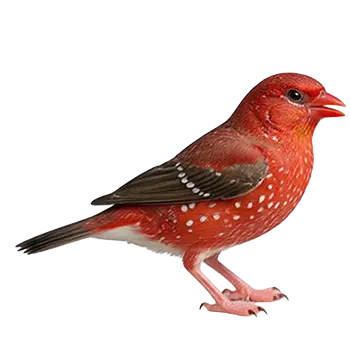

Physical Maturity & Appearance

The adult Strawberry Finch, known formally as Amandava amandava, reaches full physical maturity at approximately six to eight months of age, following the completion of its post-juvenile molt. In its prime adult form, this species is one of the most visually striking small finches kept in aviculture. The adult male in breeding plumage displays a rich crimson to deep strawberry-red coloration across the head, breast, and flanks, overlaid with a distinctive pattern of small white spots that gives the bird a jewel-like quality. The wings are dark brown with fine red edging on the coverts, and the rump is a vivid red that is often the brightest area on the bird. The beak is a coral-red with a dark culmen, and the eyes are dark brown framed by a subtle red orbital ring.

The adult female presents a markedly different appearance, more subdued but no less attractive. Her upperparts are warm brown with a slight olive wash, and the underparts range from pale buff to a soft peachy tone on the breast. White spots are present on the flanks but are fewer and less prominent than those of the male. The female's beak is typically a duller pinkish-red compared to the male's brighter coral. These sexual dimorphism differences make adult pairs easy to distinguish visually, which is a practical advantage for breeders and colony managers.

It is important to understand that the male Strawberry Finch does not maintain his brilliant red plumage year-round. Outside the breeding season, males undergo an eclipse molt that replaces much of the vivid red body plumage with duller, brownish feathers more similar to the female's coloration. The white spots may diminish in prominence, and the overall appearance becomes significantly more subdued. This seasonal fluctuation is entirely normal and driven by hormonal cycles linked to photoperiod. First-time keepers who are unfamiliar with this phenomenon sometimes worry that their male is ill or nutritionally deficient when the eclipse plumage appears, but it is simply a natural part of the annual cycle.

Body condition in a healthy adult Strawberry Finch is characterized by a well-muscled breast with the keel bone palpable but not prominently protruding, smooth and well-maintained plumage that lies flat against the body, clear and bright eyes, clean nares, and a clean vent area. Adults typically weigh between 7 and 10 grams, with some variation depending on sex, subspecies, and individual condition. Regular visual assessment of body condition, supplemented by occasional gentle handling to evaluate pectoral muscle mass and fat reserves, helps the caregiver maintain each bird at its optimal weight.

Diet & Nutrition

The adult Strawberry Finch's dietary needs center on maintaining peak physical condition through a balanced intake of seeds, protein, fresh foods, and supplementary nutrients. While the intensive feeding demands of the growth and molt periods have subsided, the nutritional quality of the adult diet directly influences feather condition, immune function, reproductive readiness, and overall longevity. A monotonous seed-only diet is the single most common husbandry error among Strawberry Finch keepers and is responsible for a significant proportion of health problems seen in captive birds.

The seed mix foundation should be a high-quality blend designed for small exotic finches, with millet varieties comprising the bulk. White proso millet, Japanese millet, red panicum, and spray millet provide the staple carbohydrate and fat intake. Canary grass seed, niger or nyjer seed, and small quantities of perilla, lettuce seed, and flaxseed add nutritional variety. Seed should be offered fresh daily, and uneaten seed should be replaced rather than simply topped off, as birds selectively eat their preferred varieties and leave the rest, creating the appearance of a full dish that actually contains only hulls and rejected seed types.

Sprouted seeds should form a regular component of the diet, offered three to five times per week. The sprouting process converts stored starches into readily available sugars and increases the vitamin and protein content of the seed. A mix of millets, canary seed, and niger seed sprouted for 24 to 48 hours until just germinating provides an excellent supplement. Maintain strict hygiene during the sprouting process, rinsing the seeds multiple times daily to prevent mold and bacterial growth, and discard any batches that develop an off odor or slimy texture.

Protein supplementation for non-breeding adult Strawberry Finches can be moderated compared to the levels provided during growth and breeding. Egg food offered two to three times per week and periodic access to small live insects such as fruit flies or micro-mealworms provide adequate protein for maintenance. During the annual molt, protein intake should be increased to support feather keratin synthesis, with daily egg food and more frequent insect offerings. Fresh greens including chickweed, dandelion leaves, sprouted wheatgrass, and small amounts of leafy vegetables like spinach and romaine provide vitamins, minerals, and dietary fiber that complement the seed-based diet.

Calcium and mineral support must be continuously available. Cuttlebone affixed to the cage wall, a mineral block, and a fine-grade grit or mineral mix provide the calcium and trace elements needed for bone maintenance and, in hens, eggshell formation. Fresh water should be changed at least once daily, more frequently in warm weather or if the birds are active bathers. A water-soluble avian vitamin supplement can be added to the drinking water once or twice weekly to address any micronutrient gaps not covered by the whole-food diet.

Housing & Aviary Design

Appropriate housing is fundamental to the well-being of adult Strawberry Finches and directly influences their behavior, physical fitness, and longevity. These are active, flight-oriented birds that suffer in small, restrictive cages. The minimum enclosure for a pair of adult Strawberry Finches is a flight cage at least 36 inches in length, though larger is invariably better. For keepers with the space and resources, a planted aviary offers the most enriching and species-appropriate living environment, allowing the birds to express their full behavioral repertoire of foraging, flying, bathing, and social interaction.

Cage or aviary construction should prioritize horizontal flight space over vertical height. Strawberry Finches are not climbers, and they do not use the upper reaches of a tall, narrow cage the way some parrot species do. A long, moderately tall enclosure encourages the sustained flights that keep pectoral muscles toned and cardiovascular health robust. Bar spacing should not exceed half an inch for these small birds, and the enclosure should be constructed of non-toxic materials. Avoid galvanized wire, which can cause zinc toxicity if the birds chew on the bars, and opt instead for stainless steel or powder-coated wire.

Interior furnishing should replicate the structural complexity of the Strawberry Finch's natural grassland and scrub habitat. Dense clusters of live or artificial plants, bundles of dried grasses, and strategically placed natural wood branches create a varied landscape of open flight paths and sheltered retreat areas. Perching should include branches of varying diameter from species such as willow, apple, or eucalyptus, positioned to allow flight between them without obstruction. Avoid overcrowding the enclosure with perches and accessories to the point where flight paths are compromised, as unrestricted horizontal flight is the primary exercise mode for these birds.

Outdoor aviaries offer significant advantages for Strawberry Finch health when climate permits. Exposure to natural sunlight enables the birds to synthesize vitamin D3 through their preening oil gland, supporting calcium metabolism and immune function in ways that artificial lighting cannot fully replicate. However, outdoor housing requires protection from predators, extreme weather, and temperature drops below approximately 60 degrees Fahrenheit. In temperate climates, a partially enclosed aviary with a sheltered, insulated roosting area that the birds can access during cold nights provides a good compromise between the benefits of outdoor exposure and the safety of indoor housing.

Cleanliness of the housing environment is a non-negotiable aspect of adult Strawberry Finch care. Cage or aviary floors should be cleaned or substrate replaced at least twice weekly, and more frequently in densely populated colonies. Food and water stations require daily cleaning and replenishment. Perches should be scrubbed or replaced as they become soiled. A thorough deep cleaning of the entire enclosure, including disinfection with an avian-safe cleaner followed by complete rinsing, should be performed monthly or more often if disease issues have been identified in the flock.

Social Behavior & Flock Management

Strawberry Finches are fundamentally social animals that have evolved to live in flocks, and their captive management should reflect this innate need for conspecific companionship. A solitary Strawberry Finch, regardless of the quality of its physical environment, is a stressed and incomplete bird. At a minimum, these birds should be kept in pairs, and they generally thrive best in small groups of four to six individuals or in larger colony settings where space permits.

Flock dynamics in a captive Strawberry Finch group follow predictable patterns that the caregiver should understand and monitor. A loose dominance hierarchy typically establishes itself through brief chasing, displacement from perches, and competitive singing among males. These interactions are usually mild and ritualized, rarely escalating to physical contact that causes injury. However, overcrowding, insufficient feeding stations, or a skewed sex ratio can intensify competition and lead to chronic stress for subordinate birds. Providing multiple feeding and watering stations, ample perching space, and visual barriers within the enclosure allows subordinate birds to avoid dominant individuals and reduces conflict.

Mixed-species housing is a common and often successful arrangement for Strawberry Finches, provided species are selected for compatibility. Strawberry Finches generally coexist peacefully with other small, non-aggressive estrildid finches such as Zebra Finches, Society Finches, Star Finches, and Cordon Bleus. They also do well alongside small softbills and some species of small doves. Avoid housing them with significantly larger or more aggressive species that may bully or injure them, and avoid pairing them with closely related Amandava species if breeding is planned, as hybridization is possible and genetically undesirable.

Seasonal behavioral changes add another layer to flock management. During the breeding season, males become more territorial around chosen nest sites and more vocal, singing their complex, buzzing courtship song for extended periods. These behavioral shifts can increase tension within the flock, particularly if nest sites are limited or if multiple males are competing for the attention of the same female. Providing more nest boxes than there are breeding pairs helps diffuse territorial disputes. Outside the breeding season, social tension typically decreases as hormonal drives subside and the flock resumes a more cohesive, cooperative structure.

Exercise & Enrichment

Physical exercise and mental stimulation are essential but frequently underappreciated aspects of adult Strawberry Finch care. In the wild, these birds spend their days foraging across extensive grassland territories, navigating complex vegetation, evading predators, and engaging in social interactions that demand constant alertness and decision-making. Captive birds deprived of opportunities for physical and cognitive engagement develop a range of problems including obesity, muscle atrophy, feather plucking, repetitive stereotypic behaviors, and a generalized lethargy that shortens their lifespan and diminishes their quality of life.

Flight is the primary mode of exercise for Strawberry Finches, and the enclosure must facilitate sustained, purposeful flight rather than mere short hops between closely spaced perches. Positioning perches at opposite ends of the cage or aviary encourages the birds to fly the full length of the enclosure repeatedly throughout the day. In aviary settings, placing feeding stations, water sources, and bathing dishes at various locations around the space further motivates movement. Some keepers practice supervised free flight in a bird-safe room, which provides unparalleled exercise, though this requires careful preparation to seal windows, cover mirrors, remove fans, and exclude other pets.

Foraging enrichment addresses the cognitive needs of these intelligent small birds. In the wild, Strawberry Finches spend a substantial portion of their active hours searching for and extracting seeds from grass heads, probing for insects, and selecting food items from their environment. Replicating this foraging complexity in captivity can be accomplished by scattering seed in trays of clean soil or coconut fiber, offering spray millet that must be worked from the stem, hanging bundles of seeding grasses from the cage ceiling, and hiding small portions of favored foods in accessible crevices or foraging toys designed for small birds. These enrichments transform passive eating from a dish into an active, time-consuming process that occupies the bird and reduces boredom.

Bathing is both a hygiene behavior and an enrichment activity that adult Strawberry Finches engage in with evident enthusiasm. A shallow dish of clean, room-temperature water placed in the enclosure daily triggers vigorous bathing behavior in most individuals. The birds splash, ruffle their feathers, and preen extensively afterward, spending considerable time restoring their plumage to optimal condition. Regular bathing supports feather health by removing dust, dander, and feather debris, and the preening that follows distributes oil from the preen gland across the feather surfaces, maintaining their waterproofing and structural integrity. Remove the bathing dish after a few hours to keep the enclosure from becoming excessively damp.

Health Maintenance

Preventive health care for adult Strawberry Finches focuses on maintaining the environmental, nutritional, and veterinary foundations that minimize disease risk and allow early detection of problems before they become critical. The small body mass of these birds means they have minimal physiological reserves, and an illness that might be weathered by a larger bird species can prove fatal to a Strawberry Finch within 24 to 48 hours. This narrow margin makes prevention and early intervention the cornerstones of health management.

Annual veterinary wellness examinations are recommended for all captive Strawberry Finches, though the logistics of catching and transporting these small, flighty birds require some planning. Schedule the visit during a calm part of the day, and transport the bird in a small, secure carrier lined with a soft cloth to prevent injury from startled flight. The examination should include a physical assessment, a fecal analysis for parasites and bacterial or yeast overgrowth, and a general discussion of the bird's diet, behavior, and environment. Bring your records of any behavioral changes, droppings abnormalities, or dietary concerns to share with the veterinarian.

Air sac mites, caused by the parasite Sternostoma tracheacolum, are among the most prevalent and dangerous health threats to captive Strawberry Finches and other estrildid finch species. These microscopic mites colonize the trachea, syrinx, and air sacs, causing progressive respiratory compromise. Infected birds may display tail-bobbing breathing, audible clicking or squeaking sounds during respiration, voice changes, reduced singing, open-mouth breathing, and eventual death from suffocation if untreated. Because the mites are transmitted through direct contact, shared feeding, and even airborne migration in enclosed spaces, an infestation can spread rapidly through a colony. Many experienced finch breeders implement a routine prophylactic treatment protocol, typically using ivermectin administered under veterinary guidance, to prevent clinical outbreaks.

Scaly face and leg mites, caused by Knemidocoptes species, represent another common ectoparasite concern. These mites burrow into the skin around the beak, cere, legs, and feet, causing crusty, proliferative growths that can become disfiguring and debilitating if left untreated. Early cases present as rough, slightly raised areas on the beak or feet, progressing to thick, layered crusts if unaddressed. Treatment is straightforward with appropriate antiparasitic medication prescribed by an avian veterinarian, and early intervention prevents the permanent damage to beak structure and foot tissue that advanced cases can cause.

Beyond parasitic concerns, adult Strawberry Finches are susceptible to bacterial enteritis, yeast infections of the crop and digestive tract, egg binding in hens, and traumatic injuries sustained during startled flight into cage walls. Maintaining impeccable cage hygiene, providing a nutritionally complete diet, minimizing stress from loud noises and sudden disturbances, and keeping the flock density at a manageable level all contribute to reducing disease incidence. A quarantine protocol for any new birds being introduced to an established flock is essential and should include a minimum 30-day isolation period with veterinary screening before the newcomer joins the group.

Seasonal Changes & the Annual Molt

The annual cycle of the adult Strawberry Finch is punctuated by two major physiological events: the breeding season and the complete annual molt. Understanding these seasonal rhythms is essential for providing appropriate care throughout the year, as the bird's nutritional needs, behavioral patterns, and environmental requirements shift substantially between these phases.

The breeding season for captive Strawberry Finches is typically triggered by increasing day length and is most pronounced during the spring and summer months in temperate climates, though birds kept under controlled lighting may breed at other times of the year. As the breeding season begins, males undergo a prenuptial molt that replaces their dull eclipse plumage with the brilliant red breeding dress. This molt is partial, primarily affecting the body feathers, and is driven by rising levels of reproductive hormones. The males' singing intensifies dramatically during this period, and courtship displays featuring a distinctive bobbing dance with a piece of grass or feather held in the beak become frequent. The caregiver should be prepared to either facilitate or suppress breeding activity depending on their management goals.

The complete annual molt, which replaces all feathers including the flight and tail feathers, typically occurs at the end of the breeding season or in early autumn. This is the most physiologically demanding non-reproductive event in the bird's year. Growing a full set of new feathers requires enormous quantities of protein, amino acids, minerals, and energy. During the molt, increase protein offerings significantly through daily egg food, frequent live insects, and sprouted seeds. Ensure calcium and mineral supplements are available, as the keratin synthesis process draws heavily on mineral reserves.

Birds in active molt often appear ragged and unkempt as old feathers drop and new pin feathers emerge. Energy levels may decrease, and some individuals become noticeably quieter and less active as their bodies redirect resources toward feather production. This is normal and not a cause for concern as long as the bird continues to eat well, maintains body weight, and does not show signs of illness such as respiratory distress or abnormal droppings. However, a molt that seems excessively prolonged, produces abnormal or poorly colored feathers, or is accompanied by genuine bald patches rather than the expected pattern of gradual feather replacement may indicate an underlying health issue or nutritional deficiency that warrants veterinary evaluation.

Manipulation of the photoperiod is one of the most powerful tools available to the caregiver for managing the annual cycle. Gradually adjusting the light cycle to mimic natural seasonal variation helps synchronize the birds' hormonal rhythms and ensures that the breeding season and molt occur at predictable, manageable times. Birds kept under constant long-day lighting may attempt to breed continuously, which exhausts hens and shortens lifespans. Allowing a rest period with reduced daylight hours of 10 to 11 hours per day during the autumn and winter months supports recovery from the molt, rebuilds physiological reserves, and prepares the birds for a healthy, productive breeding season the following spring.

Always consult a qualified professional before making any health-related decisions. This content is provided for informational reference only and should not replace professional guidance specific to your animal.