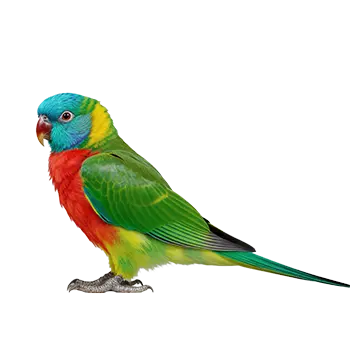

Splendid Parakeet chicks hatch after an incubation period of approximately 18 to 19 days, emerging as tiny, almost entirely helpless creatures. A newly hatched chick weighs roughly 2 to 3 grams, making it one of the smaller parrot hatchlings commonly encountered in aviculture. The chick arrives blind, covered in sparse white or pale grey down, and completely reliant on its parents or a hand-feeder for warmth and nourishment. These first hours set the tone for the chick's entire developmental trajectory, and careful attention during this window can mean the difference between a thriving hatchling and one that struggles.
In a parent-raised clutch, the hen will typically begin feeding the chick within a few hours of hatching. Splendid Parakeets are generally attentive parents, and the hen will brood the chick almost continuously during the first day, leaving only for very brief periods to eat or drink. The cock bird plays a supporting role by feeding the hen at the nest box entrance, ensuring she has the nutritional reserves to produce adequate crop milk for the new hatchling. Disturbing the nest box excessively during this critical period can stress the parents and should be avoided.
If the chick is being hand-raised, the first feeding should be delayed until the yolk sac has been fully absorbed, which usually occurs between six and ten hours after hatching. Attempting to feed before the yolk sac is absorbed can overwhelm the chick's immature digestive system and lead to complications including crop stasis or infection. The initial hand-feeding should be extremely small in volume, just a drop or two of thin, properly prepared formula, and delivered with great care using a small syringe or bent spoon.
During the first 24 hours, the most important observation is whether the chick demonstrates a feeding response. A healthy Splendid Parakeet hatchling will bob its head and gape when it senses warmth or gentle touch near its beak. The skin should appear pinkish and translucent, and the chick should feel warm to the touch when held briefly. Any chick that is cold, limp, discolored, or fails to respond to feeding stimuli requires immediate veterinary attention, as these signs can indicate congenital issues, infection, or inadequate environmental conditions.