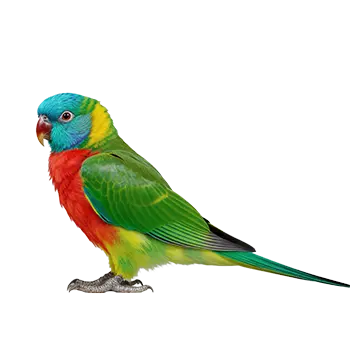

Recognizing the Final Stage

The transition from senior care to end-of-life care in a Splendid Parakeet is not always marked by a single dramatic event. More often, it is a gradual accumulation of changes that together signal the bird is entering the final phase of its life. Recognizing this transition requires honesty, attentiveness, and a willingness to separate what we hope for from what we observe. The bird's comfort and dignity depend on its caregiver's ability to see the situation clearly and respond with compassion rather than denial.

Physical signs that a Splendid Parakeet is approaching the end of its life include progressive weight loss that does not respond to dietary intervention, persistent fluffing of the feathers even in a warm environment, spending most or all of the day on the cage floor rather than on perches, and a marked decrease in or cessation of preening behavior. The bird may eat and drink less, sometimes refusing food entirely, and its droppings may change significantly in consistency, volume, or color, reflecting declining organ function. These changes may appear over weeks or months in cases of chronic disease, or over a matter of days in acute illness.

Behavioral changes during the terminal stage can be equally telling. A bird that was once alert and responsive may become withdrawn, sleeping with its head tucked for extended periods during the day, and showing little interest in social interaction, food, or environmental stimuli that previously engaged it. Vocalizations may become infrequent or absent altogether. The bird may seek out the lowest, most sheltered spot in its cage, an instinctive behavior driven by vulnerability. These behavioral shifts reflect the bird's diminishing energy reserves and its body's progressive inability to maintain normal function.

It is important to distinguish between a treatable illness in a senior bird and a genuine terminal decline. A senior Splendid Parakeet that suddenly shows symptoms of illness may have a condition that, if diagnosed and treated promptly, allows for a meaningful return to comfort and function. A veterinary evaluation is always warranted when new symptoms appear, regardless of the bird's age. End-of-life care is appropriate when veterinary assessment confirms that the bird's condition is not amenable to treatment, that available treatments would cause more suffering than benefit, or that the bird's quality of life has declined below a level that is compatible with comfort.

Palliative & Comfort Care

Palliative care for a Splendid Parakeet in the final stage of life focuses entirely on comfort. The goal is not to cure the underlying condition, which by definition is beyond cure at this point, but to minimize suffering, reduce stress, and provide the bird with the highest quality of remaining life possible. Palliative care is an active, intentional practice that requires daily assessment and ongoing adjustment as the bird's condition evolves.

The bird's immediate environment should be simplified and optimized for comfort. Move the bird to a smaller, warm, quiet enclosure if it is no longer using the full space of its regular cage. A hospital cage or small enclosure lined with soft toweling provides warmth, cushioning, and easy access to food and water. Position perches low and close together, or replace them with a padded flat surface if the bird can no longer grip. Ensure that food and water are within easy reach of wherever the bird rests, so that it does not need to expend energy traveling to reach sustenance.

Warmth is one of the most important comfort measures for a terminally ill bird. A Splendid Parakeet in decline often cannot maintain its body temperature effectively, and the resulting chill adds to its discomfort and accelerates metabolic decline. A ceramic heat emitter or radiant heat panel positioned above or beside the resting area provides gentle, consistent warmth without the light that a heat lamp produces, which can disturb the bird's rest. Aim for an ambient temperature of 80 to 85 degrees Fahrenheit in the immediate vicinity of the bird, and ensure that the bird has the ability to move slightly away from the heat source if it becomes too warm.

Reduce environmental stressors to an absolute minimum. Keep the room quiet, minimize handling to only what is medically necessary, and shield the bird from the activity of other pets, children, or household commotion. Dim the lighting to a gentle, indirect level during the day and provide complete darkness for sleep. If the bird has a bonded companion bird, consider whether the companion's presence is a comfort or a source of stress, as this varies with individual relationships. Some dying birds are calmed by the nearby presence of their mate, while others prefer solitude.

Continue offering the bird's favorite foods, even if it is eating very little. The pleasure of familiar tastes and textures retains value even when nutritional intake is no longer sufficient to sustain recovery. Fresh water should always be available, and if the bird is too weak to drink from its usual container, offer water from a shallow dish, a dropper, or a small syringe held gently to the beak. Forced feeding is generally not appropriate during palliative care, as the stress it causes typically outweighs any nutritional benefit.

Pain Management & Veterinary Support

Effective pain management is a cornerstone of compassionate end-of-life care for Splendid Parakeets. Birds experience pain just as mammals do, but their instinct to conceal it makes assessment challenging. Working closely with your avian veterinarian to develop a pain management plan tailored to your bird's specific condition ensures that the bird's final days or weeks are as comfortable as possible.

Recognizing pain in a Splendid Parakeet requires careful observation of behavioral indicators. A bird in pain may adopt a hunched posture, tuck its head against its body, close its eyes partially or fully during periods when it would normally be alert, resist handling or flinch when touched in specific areas, or show reduced appetite and activity beyond what its underlying condition would explain. Some birds in pain become unusually quiet, while others may vocalize in ways that differ from their normal repertoire. Learning to read these subtle signals allows the caregiver to advocate effectively for the bird's comfort during veterinary consultations.

Avian pain management typically involves nonsteroidal anti-inflammatory drugs such as meloxicam, which is widely used in avian medicine for both its analgesic and anti-inflammatory properties. Your avian veterinarian will determine the appropriate medication, dosage, and administration route based on the bird's condition, weight, and organ function. In some cases, particularly when pain is severe or not adequately controlled by a single agent, additional medications may be used in combination. Opioid-based pain relievers are occasionally employed for avian patients with severe pain, though their use requires careful veterinary oversight due to species-specific differences in metabolism and side effects.

The veterinarian's role during the end-of-life stage extends beyond prescribing medications. Regular check-ins, whether in person or by phone, allow the veterinarian to adjust the care plan as the bird's condition changes. Discuss in advance the criteria that would indicate the bird's suffering has exceeded what palliative care can manage, so that the transition to the euthanasia conversation occurs naturally and without the added distress of an emergency decision. A veterinarian who knows your bird and its baseline is better positioned to help you assess when comfort care has reached its limits.

Home-based palliative care is appropriate for many terminally ill Splendid Parakeets, as the stress of repeated veterinary transport can offset the benefits of in-clinic treatment. If your veterinarian offers house calls or teleconsultation, these options can allow the bird to receive ongoing professional guidance while remaining in the familiar, low-stress environment of its home. When clinic visits are necessary, schedule them for times when the practice is quiet, and minimize waiting time to reduce the bird's stress exposure.

Nutritional Support in Decline

Feeding a Splendid Parakeet that is in terminal decline presents unique challenges that require a shift in philosophy from nutrition-as-health-maintenance to nutrition-as-comfort-measure. The rules that governed dietary decisions during the bird's healthy years, emphasizing balanced nutrition, variety, and appropriate caloric intake, give way to a simpler principle: offer what the bird will eat, when it will eat, in whatever way makes eating easiest.

As organ function declines, a dying bird's appetite typically diminishes progressively. The bird may begin by eating smaller quantities of its usual diet, then gradually become more selective, favoring certain foods while refusing others, and eventually may eat very little or stop eating altogether. This declining appetite is a natural part of the dying process and should not be met with aggressive feeding interventions that cause the bird distress. The caregiver's role is to make food available and appealing, not to force consumption.

Offer the bird's preferred foods in small, fresh portions placed as close to its resting position as possible. If the bird has always loved millet sprays, offer millet. If it favors a particular type of green or fruit, provide that. Warm, softened foods may be more appealing than cold or hard items, as they require less effort to consume and may be easier for a bird with reduced jaw strength or beak overgrowth to manage. Soaked or sprouted seeds, warm soft food preparations, and small amounts of hand-feeding formula offered from a spoon or shallow dish can sometimes tempt a bird that has lost interest in dry seed.

Hydration is often a more pressing concern than caloric intake during the terminal stage. Dehydration accelerates decline and increases discomfort, and a bird that is too weak to travel to its water dish may become dehydrated even though water is technically available. Provide water in a shallow dish at the bird's level, and if the bird is unable to drink independently, offer droplets of water from a small syringe or dropper placed gently at the edge of the beak. Fruit with high water content, such as small pieces of watermelon or cucumber, can also contribute to hydration and may be accepted by birds that are not drinking adequately from a dish.

Discuss nutritional support strategies with your avian veterinarian, who can advise on whether subcutaneous fluid administration is appropriate for your bird's situation. Subcutaneous fluids, administered by a veterinarian or a trained caregiver, can help maintain hydration in a bird that is not drinking enough on its own and can provide meaningful comfort by alleviating the physiological distress of dehydration. However, this intervention must be weighed against the stress it causes the bird, and there comes a point in the dying process where even gentle medical interventions add more burden than benefit.

Environmental Adjustments for Comfort

The living environment of a Splendid Parakeet in its final stage of life should be configured entirely around the bird's comfort, safety, and ease of access to essential resources. Many of the environmental modifications recommended during the senior stage become even more important during end-of-life care, while additional adjustments specific to the bird's terminal condition may also be necessary.

If the bird can no longer perch safely, the cage setup must be redesigned to accommodate ground-level living. Remove elevated perches that the bird might attempt to reach and fall from, as even a short fall can cause injury to a weakened bird. Line the cage floor with a soft, clean material such as a folded towel or fleece pad, and position food and water directly on or very near this surface. If the bird still shows a desire to perch but lacks the grip strength for a standard perch, a wide, padded platform perch positioned just an inch or two above the cage floor provides the satisfaction of elevation without the risk of a dangerous fall.

The thermal environment requires attentive management during end-of-life care. A dying bird's ability to thermoregulate is severely compromised, and maintaining an appropriate ambient temperature around the bird is one of the simplest and most effective comfort measures available. Position a heat source, such as a ceramic heat emitter or radiant panel, to create a warm zone of approximately 80 to 85 degrees Fahrenheit where the bird rests. A thermometer placed at the bird's level allows continuous monitoring. The bird should have enough space to shift slightly away from the direct heat if it becomes too warm, ensuring it retains some control over its thermal comfort.

Light and sound management contribute to the bird's sense of peace during its final days. Reduce ambient light to a soft, indirect level during waking hours, and ensure complete darkness and quiet during sleeping periods. Avoid sudden noises, bright flashes, and the presence of other animals that might startle or stress the bird. Some caregivers find that playing very soft, calming music or nature sounds provides gentle auditory enrichment without overstimulating a fragile bird. The key is to create an atmosphere of calm security, a small, warm, quiet space where the bird can rest without fear or discomfort.

Hygiene in the end-of-life enclosure is important but must be balanced against the stress that cleaning activities can cause. Change soiled bedding gently and quickly, preferably when the bird is awake and alert rather than during sleep. Use warm water and a soft cloth to clean any soiling on the bird's feathers if it is unable to preen effectively, but handle the bird as briefly and gently as possible. The goal is to keep the bird clean and dry without subjecting it to prolonged handling that depletes its diminishing energy.

Saying Goodbye & Euthanasia Decisions

The decision to euthanize a beloved Splendid Parakeet is one of the most difficult responsibilities a caregiver faces. It is also, when the time is right, one of the most compassionate acts a person can perform for an animal in their care. Understanding when euthanasia is appropriate, what the process involves, and how to prepare emotionally can help caregivers navigate this painful decision with clarity and confidence that they are acting in their bird's best interest.

Quality-of-life assessment is the framework that guides the euthanasia decision. Several structured tools exist to help pet owners evaluate their animal's quality of life across multiple dimensions, including pain, appetite, hydration, mobility, hygiene, social engagement, and the balance of good days versus bad days. When a Splendid Parakeet consistently scores poorly across these dimensions, when pain or discomfort dominates its experience despite palliative interventions, and when the bird shows no signs of pleasure, engagement, or comfort, the threshold for euthanasia has been reached. It is better to let go a day too early than a day too late, a principle that, while emotionally difficult, prevents the bird from enduring needless suffering.

Discuss the euthanasia option with your avian veterinarian before a crisis forces the conversation. Having a plan in place, knowing how the procedure will be performed, where it will take place, and what aftercare options are available, reduces the burden of decision-making during an already emotional time. Many avian veterinarians offer at-home euthanasia services, which spare the bird the stress of a final car ride and clinic visit and allow the bird to pass in the familiar comfort of its home. If at-home service is not available, ask the clinic to accommodate you in a quiet room with minimal waiting.

The euthanasia procedure for a small bird like a Splendid Parakeet is typically performed using an injectable anesthetic agent administered by the veterinarian. The bird may first be given a sedative to reduce awareness and anxiety before the final injection is administered. The process is rapid, and the bird does not experience pain from the procedure itself. The veterinarian will confirm that the heart has stopped and that the bird has passed. You may choose to be present during the procedure or to say your goodbye before and return afterward. There is no right or wrong choice, only what feels most appropriate for you and your relationship with your bird.

Aftercare options for the bird's remains include cremation, either individual with ashes returned or communal, and burial. Many veterinary clinics can arrange cremation services. If you choose home burial, check local regulations regarding the burial of animal remains on residential property. Some caregivers find comfort in creating a small memorial, whether a planted garden, a framed photograph, or a dedicated space in the home that honors the bird's memory and the years of companionship it provided.

Grief & Healing After Loss

The grief that follows the loss of a Splendid Parakeet is real, legitimate, and can be surprisingly intense. For a caregiver who has shared daily life with a bird for a decade or more, who has tended to its needs through every life stage, and who has built a quiet, trusting bond with this gentle creature, the absence left by its death is profound. Allowing yourself to grieve fully and without apology is an essential part of healing.

Grief for a pet bird can be complicated by the fact that not everyone in the bereaved person's life will understand the depth of the loss. Friends, family members, or colleagues who have never formed a close bond with a bird may minimize the grief, offering well-meaning but hurtful comments that dismiss the significance of the relationship. It is important to recognize that the validity of your grief is not dependent on others' ability to understand it. The bond you shared with your Splendid Parakeet was real, and the sorrow you feel at its loss is a natural and healthy response to the end of that bond.

The grieving process is not linear and does not follow a prescribed timeline. Some caregivers experience the sharpest grief immediately after the bird's death, while others feel numb at first and find the full weight of loss settling in days or weeks later. Waves of sadness may be triggered by routine moments, the silence at the time when the bird would normally vocalize, the empty cage in the corner of the room, the absence of the small rustling sounds that accompanied the bird's daily activity. These triggers are a normal part of grief and will gradually diminish in intensity over time, though they may never disappear entirely.

Support resources are available for those who find the grief process particularly difficult. Pet loss support groups, both in person and online, provide a community of people who understand the specific pain of losing a companion animal. Some veterinary schools and animal welfare organizations operate pet loss hotlines staffed by trained counselors. Professional grief counseling from a therapist experienced in pet bereavement can be valuable for individuals whose grief is persistent, overwhelming, or complicated by other life stressors. Seeking help is a sign of the seriousness with which you honored the relationship, not a sign of weakness.

The question of whether and when to welcome a new bird into your life is deeply personal and has no universally correct answer. Some caregivers find comfort in opening their home to another bird relatively soon after their loss, channeling their caregiving instincts into a new relationship. Others need an extended period of time before they are emotionally ready for the responsibilities and vulnerabilities of a new bond. Neither approach is more valid than the other. When the time does come to consider a new bird, approach the decision with the understanding that the new bird will be its own individual, not a replacement for the one you lost. Each Splendid Parakeet is unique in personality, temperament, and the particular way it inhabits your life, and a new relationship should be welcomed on its own terms.

Always consult a qualified professional before making any health-related decisions. This content is provided for informational reference only and should not replace professional guidance specific to your animal.