
Understanding the Adult Stage

The adult stage of a Splendid Parakeet's life begins after the completion of the first full molt, typically around six to eight months of age, and extends through the bird's prime years until the onset of age-related changes, usually around seven to nine years of age. During this extended period, the Splendid Parakeet is at its most vibrant in plumage, most active in behavior, and most resilient in health. The adult years are when the bird's personality is fully formed, its dietary patterns are established, and its relationship with its caregiver reaches its fullest expression.

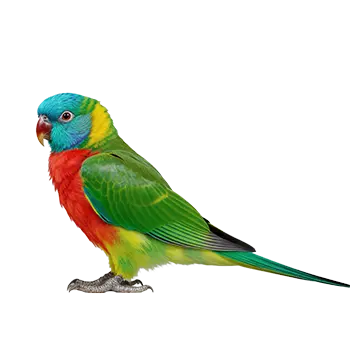
Adult male Splendid Parakeets are among the most visually striking of all grass parakeets. The face is a deep, rich cobalt blue extending from the forehead to below the eye. The chest carries a bold band of scarlet red, and the underparts are bright yellow. The back and wings display vivid green with turquoise highlights on the wing coverts. Females are beautiful in their own right, with a predominantly green body, a subtler blue wash on the face, and the absence of the red chest band. These color differences are reliable for visual sexing in adult birds, eliminating the ambiguity present during the juvenile stage.

Behaviorally, adult Splendid Parakeets settle into predictable daily routines that revolve around feeding, bathing, social interaction, and rest. They are creatures of habit and generally prefer a stable, predictable environment. This does not mean they should be denied novelty or enrichment, but rather that changes should be introduced thoughtfully and gradually. A sudden cage relocation, an abrupt shift in daily schedule, or the introduction of an unfamiliar animal can cause significant stress in a bird that thrives on routine.

The adult years are also the period when long-term health habits matter most. The dietary choices, exercise opportunities, environmental conditions, and veterinary care established during this stage directly influence how gracefully the bird ages and how many healthy years it enjoys. A Splendid Parakeet that receives attentive care during its prime can live to the upper end of its ten to fifteen year lifespan, remaining active and engaged well into its later years.

Nutrition & Diet Management

Nutrition during the adult stage is the single most impactful factor within a caregiver's control for maintaining long-term health in a Splendid Parakeet. In the wild, these birds feed on a diverse array of grass seeds, herb seeds, green plant material, and occasional invertebrates. Replicating this dietary diversity in captivity is essential, because an all-seed diet, the most common nutritional error in grass parakeet keeping, leads to obesity, fatty liver disease, and vitamin and mineral deficiencies that shorten the bird's life and degrade its quality.

The foundation of an adult Splendid Parakeet's diet should be a high-quality small parakeet seed mix that includes a variety of grass seeds such as canary seed, various millets, and oat groats. However, seed should constitute only part of the daily diet, not the entirety of it. Supplement the seed mix with daily offerings of fresh leafy greens including dandelion greens, endive, kale, spinach in moderation due to its oxalate content, and Asian greens such as bok choy. Sprouted seeds are an excellent nutritional bridge between dry seed and fresh vegetables, offering increased protein, vitamin, and enzyme content compared to their unsprouted counterparts.

Fresh fruits can be offered in small quantities as a treat and source of natural vitamins, but should not form a large portion of the diet due to their sugar content. Suitable fruits include small pieces of apple, pear, berries, and melon. Avoid avocado, which is toxic to birds, as well as the seeds and pits of stone fruits. Many Splendid Parakeets also enjoy and benefit from commercial egg food or a homemade mixture of hard-boiled egg crumbled with whole wheat breadcrumbs, particularly during and immediately after the annual molt when protein demands increase.

Mineral supplementation is a non-negotiable component of the adult diet. Cuttlebone should be available in the cage at all times, providing calcium and trace minerals that the bird can self-regulate its intake of. A mineral block or mineral grit can serve as additional sources. Vitamin supplementation through water-soluble products can be beneficial, particularly for birds housed exclusively indoors without access to UVB lighting, but should be used judiciously and ideally under veterinary guidance to avoid over-supplementation, which can be as harmful as deficiency.

Fresh, clean water must be available at all times and changed at minimum twice daily. Splendid Parakeets are not heavy drinkers compared to some bird species, but consistent access to clean water is essential for digestion, kidney function, and overall hydration. Water containers should be positioned to prevent contamination from droppings, seed husks, or bathing activity. Some keepers prefer water bottles over open dishes for hygiene reasons, though not all individual birds readily adapt to bottle drinking.

Exercise & Enrichment

Splendid Parakeets are active, agile birds that require regular opportunities for exercise to maintain physical health and psychological well-being during the adult years. In their native habitat across the arid interior of southern Australia, these birds spend much of the day in motion, foraging on the ground, flying between feeding areas, and engaging with flock mates. Captive birds retain these instincts and need an environment that accommodates their natural activity levels, even if the scale is necessarily smaller than the open Australian landscape.

Flight remains the most important form of exercise for an adult Splendid Parakeet. Whether the bird is housed in a spacious flight cage or an outdoor aviary, the enclosure should allow sustained flight rather than just short hops between closely spaced perches. For indoor birds, supervised out-of-cage flight time in a bird-safe room provides exercise opportunities that even a large cage cannot match. Ensure the room is secure, with windows covered or screened, ceiling fans turned off, and no other pets present that could injure the bird. Even fifteen to twenty minutes of free flight daily makes a measurable difference in the bird's muscle tone, cardiovascular fitness, and overall mood.

Foraging enrichment taps into the Splendid Parakeet's natural ground-feeding behavior and provides both physical and mental exercise. Rather than placing all food in a single easily accessible dish, scatter a portion of the daily seed ration across the cage floor or in shallow foraging trays mixed with clean paper strips, dried herbs, or other safe materials the bird must sort through. Foraging balls, treat-dispensing toys, and food hidden inside paper rolls encourage the bird to work for its meals, replicating the effort and problem-solving involved in wild feeding behavior.

Bathing is both an enrichment activity and a health practice that most adult Splendid Parakeets enjoy. Offer a shallow dish of room-temperature water several times per week, or mist the bird lightly with a spray bottle if it shows receptiveness to this approach. Bathing maintains feather condition by removing dust and loose feather particles, stimulates preening behavior, and provides a source of enjoyment and sensory variety. Some birds prefer to bathe in the morning, while others favor afternoon bathing, so observe your bird's preferences and provide bathing opportunities accordingly.

Toy selection for Splendid Parakeets should reflect the species' temperament and physical capabilities. Unlike larger parrots, these birds are not aggressive chewers and are more likely to interact with toys through gentle manipulation, swinging, and climbing. Small bells, lightweight hanging toys, leather strips, and natural fiber items are generally well received. Introduce new toys gradually and observe the bird's reaction, as some individuals may initially be wary of unfamiliar objects. Rotate toys on a weekly or biweekly basis to prevent habituation and maintain the enrichment value of each item.

Social Behavior & Bonding

The social dynamics of adult Splendid Parakeets differ meaningfully from those of more commonly kept parrot species, and understanding these differences is key to providing appropriate social environments. Splendid Parakeets are not typically cuddly or overtly demanding of attention in the way that cockatiels or budgerigars can be. Instead, they tend toward a quieter, more observational style of bonding with their human caregivers, preferring to be near their favored person rather than necessarily on that person. This temperamental subtlety can be misread as aloofness, but attentive keepers learn to recognize the quiet signs of attachment that are characteristic of the species.

A bonded adult Splendid Parakeet will orient its body toward its preferred person, vocalize softly in greeting, and display relaxed body language including slightly fluffed feathers, a calmly held tail, and slow, deliberate movements when the caregiver approaches. Hand-raised birds may step readily onto a finger or hand and tolerate gentle head scratches, while parent-raised birds may prefer to interact at a slight distance, perching nearby and engaging through soft calls and eye contact. Both forms of bonding are valid expressions of the species' social nature, and caregivers should respect the individual bird's comfort level rather than pushing for a degree of physical contact the bird finds stressful.

Keeping Splendid Parakeets in pairs or small groups is a practice that merits careful consideration. In the wild, these birds are generally found in pairs or small, loosely organized flocks. A single bird kept without avian companionship may become lonely, particularly if its human caregiver is away from home for extended periods during the day. However, pairing birds requires thoughtful introduction and compatibility assessment. Two males housed together may coexist peacefully or may develop territorial conflicts, particularly during the breeding season. A male-female pair will likely attempt to breed if nest box access is provided, which carries its own set of responsibilities.

If keeping multiple Splendid Parakeets, provide sufficient space and resources to minimize competition. Each bird should have access to its own feeding station, water source, and preferred perching area. Observe interactions closely during the introduction period and be prepared to separate birds that show persistent aggression. Splendid Parakeets are generally peaceable compared to some Neophema species, but individual temperament varies, and forced cohabitation with an incompatible partner is a significant source of chronic stress.

For single birds, the caregiver's role as a social partner is particularly important. Dedicate time each day to quiet interaction with the bird, whether that involves handling, talking softly, or simply sitting near the cage while the bird goes about its activities. Splendid Parakeets are perceptive and responsive to the emotional tone of their environment. A calm, predictable household where the bird receives consistent daily attention, even if that attention is quiet rather than effusive, provides the social stability these birds need to thrive.

Housing & Environmental Needs

The housing requirements for an adult Splendid Parakeet reflect the bird's need for space, safety, cleanliness, and environmental conditions that support its physical and behavioral health. Whether kept indoors in a cage or outdoors in an aviary, the enclosure and its surroundings should be designed with the species' specific characteristics in mind, including its active flight style, ground-feeding habits, sensitivity to dampness, and preference for sheltered roosting spots.

For indoor housing, the cage should be as large as space permits, with an absolute minimum of 36 inches in length to allow short flights. Larger flight cages, four feet or longer, are strongly preferred and provide a noticeably better quality of life. Bar spacing should not exceed half an inch. Place the cage in a room where the bird can observe household activity without being subjected to constant noise or commotion. Avoid positioning the cage in the kitchen, where cooking fumes from overheated nonstick coatings can release gases that are rapidly fatal to birds, or in drafty locations near exterior doors and heating or cooling vents.

Outdoor aviary housing is an excellent option for Splendid Parakeets in climates that are not excessively cold or persistently damp. A well-designed aviary should include a fully enclosed, weatherproof shelter where the birds can retreat from rain, wind, and temperature extremes, connected to a wire-fronted flight section that allows the birds to enjoy fresh air and natural sunlight. The aviary floor should be constructed of concrete or paving that can be hosed clean, or a deep layer of washed river sand that is raked and replaced regularly. Earth floors are difficult to keep hygienic and can harbor parasites and fungal spores.

Regardless of whether the bird is housed indoors or outdoors, cleanliness is paramount. Remove uneaten fresh food within a few hours to prevent spoilage and bacterial growth. Clean food and water dishes daily. Replace cage floor lining or substrate at least every other day, and perform a thorough cage or aviary disinfection weekly using an avian-safe cleaning product. Splendid Parakeets are susceptible to respiratory infections caused by Aspergillus and other fungi that thrive in damp, dirty environments, so maintaining dry, clean housing is one of the most effective preventive health measures available.

Lighting for indoor birds deserves dedicated attention. Splendid Parakeets, like all birds, see into the ultraviolet spectrum, and standard household lighting appears dim and spectrally incomplete to them. A full-spectrum avian light fixture positioned within twelve to eighteen inches of the cage and operated on a timer providing ten to twelve hours of light followed by twelve to fourteen hours of uninterrupted darkness supports healthy circadian rhythms, hormone regulation, and vitamin D3 synthesis. The dark period is as important as the light period, and covering the cage or housing the bird in a room that can be made truly dark at night helps ensure adequate sleep.

Health Maintenance & Preventive Care

Maintaining the health of an adult Splendid Parakeet is fundamentally about prevention. These birds are remarkably hardy when their basic needs for proper nutrition, clean housing, and appropriate environmental conditions are met, but they are also skilled at concealing signs of illness, a survival instinct inherited from their wild ancestors for whom any visible weakness could attract predators. By the time a Splendid Parakeet looks obviously ill, the condition may already be advanced. Preventive care and attentive daily observation are the most reliable defenses against health problems.

Annual veterinary examinations are the cornerstone of preventive health care for adult Splendid Parakeets. A thorough annual wellness check with an avian veterinarian should include a physical examination, a fecal analysis for parasites and bacterial balance, and a baseline weight measurement. Your veterinarian may also recommend periodic blood work to assess organ function, particularly liver and kidney values, which can reveal subclinical problems before they produce visible symptoms. Establishing a consistent annual record allows the veterinarian to detect trends over time that might not be apparent from a single visit.

Daily health monitoring at home supplements professional veterinary care. Develop the habit of observing your bird each morning during a quiet moment before the bustle of the day begins. A healthy adult Splendid Parakeet is alert, bright-eyed, and active within its normal behavioral range. Its feathers lie smooth and close to the body unless the bird is cold or relaxing. Droppings should be well-formed with distinct fecal, urate, and urine components. The cere and nares should be clean and dry, and the beak and nails should show normal wear without overgrowth. Any deviation from the bird's normal baseline, including changes in vocalization patterns, food consumption, activity level, or droppings, warrants closer attention and potentially a veterinary consultation.

The annual molt, which occurs once per year in adult Splendid Parakeets, is a period of increased vulnerability that requires attentive monitoring and nutritional support. Molting is metabolically taxing, and the bird's immune defenses may be temporarily reduced during the molt period. Increase protein-rich food offerings, ensure mineral supplementation is adequate, and provide frequent bathing opportunities. Monitor the progress of the molt, watching for abnormal feather growth, excessive feather loss that leaves bald patches, or signs of feather-destructive behavior. A healthy molt produces symmetrical feather replacement with clean, well-formed new feathers emerging steadily over several weeks.

Parasite prevention is an ongoing concern for adult birds, particularly those housed outdoors or in mixed-species collections. External parasites such as red mites, feather lice, and scaly face mites can infest Splendid Parakeets, causing irritation, feather damage, and in severe cases, anemia. Internal parasites including roundworms and coccidia can affect birds with access to earth floors or those housed near wild bird populations. Your avian veterinarian can recommend an appropriate parasite prevention protocol based on your specific housing situation and risk factors.

Behavioral Considerations

Understanding the behavioral repertoire of an adult Splendid Parakeet helps caregivers create environments that support natural behaviors, recognize signs of stress or discomfort, and address behavioral concerns before they become entrenched patterns. While Splendid Parakeets are generally easygoing birds with fewer behavioral challenges than many larger parrot species, they are still complex animals with psychological needs that extend beyond food, water, and shelter.

One of the most common behavioral concerns in adult Splendid Parakeets is excessive fearfulness or skittishness. While a degree of caution is normal for the species, a bird that panics violently when approached, thrashes against cage bars when a hand enters the enclosure, or remains in a constant state of hypervigilance is experiencing a level of fear that degrades its quality of life. This behavior is most often rooted in insufficient socialization during the juvenile stage, traumatic experiences, or an environment that provides no sense of security. Addressing it requires patience, consistency, and a gradual desensitization approach. Begin by simply spending time near the cage without attempting to interact, allowing the bird to observe that your presence does not predict anything threatening. Over weeks and months, the bird's tolerance and eventually its comfort with proximity can improve significantly.

Seasonal behavioral changes are normal in adult Splendid Parakeets and reflect their hormonal cycles. During the breeding season, which in captivity can be triggered by increasing day length, warmer temperatures, and abundant food, both sexes may show heightened territorial behavior, increased vocalization, and in males, courtship displays including wing lifting, head bobbing, and regurgitation. Females may become more interested in dark, enclosed spaces, which mimic nest cavities. If breeding is not intended, managing these hormonal triggers through photoperiod control, limiting nesting opportunities, and avoiding overfeeding can reduce the intensity of breeding-related behaviors.

Feather-destructive behavior, while less common in Splendid Parakeets than in some other parrot species, can occur and should be taken seriously whenever it appears. A bird that plucks, chews, or barbers its own feathers may be responding to medical causes such as skin irritation, parasites, or liver disease, or to psychological causes including boredom, anxiety, loneliness, or sexual frustration. A thorough veterinary examination is always the first step when feather damage is observed, to rule out or treat any underlying medical condition. If the cause is behavioral, addressing the bird's environmental and social needs, including enrichment, companionship, and stress reduction, is the most effective long-term approach.

Night frights are another behavioral phenomenon that occasionally affects Splendid Parakeets. A startled bird may thrash violently in its cage in response to a sudden noise, flash of light, or shadow during the night, potentially injuring itself on cage bars, perches, or toys. Minimizing night fright risk involves providing a dim nightlight in the room so the bird can orient itself if startled, covering the cage partially to reduce exposure to moving shadows, and ensuring the sleeping area is as quiet as possible. Birds that experience frequent night frights may benefit from a smaller sleeping cage with padded walls that is used only during sleeping hours.

Always consult a qualified professional before making any health-related decisions. This content is provided for informational reference only and should not replace professional guidance specific to your animal.