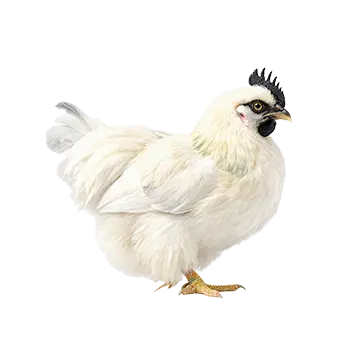

Successful Silkie Chicken breeding begins with the careful selection of breeding stock that exemplifies the breed's defining characteristics. The American Poultry Association standard for Silkies specifies a broad, rounded body carried low to the ground, a walnut comb that is preferably dark mulberry in color, five toes on each foot, feathered shanks and toes, black skin and bones, turquoise-blue earlobes, and the signature silky plumage that gives the breed its name. Selecting birds that closely conform to this standard improves the likelihood that offspring will meet breed expectations, whether the goal is exhibition, pet quality, or maintaining breed integrity.
Health history is as important as physical conformation when evaluating potential breeders. Choose birds from stock with no known history of Marek's disease, chronic respiratory infections, or reproductive disorders. Both the rooster and the hens should be in peak physical condition at the time of breeding, with bright eyes, clean plumage, clear nostrils, and healthy body weight. A breeding bird that is underweight, overweight, or recovering from illness is less likely to produce viable eggs with strong fertility rates and may pass nutritional deficiencies or immune weaknesses to the next generation.
Temperament should factor into breeding decisions alongside physical traits. One of the Silkie's most valuable qualities as a pet and companion breed is its docile, friendly disposition. Breeding from birds that are calm, handleable, and sociable reinforces this temperamental trait in offspring. Conversely, breeding from aggressive, flighty, or excessively nervous individuals risks producing chicks that lack the gentle nature the breed is prized for. Observe potential breeders over time in a variety of situations before making final selections.
Age considerations play a role in breeding stock decisions. Silkie hens reach sexual maturity between five and eight months of age, and fertility is generally highest during the first two to three years of laying. Roosters can be fertile as early as five months but typically reach peak fertility around one year of age. Breeding from birds that are too young may result in lower hatch rates and smaller eggs, while breeding from very old birds may yield declining fertility and reduced chick vigor. A breeding flock composed of birds in their first through third year of maturity generally produces the best outcomes.