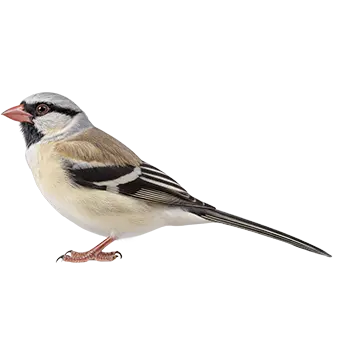

Physical Maturity & Identification

The adult Shaft-tail Finch is one of the most elegant and visually distinctive members of the Australian grassfinch family. Physical maturity is reached at approximately four to five months of age, following the completion of the first adult molt, though some birds continue to refine their plumage subtly through subsequent annual molt cycles. A fully mature Shaft-tail Finch measures between 15 and 17 centimeters from bill tip to the end of the elongated central tail feathers, with those characteristic shaft-like rectrices accounting for a significant portion of the total length and lending the bird its common name.

Two recognized subspecies exist, and their differences are most apparent in adult plumage. Poephila acuticauda acuticauda, the yellow-billed form, displays a vivid yellow-orange bill and is found across the western portion of the species' range in the Kimberley region. Poephila acuticauda hecki, the red-billed form, occurs in the eastern part of the range across the Northern Territory and into Queensland, and displays a striking coral-red bill. Both forms share the same overall body coloring: a warm fawn-brown body, a prominent black bib extending from the throat onto the upper breast, a distinctive black loral stripe running from the bill to the eye, pale silvery-gray crown and nape, and white undertail coverts bordered by bold black thigh patches. The rump and upper tail coverts are a rich rufous-orange.

Sexual dimorphism in the Shaft-tail Finch is subtle and can challenge even experienced keepers. Males tend to have a slightly larger and more rounded black bib than females, and the male's bill may be fractionally wider at the base. The most reliable method of sexing, short of DNA testing, is behavioral observation. Males sing a structured, buzzy courtship song while performing a characteristic display that involves holding a long grass stem in the bill and bobbing up and down on the perch. Females do not sing, though they produce the full range of contact calls shared by both sexes.

Adult plumage condition serves as an ongoing barometer of health and husbandry quality. Feathers should lie smoothly against the body, exhibit full color saturation, and show no signs of fraying, breakage, or discoloration. The elongated tail feathers are particularly telling; because they extend well beyond the rest of the tail and are susceptible to mechanical damage from cage bars, rough perch surfaces, and other birds, their condition reflects both the physical environment and the social stability of the bird's housing. A well-kept adult Shaft-tail Finch in prime condition is a genuinely striking bird that rewards its keeper's attention to detail.

Daily Nutrition & Diet Management

The dietary needs of an adult Shaft-tail Finch in its prime years are centered on a high-quality seed mix supplemented with fresh foods, mineral sources, and clean water. While these birds are primarily granivorous, a seed-only diet is nutritionally incomplete and will eventually lead to deficiencies that manifest as poor feather quality, reduced immune function, and shortened lifespan. The goal of a sound feeding program is to replicate as closely as possible the nutritional diversity that wild Shaft-tail Finches obtain by foraging across the grasslands and savannas of northern Australia.

The base diet should consist of a seed mix formulated for Australian grassfinches. This typically includes a blend of white and yellow millet varieties, canary seed, Japanese millet, and smaller quantities of niger seed, linseed, and rape seed. Avoid mixes that are heavily padded with filler seeds or that contain artificial colors and preservatives. The seed should smell fresh and clean, with no musty or rancid odors that indicate spoilage or mold contamination. Offer seed in shallow dishes that are refilled daily after removing empty husks, as finches dehusk their seeds before eating them and a dish that appears full may actually contain only discarded hulls.

Sprouted seeds represent one of the most valuable dietary supplements for adult Shaft-tail Finches. The sprouting process increases the protein, vitamin, and enzyme content of the seed dramatically while reducing fat levels. Millet, canary seed, and mung beans sprout reliably and are eagerly consumed by most finches. Rinse the sprouts thoroughly before offering them to remove any bacterial growth, and discard any that develop an off smell or slimy texture. Egg food, either a commercial preparation or a homemade mixture of finely grated hard-boiled egg with breadcrumb and grated carrot, provides concentrated protein that supports feather maintenance and general vitality.

Fresh greens and vegetables should be offered several times per week. Dandelion leaves, chickweed, endive, cos lettuce, grated carrot, and broccoli florets are all well-accepted and nutritionally valuable options. Avoid avocado, onion, garlic, and any plants treated with pesticides or herbicides. Seeding grass heads collected from unsprayed areas are a particular favorite and closely mimic the natural foraging behavior of wild birds. Fruits can be offered in small quantities but should not form a major part of the diet, as their sugar content is higher than ideal for a granivorous species.

Mineral supplementation is essential year-round, not just during breeding. A cuttlebone affixed to the cage bars provides calcium and beak-conditioning opportunities. A mineral block or grit mix containing crushed shell, charcoal, and trace minerals supports digestive function and fills micronutrient gaps. Clean, fresh water must be available at all times, changed daily, and provided in containers that cannot be fouled by droppings. Some keepers add a water-soluble vitamin supplement once or twice per week as nutritional insurance, though this should complement rather than replace a varied whole-food diet.

Housing & Environment

Housing an adult Shaft-tail Finch properly is fundamental to its physical health and behavioral wellbeing. These are active, flight-oriented birds that require considerably more space than their small size might suggest. The elongated tail feathers that define the species are particularly vulnerable to damage in cramped quarters, and the bird's natural activity level demands room to fly horizontally across a meaningful distance. A single pair should be housed in a flight cage no smaller than 90 centimeters in length, though longer enclosures are strongly preferred. For keepers who maintain these birds in aviaries, an outdoor or indoor flight measuring at least 1.8 meters in length provides a much more appropriate living space.

Perching arrangements deserve thoughtful planning. Natural wood branches of varying diameters provide the best footing and help exercise the feet and toes, reducing the risk of pressure sores and bumblefoot that can develop on uniform-diameter dowel perches. Position perches at different heights and avoid placing them directly above food and water dishes, where droppings would contaminate the supplies. The Shaft-tail Finch's elongated tail requires clearance behind and below the bird's perching position; placing perches too close to cage walls or other perches results in the tail pressing against surfaces and developing bent or broken central feathers.

Lighting is a significant environmental factor for Shaft-tail Finches maintained indoors. These birds evolved under the intense, full-spectrum sunlight of tropical Australia, and inadequate lighting in captivity can affect their mood, hormonal regulation, and the metabolism of vitamin D3, which is essential for calcium absorption. Full-spectrum avian lighting fixtures that produce output in the UVA and UVB range should be installed above the cage or aviary and operated on a timer to provide a consistent photoperiod. A cycle of 12 to 14 hours of light during the warmer months, reduced to 10 to 12 hours during winter, mimics the seasonal light variation that regulates natural behavioral cycles including molt and breeding readiness.

Temperature management depends on the housing situation. Shaft-tail Finches tolerate a fairly broad temperature range once acclimated, generally comfortable between 60 and 85 degrees Fahrenheit, but they are sensitive to sudden temperature drops and drafts. Outdoor aviaries in temperate climates should include a sheltered, insulated section where the birds can retreat during cold weather, and supplemental heating may be necessary in regions where temperatures regularly fall below 50 degrees Fahrenheit. Indoor birds maintained in climate-controlled rooms face fewer temperature concerns but may suffer from the low humidity typical of heated indoor environments, which can dry out respiratory membranes and interfere with feather maintenance.

Cage and aviary hygiene is a daily commitment. Droppings, discarded seed husks, and food remnants should be removed from the cage floor daily, with a thorough cleaning and disinfection of the entire enclosure performed weekly. Water and food containers should be washed with hot water and mild detergent each day. The nest boxes or woven nests that Shaft-tail Finches use for roosting, even outside the breeding season, should be checked regularly for parasite infestations and replaced when they become soiled or structurally compromised.

Social Behavior & Flock Dynamics

Adult Shaft-tail Finches are gregarious birds whose social structure in the wild revolves around loose flock associations punctuated by pair bonding during the breeding season. In captivity, their social needs must be met through thoughtful housing decisions that balance the bird's desire for companionship against the territorial tensions that can arise in confined spaces. A solitary Shaft-tail Finch, kept without the company of conspecifics or compatible species, will typically exhibit signs of loneliness including reduced vocalization, lethargy, and decreased feeding activity.

Pair bonding in Shaft-tail Finches is a relatively stable arrangement, though not as rigidly monogamous as in some parrot species. A bonded pair will perch in close proximity, engage in mutual allopreening, roost together in a shared nest at night, and coordinate their movements through the cage or aviary. These pair bonds can persist across multiple breeding seasons, and the death or removal of a bonded partner can cause visible behavioral distress in the remaining bird. When housing pairs, provide at least one roosting nest or enclosed shelter per pair to reduce competition for sleeping sites.

In a colony setting, social hierarchies develop based on age, sex, and individual temperament. These hierarchies are maintained primarily through subtle displays rather than overt aggression. Dominant birds may claim preferred perching spots and feeding positions, while subordinate individuals adjust their positions accordingly. This system works smoothly in adequately sized enclosures with multiple feeding stations and perching options that allow subordinate birds to maintain comfortable distances from dominant individuals. Problems arise when space is insufficient and subordinate birds have nowhere to retreat, leading to chronic stress, feather damage from chasing, and suppressed immune function.

Compatibility with other species is an important consideration for keepers who maintain mixed aviaries. Shaft-tail Finches are among the more peaceful Australian grassfinches and generally coexist harmoniously with other Poephila and Taeniopygia species, as well as with waxbills, mannikins, and similarly sized non-aggressive species. They should not be housed with highly territorial finches that might dominate feeding stations or harass them during roosting. Some keepers report occasional hybridization between Shaft-tail Finches and closely related species such as the Parson Finch or Masked Finch when housed together, so maintaining species purity requires separate housing during the breeding season.

Reading the social behavior of adult Shaft-tail Finches provides valuable insight into the overall health of the flock and the adequacy of the housing conditions. Birds that are perching in the open, vocalizing regularly, bathing enthusiastically, and engaging in mutual preening are communicating contentment. Birds that are consistently found sitting alone with feathers fluffed, avoiding social interaction, or spending excessive time hiding in corners are signaling that something in their environment or social structure needs attention. The keeper who learns to interpret these behavioral cues has a powerful early-warning system for problems that might otherwise go undetected until they escalate into clinical illness.

Exercise & Enrichment

Physical activity and mental stimulation are not optional extras for adult Shaft-tail Finches; they are essential components of proper husbandry that directly influence the bird's physical fitness, psychological health, and longevity. In the wild, these birds spend their days flying between foraging sites, exploring their environment, engaging in social interactions, and navigating the complex three-dimensional landscape of the Australian savanna. Captive birds that are denied the opportunity to exercise and explore are prone to obesity, muscle atrophy, boredom-related behavioral problems, and the general malaise that accompanies a sedentary existence.

Flight is the primary form of exercise for Shaft-tail Finches, and the housing enclosure must be long enough to permit sustained horizontal flight. A bird that can only hop from perch to perch in a small cage is not exercising meaningfully. In an appropriately sized flight cage or aviary, the birds will engage in spontaneous flight bouts throughout the day, chasing each other in social play, flying to and from feeding stations, and making circuits of the enclosure. These flight sessions maintain cardiovascular fitness, muscle tone, and healthy body weight. Monitoring the bird's breast muscle condition through gentle palpation of the keel bone provides a practical assessment of whether adequate flight exercise is occurring.

Foraging enrichment is the most natural and effective form of mental stimulation for a granivorous bird. Instead of presenting all food in a single easily accessible dish, scatter seeds across the cage floor, hide them among clean leaf litter or in crumpled paper, and offer millet sprays wedged among branches or clipped to the cage bars at varying heights. These simple modifications encourage the bird to work for its food, mimicking the natural foraging effort that occupies a wild finch for hours each day. The behavioral shift from passive eating to active foraging is evident almost immediately, with birds displaying increased alertness, physical activity, and apparent engagement with their environment.

Environmental enrichment extends beyond food-related activities. Natural branches with bark, leaves, and seed heads provide textural variety and opportunities for exploratory behavior. Shallow bathing dishes inspire enthusiastic bathing sessions that serve both hygienic and recreational purposes. Swings and flexible perches add movement and challenge to the perching experience. Even something as simple as rearranging the perch layout periodically introduces novelty that stimulates the bird's curiosity and prevents the stagnation that comes from an unchanging environment.

Enrichment activities also serve a diagnostic purpose. A healthy, well-adjusted adult Shaft-tail Finch responds to novel enrichment with curiosity, approaching new objects cautiously but investigating them within a reasonable timeframe. A bird that shows no interest in novel stimuli, or one that reacts with extreme fear to minor environmental changes, may be experiencing underlying health issues or chronic stress that dampens its natural inquisitiveness. Tracking how individual birds respond to enrichment over time creates a behavioral baseline against which future changes can be measured.

Routine Health Maintenance

Preventive health care for adult Shaft-tail Finches during their prime years centers on consistent husbandry practices, regular observation, and periodic veterinary evaluation. These birds are generally hardy when maintained under appropriate conditions, but their small size means that illness can progress from subtle signs to critical condition within 24 to 48 hours. A proactive health management program that catches problems early, before they become emergencies, is the most effective strategy for maintaining a healthy flock.

Daily health assessment should become as routine as feeding and watering. Observe each bird's posture, activity level, feeding behavior, and droppings quality during morning care. A healthy adult Shaft-tail Finch holds its body in an alert, upright posture with feathers sleek against the body. It moves actively between perches, feeds with vigor, vocalizes regularly, and produces well-formed droppings with distinct fecal, urate, and urine components. Any deviation from this baseline warrants closer attention and, if persistent, veterinary consultation.

The annual molt is a period of particular vulnerability that requires heightened attention. Most adult Shaft-tail Finches undergo a complete molt once per year, typically triggered by changes in photoperiod during late summer or autumn. During the four to eight weeks of active feather replacement, the bird's nutritional demands increase substantially, and its immune system may be somewhat suppressed. Increase the availability of protein-rich foods, ensure mineral supplementation is adequate, and monitor for abnormal feather growth such as stress bars, color faults, or feathers that fail to emerge from their sheaths.

Parasite management is an ongoing concern in any finch collection. External parasites including red mites, scaly face mites, and feather lice can establish infestations that cause irritation, feather damage, anemia, and in severe cases death. Regular inspection of the birds, particularly around the face, legs, and vent, helps detect infestations early. Cage and aviary furnishings should be inspected and treated regularly, as red mites in particular hide in crevices during the day and emerge at night to feed on the birds. Internal parasites including intestinal worms and coccidia are controlled through good hygiene, regular fecal testing, and targeted treatment when indicated.

Annual or biannual veterinary checkups provide an objective assessment of health that supplements the keeper's daily observations. A thorough examination by an avian veterinarian includes body condition scoring, examination of the eyes, nares, oral cavity, and vent, palpation of the abdomen, and assessment of feather condition. Fecal testing for parasites and, if warranted, blood work to screen for systemic disease round out the visit. Establishing this regular veterinary relationship ensures that the clinician is familiar with the bird's individual baseline, making it easier to detect subtle changes that might indicate emerging health concerns.

Common Adult Health Concerns

While Shaft-tail Finches are among the hardier grassfinch species in aviculture, they are susceptible to a range of health conditions that keepers should understand and be prepared to address. Familiarity with the most common ailments, their presenting signs, and appropriate initial responses can mean the difference between a swift recovery and a preventable loss. The following conditions represent the issues most frequently encountered in adult Shaft-tail Finches during their prime years.

Air sac mites remain a persistent concern throughout the bird's life, not just during the juvenile period. Sternostoma tracheacolum infestations can be acquired through contact with infected birds, shared water sources, or regurgitative feeding between adults. The classic presentation is a clicking or wheezing respiratory sound, often most noticeable when the bird is at rest in a quiet room. Mild cases may produce no obvious external signs, with the infestation detected only during routine veterinary examination or when the keeper listens carefully at night while the birds roost. Treatment with ivermectin, typically applied topically to the skin in a precise dose calculated for the bird's weight, is effective when administered under veterinary guidance. Flock treatment is generally recommended when any individual is diagnosed.

Enteric infections caused by bacteria, coccidia, or other protozoal organisms are common in finch collections, particularly those housed in aviaries where ground feeding allows fecal-oral transmission. Symptoms include watery or discolored droppings, weight loss, fluffed plumage, and reduced activity. Diagnosis requires fecal testing by a veterinarian, and treatment depends on the specific organism identified. Maintaining strict hygiene, particularly in areas where food contacts the cage floor, is the most effective preventive measure.

Egg binding is a life-threatening condition that primarily affects female Shaft-tail Finches during or outside of controlled breeding situations. A female that appears fluffed, straining, or sitting on the cage floor with labored breathing and a swollen abdomen may have a retained egg. This is a veterinary emergency that requires prompt intervention. Calcium deficiency, obesity, and environmental stressors such as cold temperatures are predisposing factors. Ensuring that females have constant access to calcium sources and are not stimulated to breed when they are in suboptimal condition reduces the risk substantially.

Obesity is an insidious problem in captive finches, particularly those housed in small cages with unlimited access to high-fat seed mixes and limited opportunity for flight exercise. An obese Shaft-tail Finch may appear superficially healthy but is at elevated risk for fatty liver disease, reproductive problems, and cardiovascular compromise. Prevention is far more effective than treatment and involves providing a balanced diet with controlled fat content, ensuring adequate enclosure size for regular flight, and avoiding the temptation to offer excessive treats. Regular body condition assessment through keel palpation helps detect weight gain before it becomes a clinical problem.

Feather abnormalities in adult birds can stem from multiple causes including nutritional deficiency, parasitic infestation, hormonal imbalance, and feather-damaging behavior by cagemates. French molt, caused by polyomavirus, can produce abnormal flight and tail feathers that fail to develop properly. Psittacine beak and feather disease, while more commonly associated with parrots, has been reported in some finch species. Any persistent or progressive feather abnormality warrants a veterinary evaluation that may include feather pulp cytology, viral testing, and nutritional assessment to identify the underlying cause and guide appropriate treatment.

Always consult a qualified professional before making any health-related decisions. This content is provided for informational reference only and should not replace professional guidance specific to your animal.